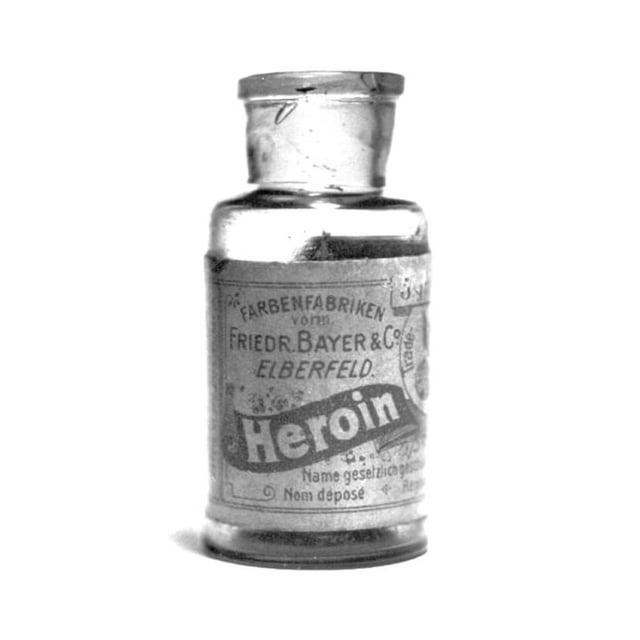
An 1890s heroin bottle, produced by the Bayer pharmaceutical company in Germany. In the 1800s, heroin, cocaine, and many other substances could be freely sold and bought by anyone.
Imagine stumbling upon an old, mysterious bottle in your attic or at a vintage shop, only to discover it’s a relic from a bygone era – an 1890s heroin bottle, produced by the Bayer pharmaceutical company in Germany. This fascinating artifact is a window into a time when the world was a very different place, and the rules surrounding substances like heroin were unrecognizable to us today. In the 1800s, heroin, cocaine, and many other substances could be freely sold and bought by anyone, without the strict regulations and warnings we’re familiar with now. It’s a startling reminder of how our understanding of these substances has evolved over time, and the complex history behind their production and use.
A Brief History of Heroin
Heroin, first synthesized by C.R. Alder Wright in 1874, was initially hailed as a miracle cure for a range of ailments, from coughs and colds to tuberculosis. The Bayer pharmaceutical company in Germany began mass-producing the drug in the late 1800s, marketing it as a safer, more effective alternative to morphine. At the time, heroin was seen as a wonder drug, and its use became widespread. It was even sold in tonics and elixirs, often in combination with other substances like cocaine and morphine, and was freely available at pharmacies and general stores. The fact that heroin was so readily available, and that it was produced by a reputable company like Bayer, is a testament to the very different attitudes towards these substances that existed at the time.
The Science Behind Heroin
So, what exactly is heroin, and how does it work? Heroin is a semi-synthetic opioid, derived from the opium poppy plant. It’s a highly addictive substance, which works by binding to opioid receptors in the brain, producing feelings of euphoria and relaxation. When heroin is ingested, it’s quickly metabolized into morphine, which is then absorbed into the bloodstream and crosses the blood-brain barrier. The effects of heroin are rapid and intense, which is why it’s so highly addictive. It’s also why, despite its initial promise as a medical treatment, heroin eventually became notorious for its dangers and risks. As our understanding of the science behind heroin has grown, so too has our awareness of its potential for harm, and the need for strict regulations and controls.
A Legacy of Controversy
Today, the legacy of heroin is one of controversy and concern. The substance is tightly controlled, and its use is heavily stigmatized. But it’s fascinating to look back on the history of heroin, and to consider how our attitudes towards it have evolved over time. The old heroin bottle, with its faded label and mysterious contents, is a poignant reminder of the complex and often surprising history of substances like heroin. It’s a reminder that our understanding of the world is always changing, and that even the most unlikely and unexpected artifacts can hold a deep significance and fascination.
As we gaze upon this old heroin bottle, we’re reminded of the power of history to surprise and intrigue us. The story of heroin is a complex and multifaceted one, full of twists and turns that reflect the changing attitudes and understanding of the time. Whether you’re a history buff, a science enthusiast, or simply someone who loves a good story, the tale of this old bottle is sure to captivate and inspire. So next time you stumble upon an old relic or artifact, take a moment to consider its story, and the fascinating history that lies behind it. You never know what secrets and surprises it might hold.