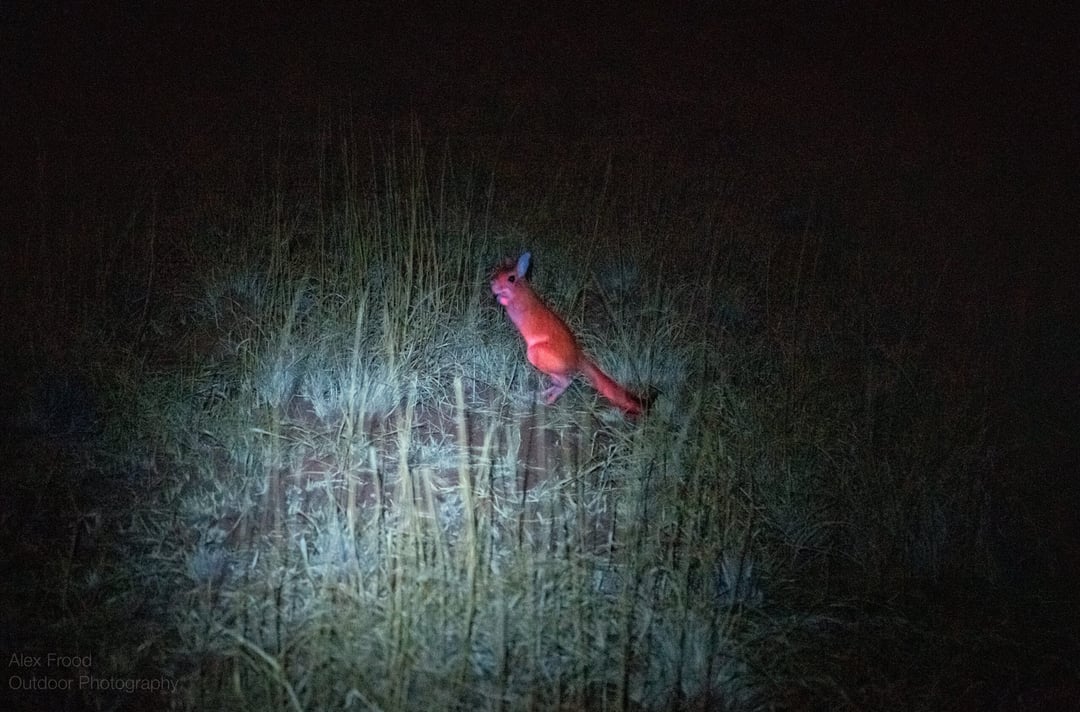
Under UV light, the noctirnal African Springhare glows neon pink
Imagine stumbling upon a creature that seems to have jumped straight out of a neon-lit fantasy world – the nocturnal African Springhare, a large rodent native to southern Africa, has a secret that’s as fascinating as it is unexpected. Under UV light, its fur glows a vibrant neon pink, a phenomenon that has left scientists and animal enthusiasts alike in awe. This isn’t just a quirky trait; it’s a window into the intricate and often mysterious world of biofluorescence, where creatures emit light as a result of chemical reactions within their bodies.
The Science Behind the Glow
The African Springhare’s neon pink glow is due to the presence of certain biomolecules in its fur, which react to ultraviolet light by emitting a fluorescent glow. This process is different from bioluminescence, where organisms produce their own light through chemical reactions. Biofluorescence, on the other hand, requires an external light source, in this case, UV light, to excite the molecules and produce the glow. Scientists are still unraveling the exact mechanisms and purposes behind this phenomenon, but it’s clear that biofluorescence plays a significant role in the natural world, from attracting mates to communicating with other members of the species.
African Springhare’s Unique Lifestyle
The African Springhare is already an intriguing creature due to its unique lifestyle and adaptations. It’s a nocturnal animal, spending most of its time underground in complex burrow systems, which it uses for shelter and protection from predators. Its large, powerful hind legs enable it to jump significant distances, a trait that’s both a mode of transportation and a defense mechanism. The discovery of its biofluorescent properties adds another layer of complexity to our understanding of this animal, suggesting that there may be more to its nocturnal behavior and interactions than initially meets the eye.
Unveiling the Secrets of Biofluorescence
The study of biofluorescence in animals like the African Springhare opens up new avenues for research into the behavior, ecology, and evolution of species. By exploring how and why certain animals glow under UV light, scientists can gain insights into their habitats, behaviors, and even the potential applications of biofluorescence in fields like medicine and technology. For instance, understanding the biomolecules responsible for biofluorescence could lead to the development of new fluorescent probes for medical imaging. The neon pink glow of the African Springhare is not just a fascinating quirk; it’s a doorway to a deeper understanding of the natural world and its many secrets waiting to be uncovered.
As we continue to explore and learn more about the African Springhare and its remarkable biofluorescent abilities, we’re reminded of the awe-inspiring complexity and beauty of the natural world. There’s still so much to discover, so much that glows in the dark, waiting for us to shine a light on it – literally. The African Springhare’s neon secret is a captivating reminder of the magic that can be found in the most unexpected places, and the journey to understand it is just as enlightening as the glow itself.