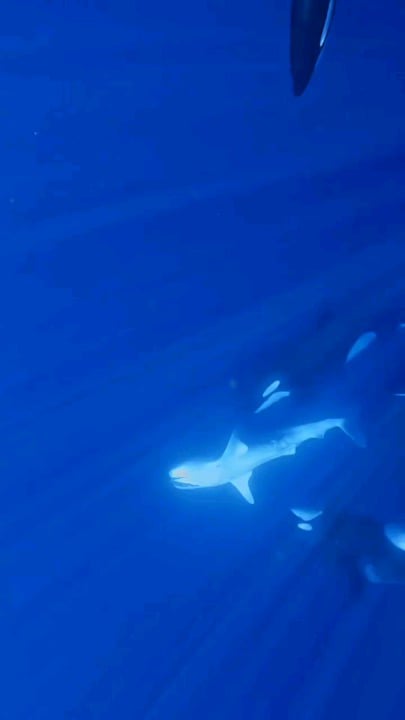
Rare sighting of killer whales hunting a whale shark, to feed on its enormous, nutrient-rich liver.
In the vast and mysterious ocean, a rare and awe-inspiring spectacle has been observed by lucky marine biologists – a group of killer whales hunting a whale shark, not for its meat, but for its enormous, nutrient-rich liver. This extraordinary event has left scientists and marine enthusiasts fascinated, and for good reason. The idea of these apex predators targeting a specific organ of their prey is a testament to their intelligence and adaptability. But what drives this unusual behavior, and what can we learn from this remarkable sighting?
The Hunt for Nutrients
Killer whales, also known as orcas, are known for their sophisticated hunting strategies and diverse diets. However, the pursuit of a whale shark’s liver is a unique and intriguing phenomenon. Whale sharks, despite their massive size, feed on plankton and small fish, and their livers are rich in nutrients, particularly oil and protein. It’s believed that killer whales have learned to target this organ to supplement their diet with essential nutrients, especially in areas where food is scarce. This behavior highlights the complex and dynamic relationships between marine species and their environments.
Uncovering the Science Behind the Hunt
Researchers have been studying the anatomy and physiology of whale sharks to understand why their livers are so prized by killer whales. It’s been discovered that whale shark livers can account for up to 30% of their body weight, making them a valuable source of energy and nutrients. The liver’s unique composition, rich in squalene and other oils, may also play a role in attracting killer whales. By examining the hunting patterns and social behaviors of killer whales, scientists can gain insights into the evolution of their predatory strategies and the importance of nutrient-rich prey in their ecosystems.
A Glimpse into the Secret Lives of Marine Predators
This rare sighting offers a fascinating glimpse into the secret lives of marine predators and the intricate web of relationships within ocean ecosystems. The fact that killer whales have developed a strategy to target a specific organ of their prey speaks to their intelligence, social complexity, and adaptability. As we continue to explore and learn more about the ocean and its inhabitants, we are reminded of the awe-inspiring diversity and complexity of marine life. The hunt for a whale shark’s liver is a remarkable example of the unexpected and fascinating behaviors that await discovery in the uncharted depths of our planet’s oceans.
As we marvel at the majesty and cunning of killer whales, we are also reminded of the importance of preserving the delicate balance of our ocean ecosystems. The intricate relationships between species, the pursuit of nutrients, and the adaptability of predators all contribute to the rich tapestry of marine life. By continuing to explore and learn from these remarkable events, we can deepen our appreciation for the natural world and work towards a future where these incredible creatures can thrive.