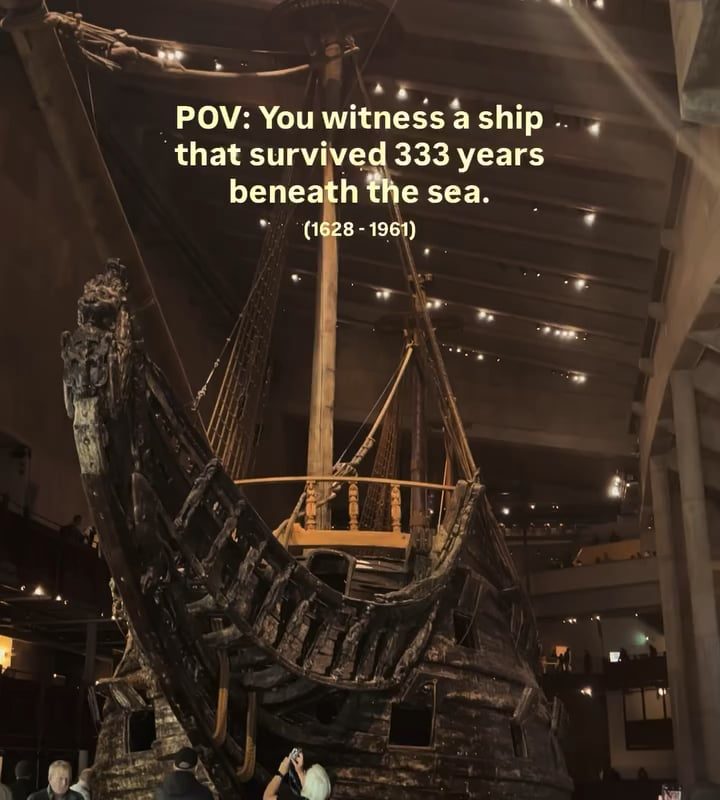
The Vasa, a Swedish warship which capsized and sank on its maiden voyage in 1628. After being underwater for 333 years, she was raised and made into a museum piece.
Imagine being on a majestic warship, with three masts and 64 guns, ready to take on the seas and make your country proud. But, in a shocking turn of events, the ship capsizes and sinks on its very first voyage, taking many lives with it. This is the story of the Vasa, a Swedish warship that met its demise in 1628, only to be rediscovered and resurrected centuries later. The Vasa’s tale is one of tragedy, mystery, and ultimately, preservation, making it a fascinating piece of history that continues to captivate us to this day.
A Royal Ambition
The Vasa was built during the reign of King Gustav II Adolf of Sweden, who was determined to make his country a major naval power. The ship was designed to be the most powerful warship in the Baltic, with an impressive array of guns and a sleek, modern design. However, the Vasa’s construction was rushed, and the ship was not adequately tested before its maiden voyage. On August 10, 1628, the Vasa set sail from Stockholm, but it didn’t take long for disaster to strike. A strong gust of wind caught the ship, causing it to capsize and sink in the harbor, resulting in the loss of 30 lives. The tragedy was met with shock and grief, and the Vasa was left to rest at the bottom of the sea for over three centuries.
Rediscovery and Restoration
In 1956, a team of Swedish divers and engineers located the Vasa’s wreck, and a massive salvage operation was undertaken to raise the ship from the depths. The Vasa was finally lifted out of the water in 1961, and a painstaking restoration process began. The ship was treated with a variety of chemicals to preserve the wood and prevent further decay, and many of its original features were painstakingly reconstructed. Today, the Vasa is housed in a purpose-built museum in Stockholm, where it is seen by millions of visitors each year. The ship’s restoration is a testament to the power of human ingenuity and the importance of preserving our cultural heritage.
A Window into the Past
The Vasa’s preservation has provided historians and scientists with a unique window into the past, offering insights into the lives of 17th-century sailors and shipbuilders. The ship’s wooden hull and rigging have been incredibly well-preserved, allowing researchers to study the construction techniques and materials used during this period. The Vasa has also yielded a treasure trove of artifacts, including clothing, tools, and even the remains of the sailors who perished on that fateful day. As we gaze upon the Vasa’s majestic hull, we are reminded of the transience of human endeavor and the enduring power of history to captivate and inspire us.
The Vasa’s story is a poignant reminder that even the most tragic events can be transformed into something beautiful and meaningful. From its tragic maiden voyage to its current status as a beloved museum piece, the Vasa continues to fascinate and inspire us, offering a glimpse into a bygone era and the people who shaped it. As we marvel at the Vasa’s grandeur and beauty, we are also reminded of the importance of preserving our cultural heritage, so that future generations can continue to learn from and appreciate the triumphs and tragedies of the past.