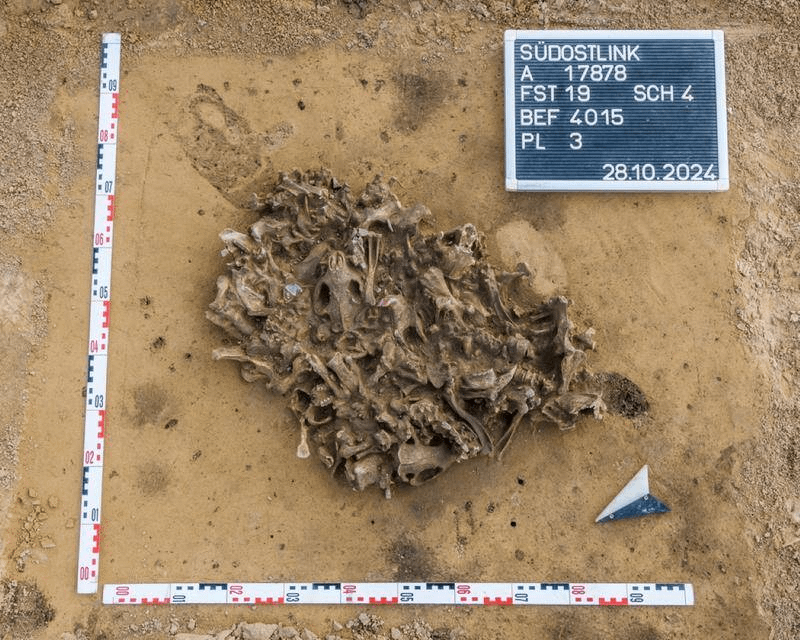
A 7,000-Year-Old Pit Filled With Beaver Bones found In Alsleben, Germany during transmission line works.
Imagine stumbling upon a hidden treasure trove of ancient secrets, buried deep beneath the earth for thousands of years. That’s exactly what happened in the small town of Alsleben, Germany, where a team of workers made a jaw-dropping discovery while constructing a new transmission line. As they dug into the earth, they uncovered a 7,000-year-old pit filled with an astonishing number of beaver bones. The sheer scale of the find has left archaeologists and scientists abuzz with excitement, and for good reason – this ancient pit is a window into a long-lost world, offering a fascinating glimpse into the lives of our ancient ancestors.
The Ancient Pit: A Window into the Past
The discovery of the beaver bone pit has sent shockwaves through the scientific community, with many experts hailing it as one of the most significant archaeological finds in recent history. The pit itself is estimated to be around 7,000 years old, dating back to the Neolithic period, a time when humans were first beginning to transition from a nomadic, hunter-gatherer lifestyle to one that was more sedentary and agricultural. The fact that the pit is filled with the remains of beavers suggests that these animals played a crucial role in the lives of ancient humans, perhaps providing a source of food, clothing, and other essential resources.
Uncovering the Secrets of the Past
As scientists begin to study the beaver bones in more detail, they’re gaining a deeper understanding of the complex relationships between humans and animals in ancient times. The bones themselves are remarkably well-preserved, with some specimens still retaining their original skeletal structure. By analyzing the bones, researchers can learn more about the diet, habitat, and behavior of the beavers, as well as the ways in which they interacted with humans. This information can also provide valuable insights into the evolution of the natural environment over time, including changes in climate, vegetation, and wildlife populations.
A Glimpse into the Lives of Ancient Humans
The discovery of the beaver bone pit is not just significant for what it reveals about the natural world – it also offers a fascinating glimpse into the lives of ancient humans. The fact that the pit was carefully constructed and filled with the remains of beavers suggests a high degree of organization and planning, as well as a deep understanding of the natural world. It’s likely that the ancient humans who created the pit had a profound respect for the beavers and the role they played in their ecosystem, and that they developed complex rituals and practices surrounding the hunting and use of these animals. As we continue to learn more about this ancient pit and its contents, we’re reminded of the profound connections that exist between humans, animals, and the natural environment.
As the story of the 7,000-year-old beaver bone pit continues to unfold, it’s clear that this ancient treasure trove has much to teach us about the past, and about ourselves. The discovery is a powerful reminder of the importance of preserving our cultural and natural heritage, and of the many secrets that still lie hidden beneath our feet, waiting to be uncovered. Whether you’re an archaeology buff, a nature lover, or simply someone who’s curious about the world around you, the beaver bone pit is a fascinating find that’s sure to captivate and inspire – and who knows what other secrets it might still hold?