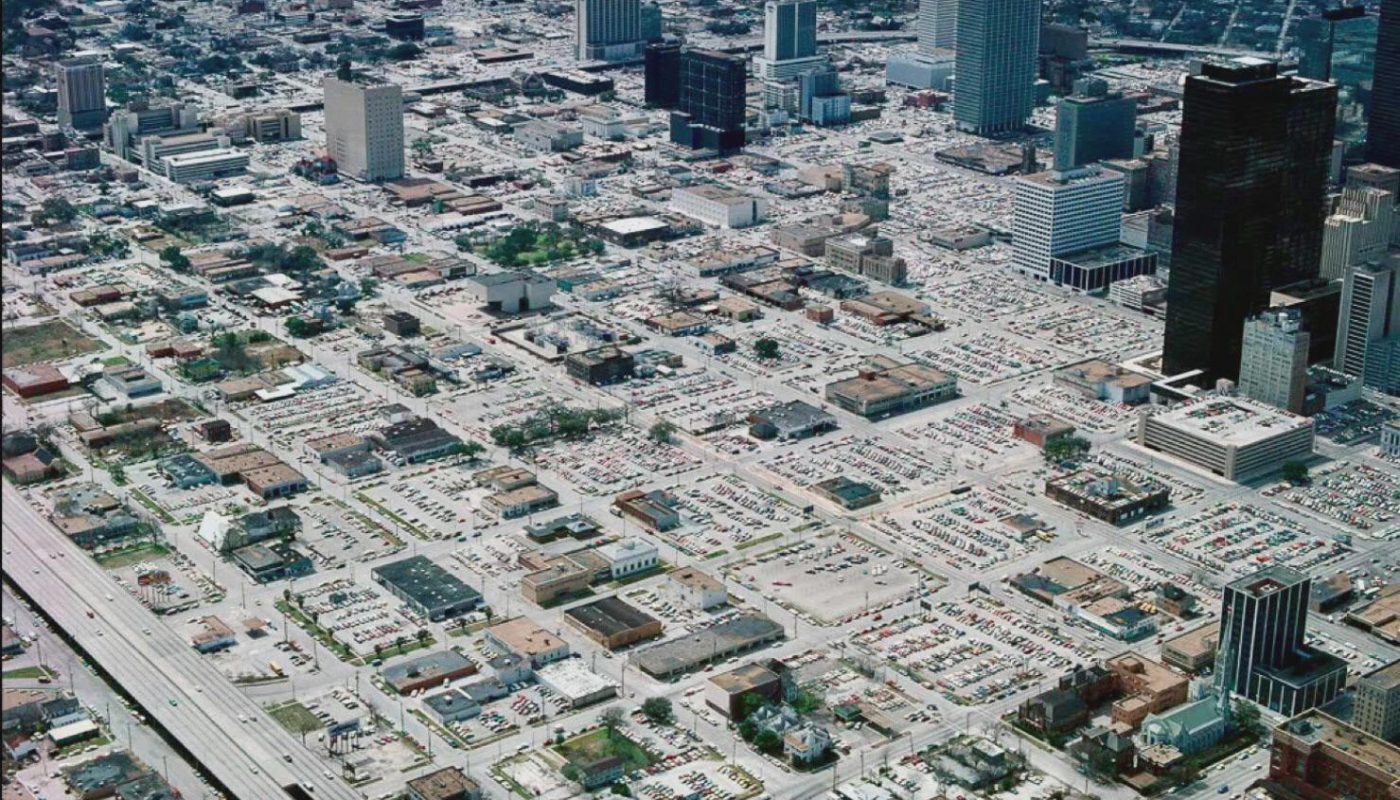
Downtown Houston in 1970s was a massive parking lot. It was estimated that nearly 50% of the downtown land area was dedicated solely to parking.
Downtown Houston in the 1970s – can you imagine a time when the bustling streets of this vibrant city were eerily quiet, with nearly half of its land area dedicated to a single purpose: parking? It’s a staggering thought, and one that sparks a lot of curiosity about how this came to be. As I dug deeper into the history of downtown Houston, I discovered a fascinating story of urban development, transportation, and the unintended consequences of our love affair with cars. The city’s transformation into a massive parking lot was not just a matter of convenience, but also a result of a complex interplay between post-war urban planning, economic growth, and the rise of suburbanization.
A City Built for Cars
The 1970s were a time of great change in Houston, with the city experiencing rapid growth and development. As the population swelled, so did the number of cars on the road, and with it, the need for parking. The construction of the interstate highway system, which was designed to bring people in and out of the city quickly and efficiently, also played a significant role in shaping the urban landscape. Wide roads and highways cut through the heart of downtown, separating neighborhoods and creating a culture of car dependency. As a result, parking lots and garages sprouted up to accommodate the influx of vehicles, slowly but surely devouring large swaths of land. It’s estimated that nearly 50% of the downtown land area was dedicated solely to parking, a staggering statistic that’s hard to wrap your head around.
The Science of Urban Planning
So, how did urban planners of the time contribute to this phenomenon? The answer lies in the science of urban planning, which was heavily influenced by the principles of modernism and the idea of functional separation. This approach emphasized the separation of different land uses, such as residential, commercial, and industrial areas, and prioritized the movement of cars over pedestrians. The result was a city that was designed to be efficient for cars, but often at the expense of other modes of transportation and community engagement. As we now know, this approach has its drawbacks, including increased air pollution, urban sprawl, and a decline in public spaces. Despite these challenges, the story of downtown Houston’s transformation serves as a valuable lesson in the importance of considering the long-term consequences of our urban planning decisions.
A New Era for Downtown Houston
Fast forward to the present day, and downtown Houston is a vastly different place. The city has undergone significant revitalization efforts, with a focus on creating a more vibrant, pedestrian-friendly environment. New public spaces, such as parks and plazas, have been built, and alternative modes of transportation, like light rail and bike-sharing systems, have been introduced. While there’s still a long way to go, it’s heartening to see the progress that’s been made. As we look to the future, it’s clear that the story of downtown Houston’s transformation from a massive parking lot to a thriving urban hub is one that holds many valuable lessons for cities around the world.
As I reflect on the fascinating history of downtown Houston, I’m struck by the complexity and nuance of urban development. The transformation of a city is never just a simple story of growth or decline, but rather a rich tapestry of factors, from transportation and economics to culture and community. And as we continue to build and shape our cities for the future, it’s essential that we remember the lessons of the past, including the unintended consequences of our love affair with cars, and strive to create urban environments that are vibrant, sustainable, and people-friendly.