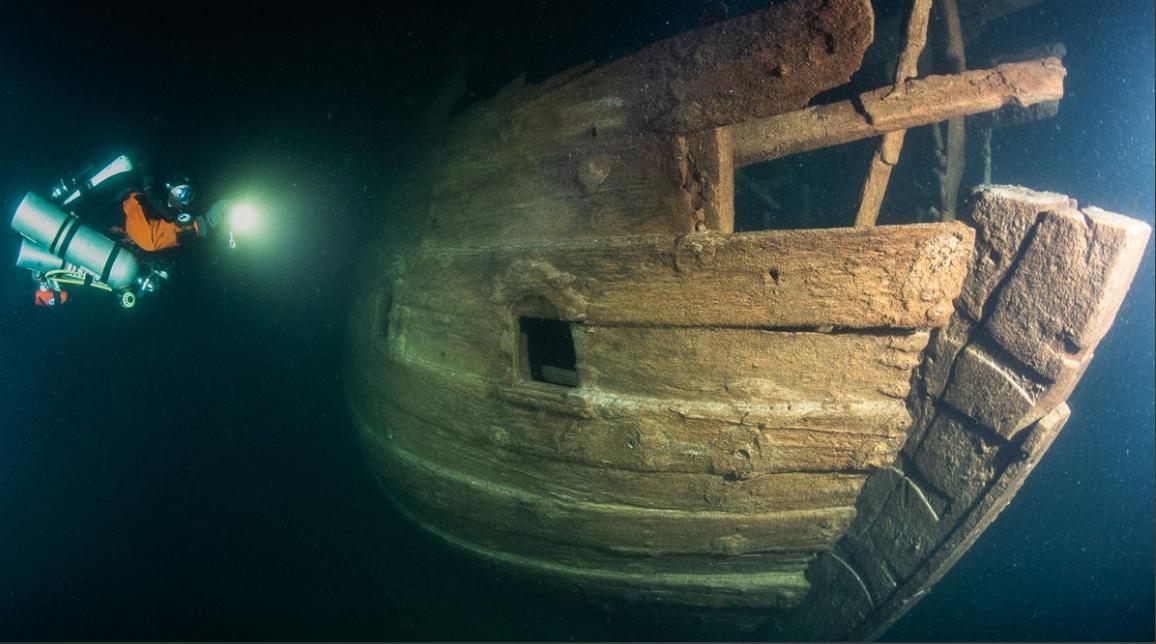
The pristine wreck of a 17th-century warship at the bottom of the Baltic Sea. Because the freezing, low-salinity water lacks wood-boring shipworms, centuries-old wooden ships remain perfectly preserved.
Imagine stumbling upon a 17th-century warship, its wooden hull and intricate carvings still intact, as if it had just set sail yesterday. This is the incredible reality at the bottom of the Baltic Sea, where a pristine wreck has been discovered, frozen in time. The Baltic’s unique environment has created a perfect storm of preservation, with its freezing, low-salinity waters lacking the wood-boring shipworms that typically devour wooden ships. As a result, centuries-old vessels like this one remain remarkably well-preserved, offering a fascinating glimpse into the past.
The Unique Environment of the Baltic Sea
The Baltic Sea’s distinct characteristics have created an ideal environment for preserving ancient ships. The low salinity of the water, combined with its near-freezing temperatures, has prevented the growth of shipworms, which are typically found in warmer, saltier waters. These shipworms, also known as Teredo navalis, are notorious for their ability to bore into and devour wooden ships, leaving nothing but a skeleton behind. But in the Baltic, the lack of these pests has allowed wooden ships to remain intact, with even the most delicate carvings and details still visible. This has created a treasure trove of historical artifacts, with many ships from the 17th and 18th centuries still lying on the seafloor, waiting to be discovered.
A Glimpse into the Past
The discovery of this 17th-century warship has provided historians and archaeologists with a unique opportunity to learn about the past. The ship’s preservation has allowed researchers to study its construction, its armament, and even the everyday lives of its crew. From the type of wood used in its construction to the food they ate on board, every detail has been frozen in time, offering a fascinating glimpse into the lives of sailors and soldiers from centuries ago. The ship’s cargo hold, for example, may still contain barrels of provisions, cannons, and other equipment, all of which can provide valuable insights into the ship’s mission and the people who sailed on it.
Unlocking the Secrets of the Past
As researchers continue to study this incredible wreck, they are unlocking the secrets of the past, one artifact at a time. From the ship’s navigational instruments to its decorative carvings, every item on board has a story to tell. The discovery of this warship has also raised questions about the history of the Baltic Sea and the role it played in the conflicts of the 17th century. As we continue to explore and learn from this incredible find, we are reminded of the importance of preserving our cultural heritage, both on land and under the sea. The story of this 17th-century warship is a testament to the power of preservation and the importance of exploring and protecting our shared history.
The discovery of this pristine 17th-century warship at the bottom of the Baltic Sea is a reminder that even in the most unexpected places, history can be found in remarkable condition. As we continue to explore and learn from this incredible find, we are drawn into a world of wonder and discovery, where the past comes alive in the most unexpected ways. Whether you’re a history buff, a marine archaeologist, or simply someone who loves a good story, the tale of this warship is sure to captivate and inspire, offering a glimpse into a bygone era that is both fascinating and unforgettable.