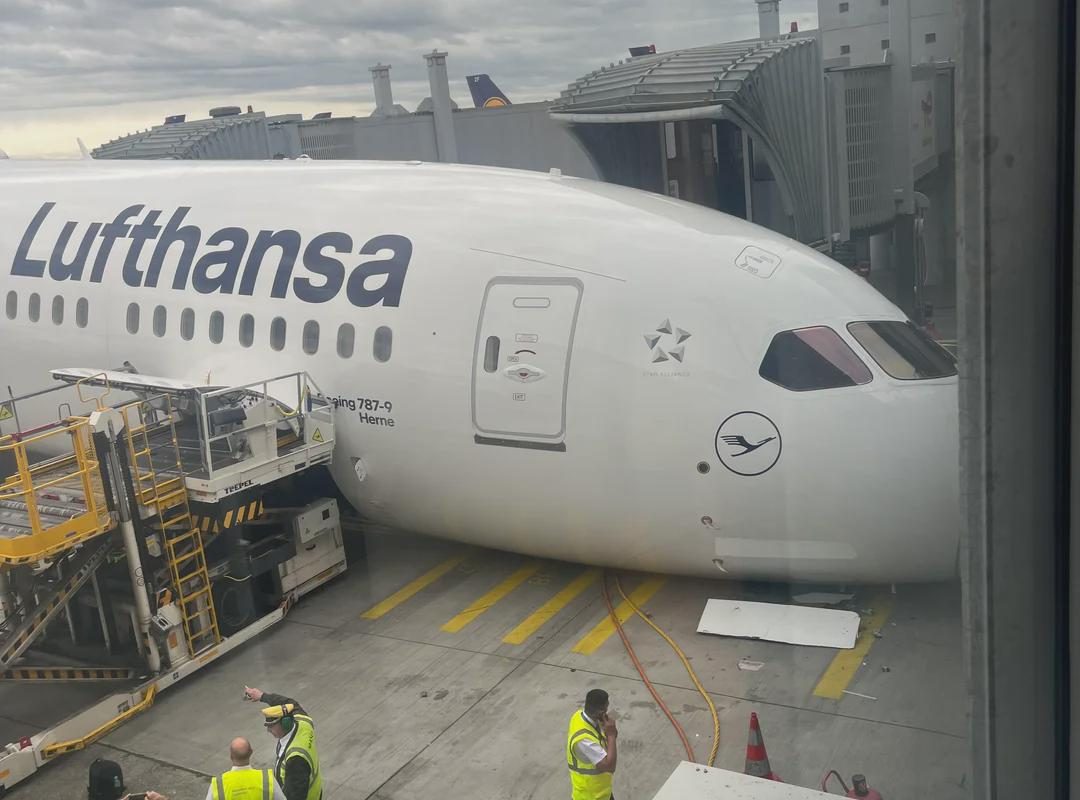
Plane’s front wheel collapsed.
Imagine being on a plane, soaring through the skies, and then suddenly hearing a loud thud as the aircraft touches down on the runway. But this time, something’s not quite right – the plane’s front wheel has collapsed, sending shockwaves through the cabin. It’s a scenario that’s both terrifying and fascinating, leaving us wondering how such a critical component could fail so catastrophically. As it turns out, the story behind a plane’s front wheel collapse is far more complex and intriguing than you might think.
The Anatomy of a Plane’s Front Wheel
The front wheel of a plane, also known as the nose wheel, plays a crucial role in the aircraft’s landing and taxiing processes. It’s designed to withstand incredible stresses and strains, from the weight of the plane itself to the constant friction and heat generated during touchdown. But despite its robust construction, the nose wheel is still vulnerable to failure, often due to a combination of factors such as metal fatigue, poor maintenance, and excessive wear and tear. When a nose wheel collapses, it can be a harrowing experience for passengers and crew alike, with the plane potentially careening out of control or even catching fire.
The Science Behind Wheel Collapse
So, what exactly causes a plane’s front wheel to collapse? It all comes down to the science of materials and mechanics. You see, the nose wheel is typically made from a combination of metals, including steel and aluminum, which are chosen for their strength, durability, and lightweight properties. However, when subjected to repeated stress and strain, these materials can begin to weaken and degrade, leading to a catastrophic failure. Additionally, factors such as temperature, humidity, and even the type of runway surface can all contribute to the likelihood of a wheel collapse. It’s a complex interplay of variables that demands careful attention and maintenance from aircraft engineers and technicians.
Lessons Learned and Safety Improvements
Fortunately, incidents of plane wheel collapse are relatively rare, and the aviation industry has learned valuable lessons from past incidents. Today, airlines and manufacturers are working tirelessly to improve the design, materials, and maintenance procedures for nose wheels, reducing the risk of failure and ensuring a safer flying experience for all. From advanced materials and testing protocols to more rigorous inspection and maintenance schedules, the science behind plane wheel safety is continually evolving. As we continue to push the boundaries of flight and explore new frontiers, it’s reassuring to know that the experts are working hard to stay one step ahead of potential hazards, keeping us safe and sound at 30,000 feet.
As the investigation into the collapsed nose wheel continues, we’re reminded of the incredible complexity and sophistication of modern air travel. It’s a sobering reminder that even with the best designs, materials, and maintenance, things can still go wrong. Yet, it’s also a testament to human ingenuity and the relentless pursuit of safety and innovation that defines the aviation industry. As we take to the skies once again, we can’t help but feel a sense of awe and appreciation for the incredible machines that carry us safely to our destinations, and the dedicated professionals who work tirelessly behind the scenes to keep us flying high.