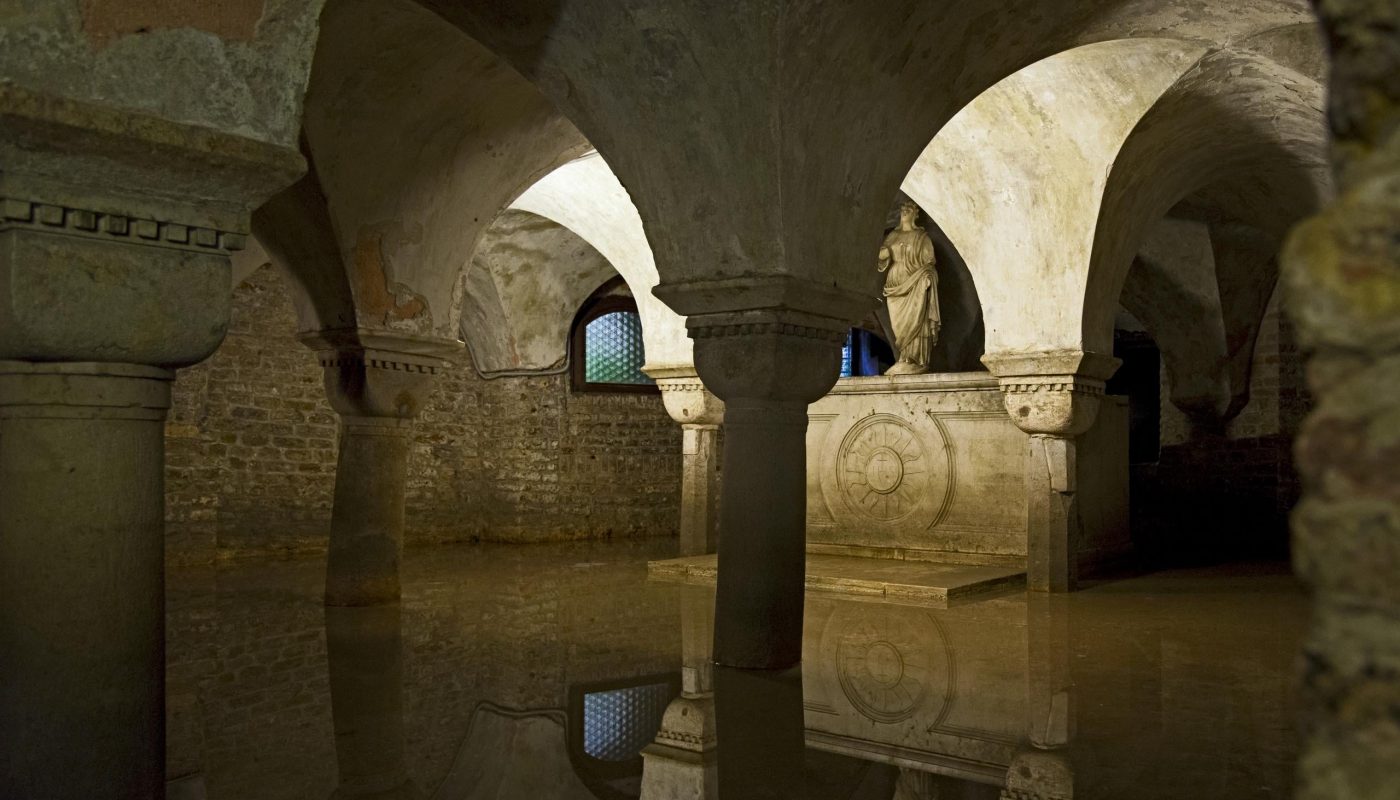
The early-10th-century crypt beneath San Zaccaria Church in Venice floods with lagoon water for much of the year
As I wandered through the narrow streets of Venice, I stumbled upon a hidden gem that left me spellbound – the early-10th-century crypt beneath San Zaccaria Church. This ancient space is not only steeped in history, but it also holds a fascinating secret: for much of the year, it floods with lagoon water. The image of a centuries-old church crypt, typically a place of solemn reverence, filled with the gentle lapping of waves, is a surreal one. But what’s behind this phenomenon, and what does it reveal about the intricate relationship between Venice and its watery surroundings?
A City Built on Water
Venice, with its majestic architecture and winding canals, is a city like no other. Built on more than 100 small islands in the marshy lagoon along the Adriatic Sea, it’s a marvel of engineering and adaptability. The city’s founders, seeking refuge from barbarian invasions, constructed their homes and buildings on wooden pilings driven into the mud and sand. Over time, as the city grew and prospered, so did its complex system of canals, bridges, and seawalls. But despite these impressive feats of engineering, Venice remains intimately connected to the lagoon that surrounds it – and the crypt beneath San Zaccaria Church is a testament to this enduring relationship.
The Science of the Floods
So, why does the crypt flood for much of the year? The answer lies in the unique combination of geological and astronomical factors that affect the lagoon. During high tide, the water level in the lagoon rises, causing the crypt to flood. This is exacerbated by the phenomenon of acqua alta, or high water, which occurs when a combination of high tide, strong winds, and low atmospheric pressure pushes even more water into the lagoon. As the water rises, it seeps into the crypt through the stone walls and floor, filling the space with a mixture of fresh and saltwater. It’s a remarkable example of how the natural and built environments intersect and influence each other in Venice.
A Symbol of Resilience
Despite the challenges posed by the flooding, the crypt beneath San Zaccaria Church remains a powerful symbol of the city’s resilience and adaptability. For centuries, Venetians have lived and thrived in this unique environment, developing innovative solutions to the problems posed by the lagoon. From the construction of elaborate seawalls to the development of specialized building techniques, the city’s inhabitants have consistently demonstrated their ability to thrive in the face of adversity. As I stood in the flooded crypt, surrounded by the gentle lapping of the water and the musty scent of age, I felt a deep sense of respect for this incredible city and its people.
As I left the crypt and made my way back into the bright sunlight, I couldn’t help but feel grateful for the experience. The flooded crypt beneath San Zaccaria Church is more than just a quirky anomaly – it’s a reminder of the intricate, often surprising relationships that exist between the natural and built environments. And as I wandered away from the church, lost in thought, I couldn’t help but wonder what other secrets this enchanting city might hold, waiting to be uncovered by curious travelers like myself.