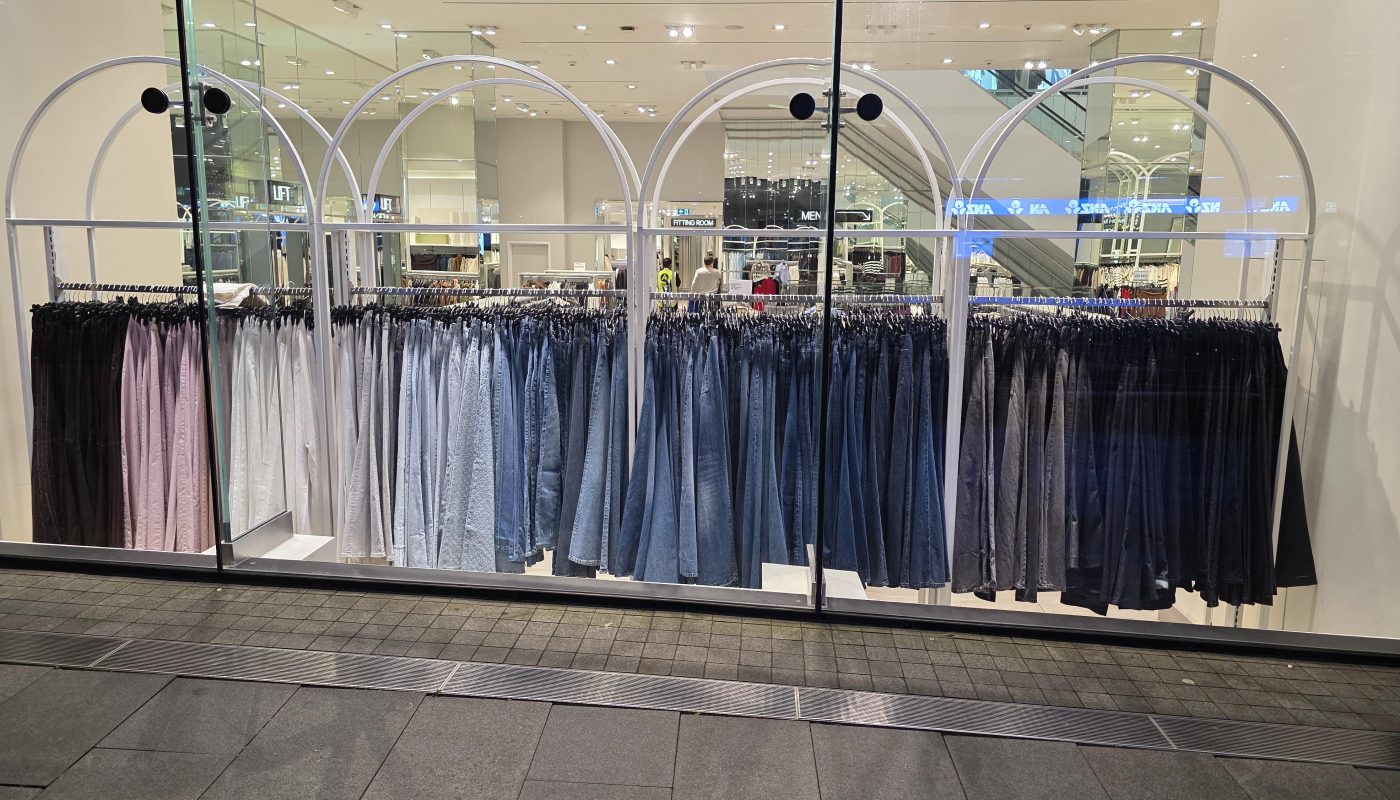
Spotted by yours truly at an H&M.
As I rummaged through my closet the other day, I stumbled upon an old pair of jeans that I hadn’t worn in years. What caught my attention wasn’t the faded logo or the worn-out knees, but the beautiful colour gradient that had developed over time. The once-deep blue hue had given way to a mesmerizing spectrum of lighter shades, each one telling a story of its own. It got me wondering – what’s behind this fascinating phenomenon, and how do jeans manage to transform into these stunning works of art?
The Science of Fading
The colour gradient on jeans is a result of a process called fading, which occurs when the indigo dye used to colour the fabric breaks down over time. This breakdown is caused by a combination of factors, including sunlight, washing, and wear. When exposed to sunlight, the indigo molecules absorb the ultraviolet radiation and start to degrade, resulting in a loss of colour intensity. Similarly, every time we wash our jeans, the dye is slowly stripped away, revealing the underlying white fabric. The fascinating part is that this fading process is not uniform – it’s influenced by the way we wear our jeans, with areas that experience more friction, like the thighs and knees, fading faster than others.
A Brief History of Indigo
Indigo, the dye responsible for the iconic blue colour of jeans, has a rich and fascinating history that dates back thousands of years. Derived from the leaves of the indigo plant, this vibrant dye was once a highly prized commodity, with ancient civilizations like the Egyptians and Greeks using it to colour their fabrics. The process of extracting indigo from the plant was labor-intensive and time-consuming, making it a luxury only the wealthy could afford. It wasn’t until the Industrial Revolution, with the introduction of synthetic indigo, that the dye became more widely available and jeans began to take on their characteristic blue hue.
From Function to Fashion
Jeans, with their distinctive colour gradient, have come a long way from their humble beginnings as workwear. Originally designed for miners and labourers, jeans were valued for their durability and practicality, not their style. However, as the years went by, jeans began to transcend their functional roots and become a fashion statement. The unique colour gradient that develops over time has become an integral part of the jeans’ appeal, with many designers and manufacturers deliberately distressing and fading their products to create a vintage, worn-in look. Whether you’re a fan of lightly faded boyfriend jeans or heavily distressed skinnies, there’s no denying the allure of a beautifully worn pair of jeans.
As I put my old jeans back in the closet, I couldn’t help but feel a sense of appreciation for the intricate dance of science, history, and culture that had transformed them into the stunning, one-of-a-kind piece of art they are today. Whether you’re a denim aficionado or just someone who loves a good pair of jeans, the colour gradient is a reminder that even the most mundane objects can hold a world of fascination and beauty, if we only take the time to look.