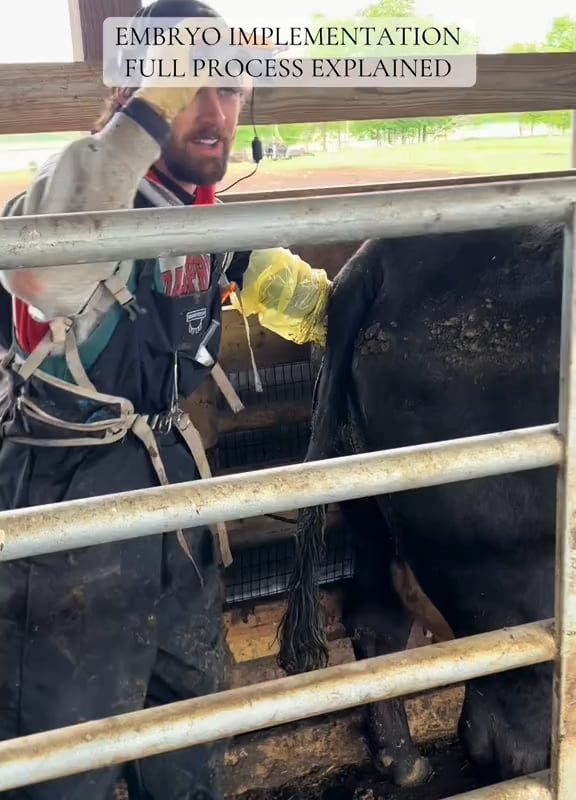
Embryo transfer in cattle, where an embryo from a genetically “elite” cow is implanted into a surrogate cow. Since cows only produce milk after pregnancy, dairy farms typically use artificial insemination as well as hormones to synchronize the herd’s reproductive cycles.
As I delved into the world of cattle farming, I stumbled upon a fascinating technique that has revolutionized the dairy industry – embryo transfer in cattle. It’s a process where an embryo from a genetically “elite” cow is implanted into a surrogate cow, allowing farmers to produce high-quality milk while preserving the genetic lineage of their prized cows. But what’s even more intriguing is the reason behind this practice. You see, cows only produce milk after pregnancy, which means dairy farms need to ensure their herd is constantly reproducing to maintain milk production. This is where artificial insemination and hormone synchronization come into play, allowing farmers to control the reproductive cycles of their cows and maximize milk production.
The Science Behind Embryo Transfer
Embryo transfer is a complex process that requires careful planning and execution. It begins with the selection of a genetically “elite” cow, which is typically chosen for its high milk production, desirable traits, and strong genetic lineage. The cow is then artificially inseminated, and after a week, the embryo is flushed out and transferred to a surrogate cow. The surrogate cow is usually a lower-genetic-merit cow that is capable of carrying the pregnancy to term. This process allows farmers to produce multiple offspring from a single elite cow, increasing the chances of preserving its desirable traits. The science behind embryo transfer is remarkable, and it’s a testament to human ingenuity and our ability to manipulate reproductive biology to achieve desired outcomes.
The Role of Artificial Insemination and Hormone Synchronization
Artificial insemination and hormone synchronization are crucial components of modern dairy farming. By using artificial insemination, farmers can control the genetic quality of their herd and reduce the risk of disease transmission. Hormone synchronization, on the other hand, allows farmers to control the reproductive cycles of their cows, ensuring that they are all pregnant at the same time. This synchronization is achieved through the use of hormones that regulate the cows’ estrous cycles, allowing farmers to breed them at the optimal time. This practice not only increases milk production but also reduces the stress associated with natural breeding. It’s a remarkable example of how science and technology can be used to improve agricultural practices and increase food production.
The Future of Dairy Farming
The use of embryo transfer, artificial insemination, and hormone synchronization has transformed the dairy industry, allowing farmers to produce high-quality milk while preserving the genetic lineage of their prized cows. As the global demand for dairy products continues to rise, it’s likely that these techniques will become even more prevalent. However, it’s also important to consider the welfare of the animals involved and ensure that these practices are carried out in a humane and sustainable manner. As I concluded my exploration of embryo transfer in cattle, I couldn’t help but feel a sense of awe at the complexity and sophistication of modern dairy farming. It’s a fascinating world that requires careful planning, precise science, and a deep understanding of animal biology. And as I sat down to enjoy a cold glass of milk, I couldn’t help but appreciate the incredible journey it took to get from the cow to my table.