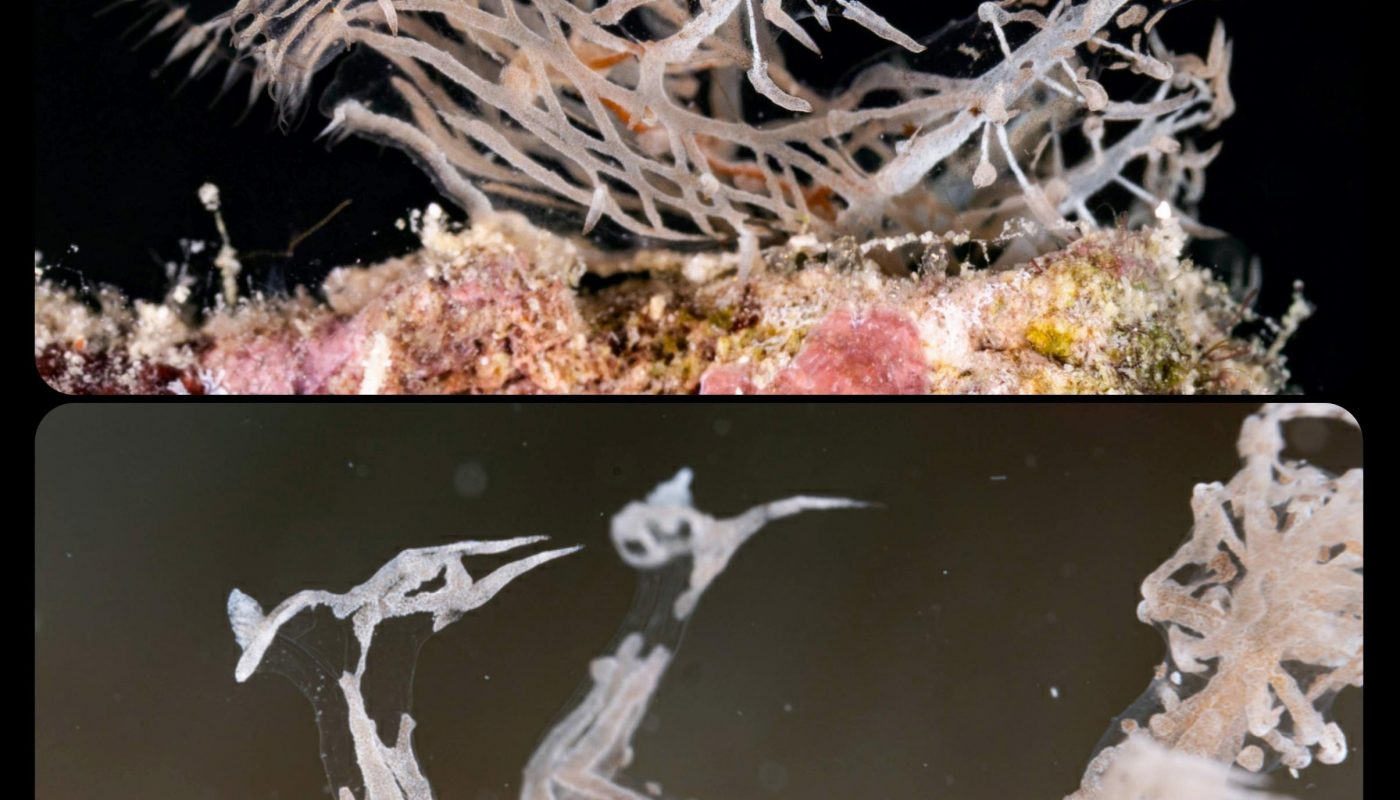
The Phantom Nudibranch: this sea slug’s body is almost completely transparent, revealing the delicate network of organs within
Title: The Phantom Nudibranch: Nature’s Invisible Marvel of the Ocean
Meta Description: Discover the Phantom Nudibranch, a see-through sea slug whose transparent body reveals its intricate internal organs. Explore its habitat, survival strategies, and unique role in marine ecosystems.
The Phantom Nudibranch: A Living Glass Sculpture of the Sea
Imagine diving into the ocean’s depths and encountering a creature so translucent, it seems almost ghostly—a living mosaic of beating hearts, spiraling digestive tracts, and branching nerves, all visible through its crystalline skin. This is the Phantom Nudibranch (Phylliroe bucephala), a spellbinding sea slug whose transparent body offers a mesmerizing window into the inner workings of marine life. In this article, we unveil the secrets of one of the ocean’s most ethereal inhabitants.
What is a Phantom Nudibranch?
Nudibranchs, often called “sea slugs,” are a group of soft-bodied mollusks renowned for their vibrant colors and striking forms. But the Phantom Nudibranch defies expectations. Unlike its boldly patterned relatives, this species is almost entirely transparent, resembling a delicate glass figurine adrift in the water. Its invisibility isn’t just a curiosity—it’s a masterstroke of survival in the open ocean.
Anatomy of Transparency: A Closer Look
The Phantom Nudibranch’s body is a biological marvel. Here’s what makes it unique:
- See-Through Skin: Its translucent tissues allow sunlight to pass through, minimizing its shadow and making it nearly invisible to predators below.
- Visible Organs: The heart, digestive gland, and nerve cords are clearly visible, arranged like intricate lacework beneath the surface.
- Streamlined Shape: Its flattened, ribbon-like body (up to 5 cm long) aids in graceful, eel-like swimming—a rarity among bottom-dwelling nudibranch cousins.
Scientists believe this transparency evolved as camouflage in the predator-rich open ocean, where hiding spots are scarce.
Habitat: Where to Find the Ocean’s Ghost
Phantom Nudibranchs drift in the pelagic zone—the vast, sunlit open waters far from coasts. They’re found globally in tropical and temperate seas, from the Mediterranean to the Pacific. Unlike most nudibranchs, they spend their lives swimming rather than crawling on reefs. Look for them near the surface at night, where they rise to feed.
Diet and Behavior: The Art of Survival
Transparency isn’t the Phantom’s only trick. Its behavior is equally fascinating:
- Carnivorous Appetite: It preys on jellyfish and siphonophores (like the Portuguese man o’ war), nibbling tentacles with specialized, concealed mouthparts.
- Stealthy Movement: Floating with currents, it mimics debris to avoid detection.
- Bioluminescent Clues: Some reports suggest it emits faint blue light, possibly to confuse predators or attract mates.
Ecological Importance: A Delicate Balance
While not a keystone species, the Phantom Nudibranch plays a subtle role in marine food webs:
- Jellyfish Control: By consuming jellyfish, it helps regulate their populations.
- Prey for Larger Species: Small fish and seabirds feed on juvenile Phantoms.
- Bioindicator: Its sensitivity to water quality makes it a potential marker for ocean health.
Conservation: Invisible but Vulnerable
Like all marine life, Phantom Nudibranchs face threats from plastic pollution, climate change, and overfishing. While not currently endangered, their pelagic habitat makes them hard to study. Protecting ocean ecosystems ensures these “living stained-glass windows” endure for future generations.
Where to Observe Phantom Nudibranchs
Spotting this elusive species requires patience and luck:
- Night Dives: Join guided dives in regions like Hawaii, the Caribbean, or Australia.
- Plankton Nets: Marine biologists often capture them during plankton surveys.
- Aquariums: Some facilities, like Monterey Bay Aquarium, display pelagic nudibranchs in specialized exhibits.
Conclusion: A Testament to Ocean Mystery
The Phantom Nudibranch is more than a scientific oddity—it’s a reminder of the ocean’s boundless creativity. Its glass-like form challenges our understanding of survival, proving that sometimes, invisibility is the ultimate superpower. As we continue to explore the seas, this translucent marvel urges us to look closer, deeper, and with wonder.
FAQ About Phantom Nudibranchs
- Are they poisonous?
No—unlike some colorful nudibranchs, Phantoms lack toxins and rely on stealth. - How long do they live?
Their lifespan is short, likely a few months to a year. - Can they be kept in home aquariums?
No. Their pelagic needs and delicate nature make them unsuitable for captivity.
Dive deeper into ocean wonders—share this article to spread awareness of nature’s hidden treasures! 🌊✨