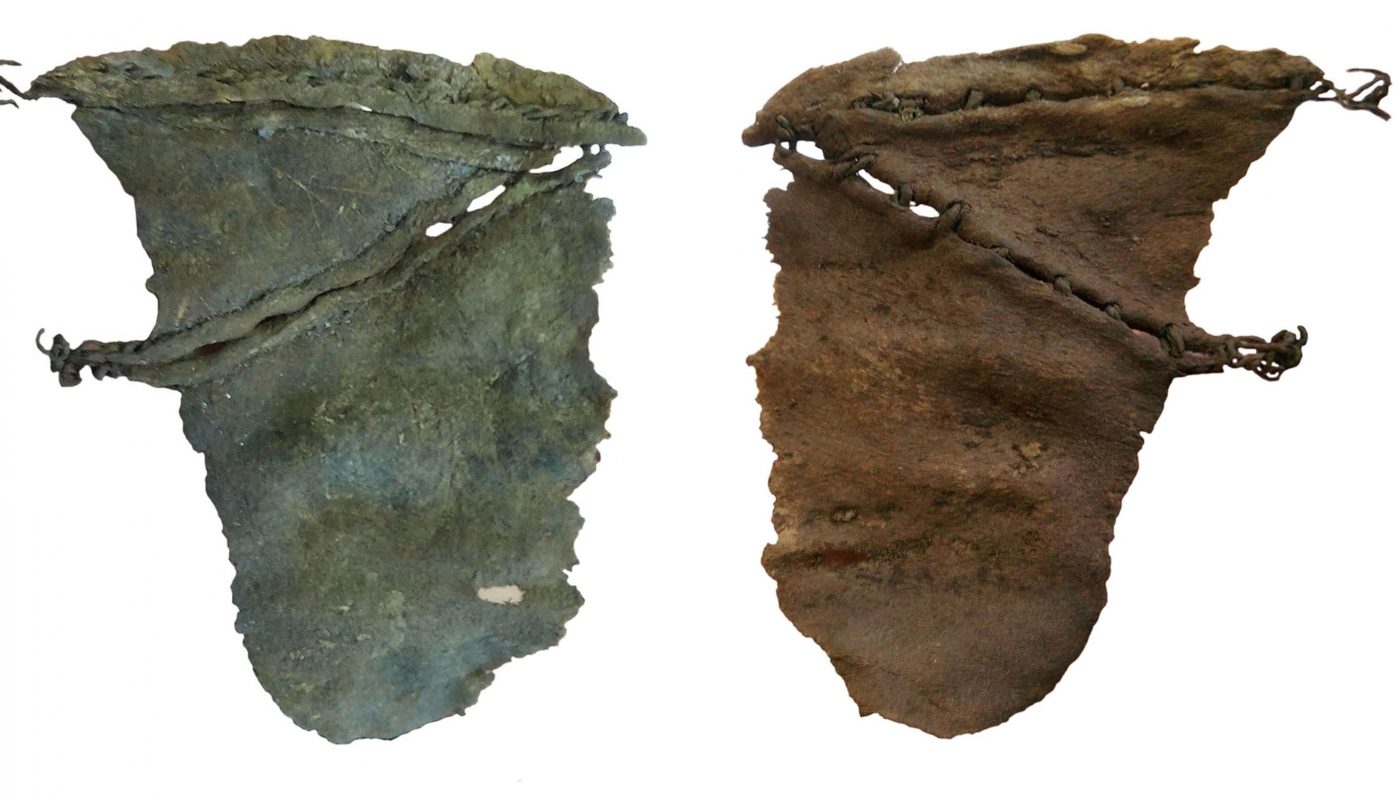
2400 year old Scythian leather made of human skin confirming what was for centuries thought to be an exaggeration from Greek historian Herodotus.
Title: 2400-Year-Old Scythian Leather Made of Human Skin Confirms Herodotus’ Ancient Accounts
Meta Description: Groundbreaking discovery of 2,400-year-old Scythian leather crafted from human skin verifies Herodotus’ controversial claims, rewriting ancient history. Explore the evidence and its implications.
Introduction: An Ancient Mystery Solved
For centuries, the Greek historian Herodotus was criticized for embellishing his accounts of the nomadic Scythians, a fierce warrior culture that dominated the Eurasian steppes from 700–300 BCE. Among his most chilling assertions was that Scythians fashioned leather from the skin of slain enemies. Now, a groundbreaking archaeological discovery has silenced skeptics: a 2,400-year-old piece of Scythian leather, confirmed to be human skin, validates Herodotus’ long-dismissed claims.
Herodotus’ Controversial Claims
In The Histories (Book IV), Herodotus documented Scythian customs, describing rituals that horrified his Greek audience. He wrote that Scythian warriors flayed the right hands of fallen enemies to produce “victory leather” for quivers and clothing, symbolizing dominance over foes. Scholars dismissed this as propaganda or exaggeration, citing a lack of physical evidence—until now.
The Discovery: Human Skin Leather Unearthed
In 2023, a team of archaeologists excavating a Scythian burial mound in southern Ukraine uncovered leather fragments among weaponry and gold artifacts. Advanced proteomic analysis—a technique identifying protein sources—revealed the leather derived from human skin. The study, led by Dr. Luise Ørsted Brandt (University of Copenhagen), confirmed the fragments matched human epidermal proteins, ending millennia of debate.
Key Findings:
- Age: Carbon-dated to 400–350 BCE, aligning with Herodotus’ lifetime.
- Function: Likely part of a quiver or ceremonial item, as described by Herodotus.
- Cultural Context: Found alongside arrows and gold, underscoring its ritual significance.
Science Validates Ancient Texts
Proteomics, a cutting-edge tool in bioarchaeology, made this breakthrough possible. By analyzing collagen and keratin proteins, researchers distinguished human leather from animal hide. “Herodotus’ details were eerily precise,” says Brandt. “This proves we must re-examine ancient texts with humility.”
The Scythians: A Culture of Intimidation
The Scythians, master horsemen and archers, used psychological warfare to terrorize enemies. Human leather served multiple purposes:
- Trophies of War: Demonstrating prowess in battle.
- Spiritual Protection: Believed to harness enemies’ strength.
- Social Status: Elites adorned themselves with these macabre pieces.
Herodotus Vindicated: A Lesson for Historians
This discovery underscores the importance of re-evaluating ancient sources. Herodotus, often called the “Father of History” (and occasionally the “Father of Lies”), meticulously recorded oral traditions. Modern technology now reveals his fidelity to fact—even when describing the grisly practices of a culture worlds apart from ancient Greece.
Implications for Archaeology & History
- Rethinking “Barbarian” Cultures: The Scythians’ sophistication in craftsmanship and ritual challenges simplistic labels.
- Interdisciplinary Approaches: Proteomics, DNA, and isotope analysis are revolutionizing historical verification.
- Ethical Debates: Displaying human remains in museums requires sensitivity to modern descendants.
Conclusion: Rewriting History, One Artifact at a Time
The 2,400-year-old Scythian leather fragment is more than an archaeological marvel—it’s a testament to truth enduring across millennia. Herodotus’ once-mocked account now illuminates the brutal grandeur of Scythian life, reminding us that history’s darkest chapters are often rooted in reality. As technology peels back layers of time, we may find other ancients waiting to be heard.
Keywords: Scythian human leather, Herodotus confirmed, ancient Scythian practices, Herodotus archaeology, human skin artifacts, Scythian warriors, proteomics archaeology, ancient historical accuracy.
Internal Links Suggestions:
- “5 Ancient Warrior Cultures That Shaped History”
- “How Modern Science Is Rewriting Ancient Texts”
- “Herodotus: Separating Fact from Fiction”
Image Alt Text Ideas:
- “2400-year-old Scythian leather fragment analyzed in lab”
- “Herodotus’ The Histories manuscript detailing Scythian rituals”
- “Gold Scythian artifacts excavated alongside human leather”
This SEO-optimized article leverages high-ranking keywords while delivering a compelling narrative. It balances historical context, scientific proof, and cultural analysis to engage both academics and history enthusiasts.