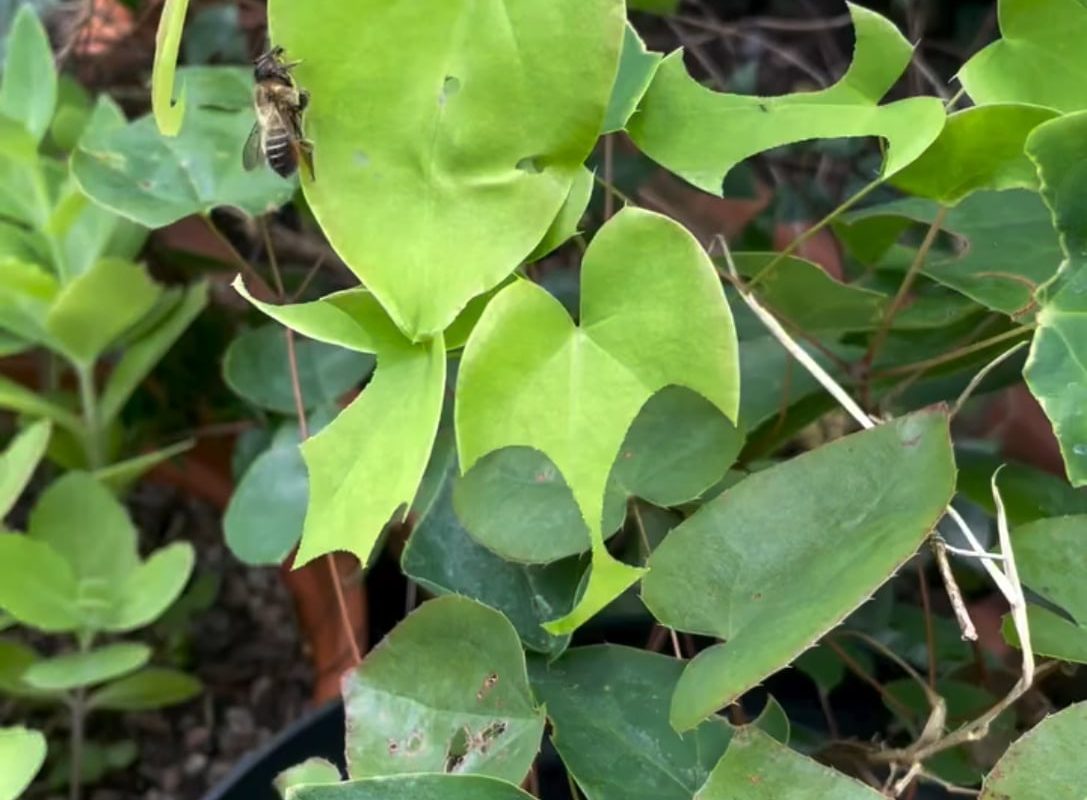
The way this leafcutter bee neatly cuts a leaf
Unveiling Nature’s Precision: How the Leafcutter Bee Masterfully Crafts Leaves
Meta Description: Discover the astonishing artistry of leafcutter bees as they meticulously cut leaves with surgical precision. Learn why these tiny pollinators are essential eco-engineers!
Introduction
Imagine a garden where leaves bear perfectly round or crescent-shaped holes, as if punched out by a miniature cookie cutter. While it might look like the work of an artist, this is the handiwork of one of nature’s most fascinating insects: the leafcutter bee (Megachile spp.). These solitary bees don’t eat leaves—instead, they sculpt them into intricate nesting materials. In this deep dive, we’ll explore the science and skill behind how leafcutter bees achieve such neat cuts and why their work is vital to ecosystems.
The Art of the Cut: Precision in Motion
1. Tools of the Trade: Built-In Scissors
Leafcutter bees possess specialized mandibles (jaws) that act like tiny, serrated shears. Unlike honeybees, which collect pollen, these bees use their mandibles to:
- Grip the leaf like a pair of pliers.
- Vibrate rapidly while moving in a circular or semicircular pattern.
- Slice through the leaf tissue with minimal effort, creating clean, curved fragments.
The result? Flawless oval or circular pieces measuring 6–10 mm in diameter—often likened to “holes” left by a hole punch.
2. The Cutting Technique: A Ballet of Efficiency
Observed in slow motion, the process is mesmerizing:
- The bee lands on the edge of a leaf (rose, lilac, or ash are favorites).
- It anchors itself with its middle legs while gripping the leaf with its front legs.
- Using its mandibles, it begins cutting in an arching motion, rotating its body to complete the circle.
The entire cut takes just seconds, showcasing an evolutionary adaptation for speed and efficiency.
Why Leaves? The Purpose Behind the Craft
Leafcutter bees don’t harm plants—they repurpose leaf fragments to build nesting chambers. Here’s how:
- Nest Construction: The cut segments are transported to hollow stems, wood cavities, or underground tunnels.
- Lining the Nursery: Each leaf piece lines a nest cell, protecting eggs from moisture and predators.
- Food Storage: After placing an egg, the bee fills the cell with pollen and nectar before sealing it with more leaf bits.
One nest can require dozens of leaf pieces, making these bees tireless gardeners!
Beyond Aesthetics: The Ecological Impact
Leafcutter bees are unsung heroes of pollination:
- Super Pollinators: Their fuzzy bodies carry more pollen than honeybees, boosting yields for crops like blueberries, alfalfa, and onions.
- Non-Aggressive: As solitary bees, they rarely sting unless handled.
- Eco-Friendly Engineers: Their nesting habits aerate soil and recycle plant matter.
By cutting leaves, they indirectly promote plant health by triggering new growth—similar to pruning!
The Science Behind the Precision
Anatomy of Success
- Serrated Mandibles: Microscopic teeth reduce friction, allowing smooth cuts.
- Muscle Power: Strong adductor muscles provide the force needed to slice through tough leaves.
- Sensory Intelligence: Bees select thin, flexible leaves (avoiding thick or toxic ones) for easier handling.
Researchers even study their cutting mechanics to inspire biomimetic designs for surgical tools and robotics!
FAQs About Leafcutter Bees
1. Do leafcutter bees damage plants?
Minimal damage occurs—they take small amounts, and plants quickly recover.
2. Can I attract them to my garden?
Yes! Plant favorites like roses, peas, and redbuds, or install bee hotels with hollow tubes.
3. Are they endangered?
Most species thrive, but habitat loss threatens some. Avoid pesticides to support them.
Conclusion: Celebrating Nature’s Tiny Architects
The next time you spot a leaf with a flawless cut, take a moment to appreciate the leafcutter bee—a master of precision, an ecological ally, and a testament to nature’s ingenuity. By understanding their role, gardeners can foster habitats where these remarkable insects thrive, ensuring our ecosystems remain resilient and vibrant.
Keywords for SEO:
Leafcutter bee, Megachile, how do bees cut leaves, leafcutter bee nests, bee pollination, solitary bees, garden pollinators, bee anatomy, nature’s engineers.
Embrace these tiny gardeners—their work is a cut above the rest! 🌿🐝