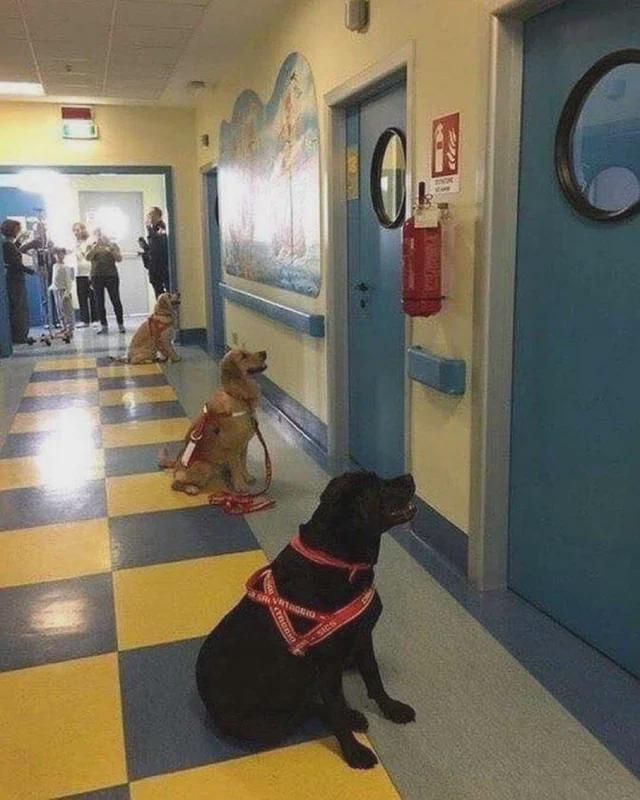
A group of therapy dogs waiting to start their shift at a children’s hospital.
As I walked into the children’s hospital, I couldn’t help but notice a group of dogs gathered near the entrance, their tails wagging excitedly as they waited to start their shift. These weren’t just any ordinary dogs – they were therapy dogs, specially trained to provide comfort and affection to the young patients inside. I was intrigued by the sight of these canine caregivers, and I couldn’t wait to learn more about the important work they do. The dogs, ranging from tiny Chihuahuas to gentle Great Danes, all wore matching vests with the hospital’s logo emblazoned on them, and their owners stood by, chatting and preparing them for the day ahead.
The Power of Animal-Assisted Therapy
Animal-assisted therapy, or AAT, has been shown to have a profound impact on the physical and emotional well-being of patients, particularly children. The presence of a therapy dog can help to reduce stress and anxiety, promote relaxation, and even alleviate symptoms of pain. But what makes these dogs so special? It all starts with their training, which teaches them to be calm and gentle in the presence of strangers, and to respond to commands in a variety of situations. The dogs are also carefully screened for temperament and health, to ensure they are suitable for the demands of therapy work. As I watched, the dogs were led into the hospital, where they would spend the day visiting with patients, playing with them, and providing comfort and companionship.
The Science Behind the Bond
So why do therapy dogs have such a profound impact on the children they visit? The answer lies in the science of human-animal bonding. When we interact with dogs, our bodies release oxytocin, a hormone that promotes feelings of relaxation and trust. At the same time, the dogs are also experiencing a release of oxytocin, which strengthens the bond between them and their human companions. This bond is especially important for children, who may be experiencing fear, anxiety, or loneliness during their hospital stay. The presence of a therapy dog can help to break down these barriers, providing a sense of comfort and security that is essential for healing. As I observed the dogs at work, I was struck by the deep connections they formed with the children, and the way they seemed to sense exactly what each child needed.
A Day in the Life of a Therapy Dog
As the day went on, I had the chance to follow one of the therapy dogs, a gentle Labrador Retriever named Max, as he made his rounds. Max visited with children of all ages, from tiny babies in the neonatal unit to teenagers undergoing treatment for cancer. Everywhere he went, he was met with smiles and hugs, and he lapped up the attention with his tail wagging happily. Despite the challenges of his work, Max seemed to take it all in stride, moving from room to room with a calm and gentle demeanor that put everyone at ease. As I watched him work, I was struck by the sense of purpose and joy that radiated from him, and I knew that he was exactly where he was meant to be.
As I left the hospital at the end of the day, I felt grateful to have had the chance to witness the incredible work of these therapy dogs. They may not have been doctors or nurses, but they were certainly healers, providing a kind of care and comfort that was just as essential to the children’s recovery. And as I looked back at the group of dogs, now tired but happy after a day’s work, I knew that I would never forget the impact they had on me, and the important role they play in the lives of those they touch.