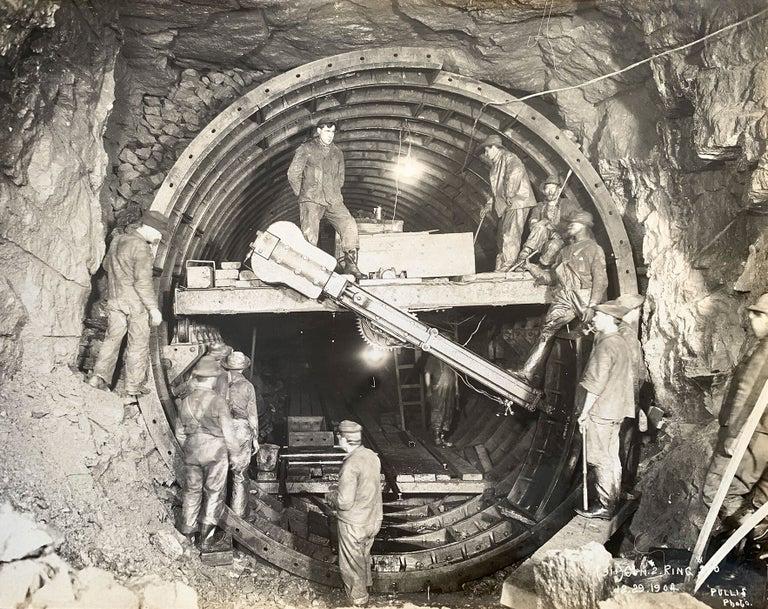
Workers building the East River subway tunnel between Manhattan and Brooklyn, 1903–1907
Imagine being a worker in the early 20th century, tasked with building a tunnel that would connect two of the most populous boroughs in New York City – Manhattan and Brooklyn. The East River subway tunnel, constructed between 1903 and 1907, was a monumental undertaking that required innovative engineering, meticulous planning, and sheer determination. As we delve into the fascinating story behind this iconic tunnel, we’ll uncover the challenges, triumphs, and remarkable feats of human ingenuity that made it all possible.
The Engineering Marvel
The East River subway tunnel was a groundbreaking project that pushed the boundaries of engineering and construction. At the time, building a tunnel under a major waterway like the East River was a daunting task, requiring the development of new techniques and technologies. The workers had to contend with treacherous underwater conditions, including strong currents, muddy sediment, and water pressure that could crush a tunnel. To overcome these challenges, the engineers designed a tunnel that would be built using a “cut-and-cover” method, where a trench was dug and then covered with a steel plate. The tunnel was also divided into sections, with each section being built separately and then connected to the others. This innovative approach allowed the workers to build the tunnel in a relatively short period, considering the complexity of the project.
Working Conditions and Challenges
Working on the East River subway tunnel was a grueling and often perilous experience for the laborers involved. The conditions were harsh, with workers facing extreme temperatures, humidity, and darkness. The air was thick with the smell of mud, sweat, and smoke from the equipment, making it difficult for the workers to breathe. Additionally, the risk of accidents was ever-present, with workers exposed to falling debris, explosions, and even drowning. Despite these challenges, the workers persevered, driven by the promise of a steady paycheck and the knowledge that they were building something that would revolutionize the way people moved around the city. The construction of the tunnel also required the use of newly developed technologies, such as the pneumatic caisson, which allowed workers to build the tunnel in a dry environment, protected from the water pressure.
A Lasting Legacy
The completion of the East River subway tunnel in 1907 marked a major milestone in the development of New York City’s transportation system. The tunnel connected the bustling boroughs of Manhattan and Brooklyn, facilitating the growth of commerce, industry, and culture. Today, the tunnel remains an essential part of the city’s infrastructure, with millions of commuters relying on it every day. As we look back on the remarkable story of the East River subway tunnel, we’re reminded of the power of human ingenuity and determination. The workers who built this tunnel were true pioneers, paving the way for future generations of engineers, architects, and laborers. Their legacy continues to inspire us, a testament to the enduring spirit of innovation and progress that defines our great city.
As we reflect on the incredible story of the East River subway tunnel, we’re struck by the realization that even the most mundane aspects of our daily lives are often the result of extraordinary efforts and achievements. The next time you’re rushing to catch a train or simply enjoying the sights and sounds of the city, take a moment to appreciate the unsung heroes who built the tunnels, bridges, and infrastructure that make it all possible. Their story is a reminder that even the most complex and ambitious projects can be achieved with hard work, creativity, and a willingness to push beyond the boundaries of what’s thought possible.