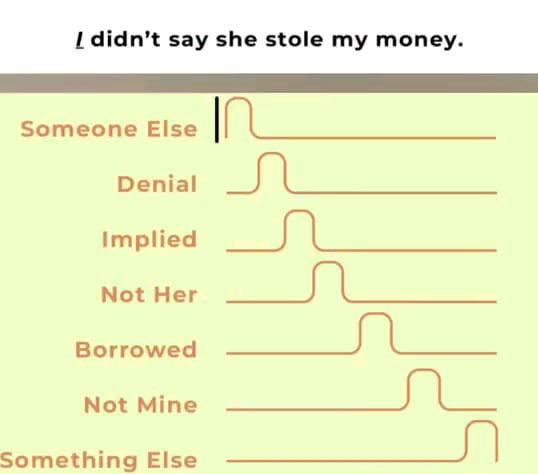
Intonation changes meaning. Thats why texting has so many miscommunications. People choose the tone they want to hear.
Have you ever sent a text message that was completely misinterpreted by the recipient? You know, one of those moments where you’re like “wait, that’s not what I meant at all!” It’s as if the words on the screen took on a life of their own, and the tone you intended to convey got lost in translation. This phenomenon is more common than you think, and it’s all because of the way our brains process language. You see, intonation – the rise and fall of our voices when we speak – plays a huge role in conveying meaning, and when that’s stripped away, things can get pretty confusing.
The Power of Intonation
When we speak, our voices dance with inflection, conveying emotions and attitudes that can completely flip the meaning of a sentence. Take the phrase “oh, great” for example. Said with a falling intonation, it’s a genuine expression of enthusiasm. But with a rising intonation, it’s sarcasm – and a very different story. This is because our brains are wired to pick up on these subtle cues, using them to infer the speaker’s intent. It’s an incredible system, really – one that allows us to convey nuance and complexity with just a few words. But when we text, that nuance gets lost, leaving room for misinterpretation.
The Psychology of Texting
So, why do we so often misinterpret texts? It’s not just because of the lack of intonation – it’s also because our brains are wired to fill in the gaps. When we read a text, we’re using our prior knowledge and expectations to infer the tone and intent behind the words. And here’s the thing: we tend to choose the tone we want to hear. If we’re feeling anxious or stressed, we might read a text as accusatory or critical, even if that’s not what the sender intended. It’s a kind of emotional confirmation bias, where we see what we want to see – or in this case, hear what we want to hear.
Beyond the Screen
The implications of this are pretty fascinating. For one, it highlights the importance of communication in our digital age. When we’re texting or emailing, we need to be extra mindful of the words we choose, and the tone we’re conveying. It’s not just about being clear and concise – it’s about being aware of the emotional nuances that can get lost in translation. And it’s not all bad news – by being more thoughtful and intentional in our digital communication, we can actually build stronger, more empathetic relationships. So the next time you’re texting with a friend or loved one, take a moment to consider the tone you’re conveying – and the tone they might be hearing.
As we navigate the complexities of digital communication, it’s worth remembering that language is a powerful tool – one that can be used to build bridges or create misunderstandings. By being more aware of the role intonation plays in conveying meaning, we can become more thoughtful and effective communicators. And who knows – we might just avoid a few miscommunications along the way.