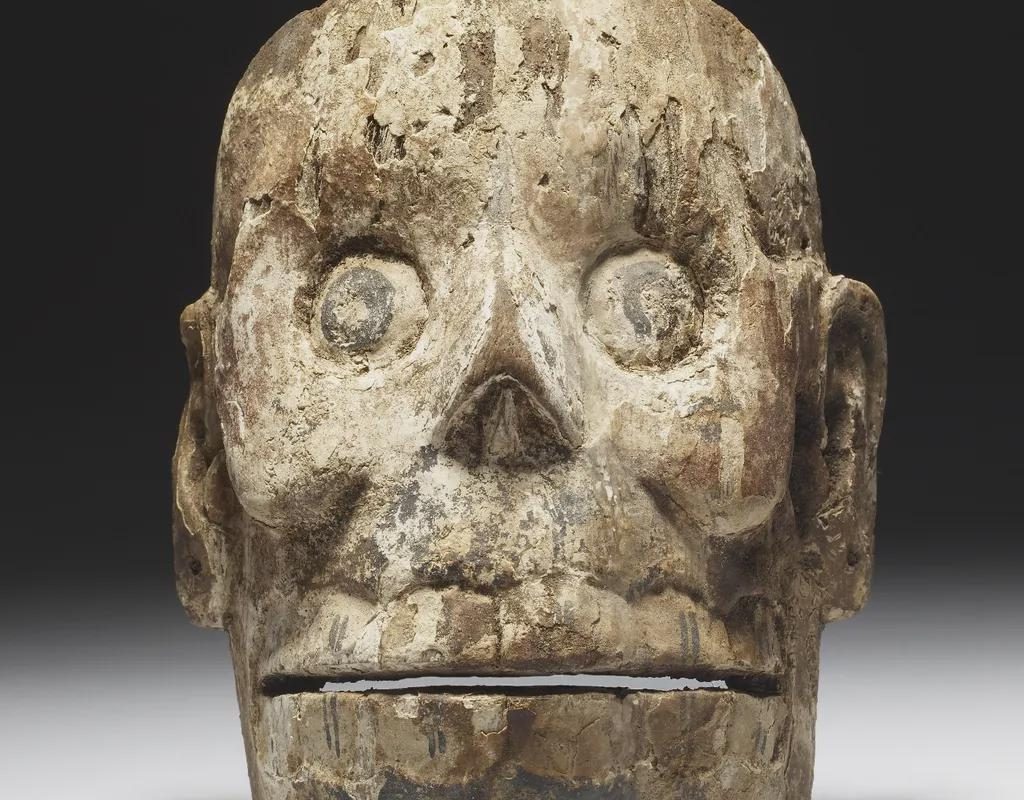
The 500-year-old wooden mask of Mictlantecuhtli, the Aztec god of death. He wore a necklace of human eyeballs and was described as being ready to tear apart the dead entering his realm.
The mere mention of Mictlantecuhtli, the Aztec god of death, sends shivers down the spine. This fearsome deity was often depicted wearing a necklace of human eyeballs, a haunting image that has captivated art lovers and historians alike for centuries. But one artifact, in particular, has shed new light on the mystique surrounding this god – a 500-year-old wooden mask that has been painstakingly preserved and studied by experts. The mask is an exquisite example of Aztec craftsmanship, with intricate details that reveal the complex mythology of the time. As we delve into the story behind this mask, we begin to unravel the fascinating tale of Mictlantecuhtli and the significance he held in Aztec culture.
The God of Death
Mictlantecuhtli was the ruler of the underworld, a realm known as Mictlan, where the dead would journey after leaving the mortal world. He was often depicted as a skeletal figure, wearing a necklace of human eyeballs, which symbolized his power to see into the souls of the deceased. The Aztecs believed that Mictlantecuhtli was a fierce and unforgiving god, who would tear apart the dead as they entered his realm, only to reassemble them and guide them through the treacherous journey to the afterlife. This complex and often contradictory nature of Mictlantecuhtli has sparked intense curiosity among scholars, who seek to understand the role he played in Aztec mythology.
The Wooden Mask
The 500-year-old wooden mask of Mictlantecuhtli is a remarkable artifact that has survived the test of time. Crafted from a single piece of wood, the mask is adorned with intricate carvings and symbols that reflect the god’s association with death and the underworld. The mask is surprisingly well-preserved, considering its age, and its discovery has provided valuable insights into the art and culture of the Aztecs. By studying the mask, experts have been able to learn more about the materials and techniques used by Aztec artisans, as well as the significance of Mictlantecuhtli in Aztec mythology.
Unraveling the Mystique
As we continue to study the wooden mask of Mictlantecuhtli, we begin to unravel the mystique surrounding this enigmatic god. The mask is more than just a relic of a bygone era – it is a window into the complex and often contradictory world of Aztec mythology. By examining the symbols and carvings on the mask, we gain a deeper understanding of the Aztecs’ beliefs about death and the afterlife. The mask also serves as a reminder of the enduring power of art and culture to captivate and inspire us, even centuries after its creation. As we gaze upon the haunting visage of Mictlantecuhtli, we are reminded of the profound impact that this god had on the Aztecs, and the lasting legacy he has left behind.
The story of Mictlantecuhtli and his wooden mask is a fascinating tale that continues to captivate art lovers and historians alike. As we delve deeper into the mythology and symbolism surrounding this god, we begin to appreciate the complexity and richness of Aztec culture. The 500-year-old wooden mask is a remarkable artifact that has shed new light on the mystique of Mictlantecuhtli, and its discovery has inspired a new generation of scholars and enthusiasts to explore the fascinating world of Aztec mythology. Whether you’re an art lover, a historian, or simply someone who is curious about the mysteries of the past, the story of Mictlantecuhtli and his wooden mask is sure to leave you spellbound and eager to learn more.