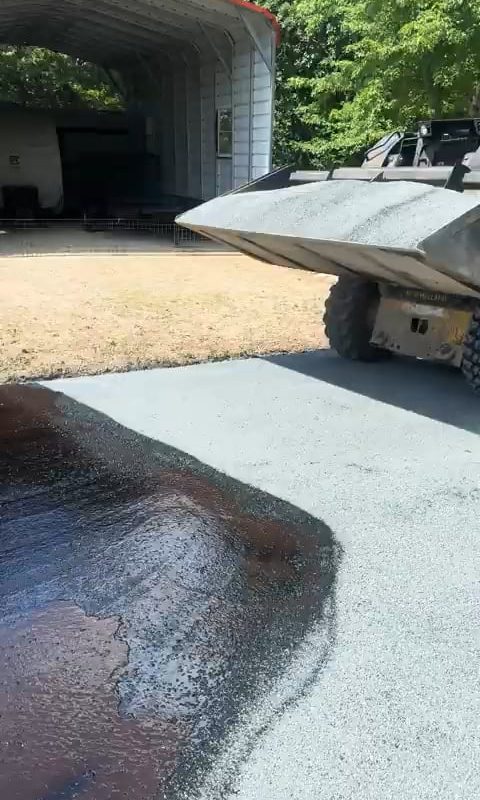
This skid steer laying down chipped rock
As I watched this skid steer laying down chipped rock, I couldn’t help but feel a sense of fascination with the process. The way the machine glided effortlessly across the ground, dispersing the rock in a uniform layer, was almost mesmerizing. But what really caught my attention was the story behind this humble machine and the important role it plays in our daily lives. From construction sites to landscaping projects, skid steers like this one are the unsung heroes of the building world, working tirelessly behind the scenes to create the infrastructure and environments we enjoy.
The History of Skid Steers
The skid steer, also known as a skid-steer loader, has a rich history that dates back to the 1950s. The first skid steers were developed by two brothers, Cyril and Louis Keller, who owned a farm in Minnesota. They were looking for a way to simplify the process of loading and moving materials around their farm, and thus the skid steer was born. The early models were simple, with a basic loader and no cab, but they quickly evolved to become the versatile machines we know today. With their ability to maneuver in tight spaces and perform a variety of tasks, skid steers have become an essential tool in many industries.
The Science of Chipped Rock
So, what’s the story behind the chipped rock being laid down by our skid steer friend? Chipped rock, also known as decomposed granite, is a popular material used in construction and landscaping projects. It’s made by crushing granite into small pieces, which are then screened to remove any dust or debris. The resulting material is a stable, porous, and durable surface that’s perfect for roads, pathways, and other applications. The science behind chipped rock is fascinating – the porous nature of the material allows it to absorb and filter water, reducing runoff and erosion. This makes it an ideal choice for areas with heavy rainfall or where water management is a concern.
A Closer Look at the Process
As I watched the skid steer at work, I was struck by the precision and care with which it laid down the chipped rock. The machine’s operator was skilled and experienced, carefully adjusting the flow of material to achieve a uniform layer. The process is not just about dumping rock on the ground – it requires a deep understanding of the material, the terrain, and the desired outcome. The skid steer’s ability to maneuver in tight spaces and make precise adjustments makes it the perfect tool for this job. As the machine finished its work and drove away, I couldn’t help but feel a sense of appreciation for the important role it plays in creating the world around us.
As I walked away from the construction site, I felt grateful for the opportunity to learn about the fascinating world of skid steers and chipped rock. It’s amazing how often we overlook the humble machines and materials that make our daily lives possible. The next time you see a skid steer at work, take a moment to appreciate the rich history, science, and skill that goes into its operation – you might just find yourself fascinated by the story behind this incredible machine.