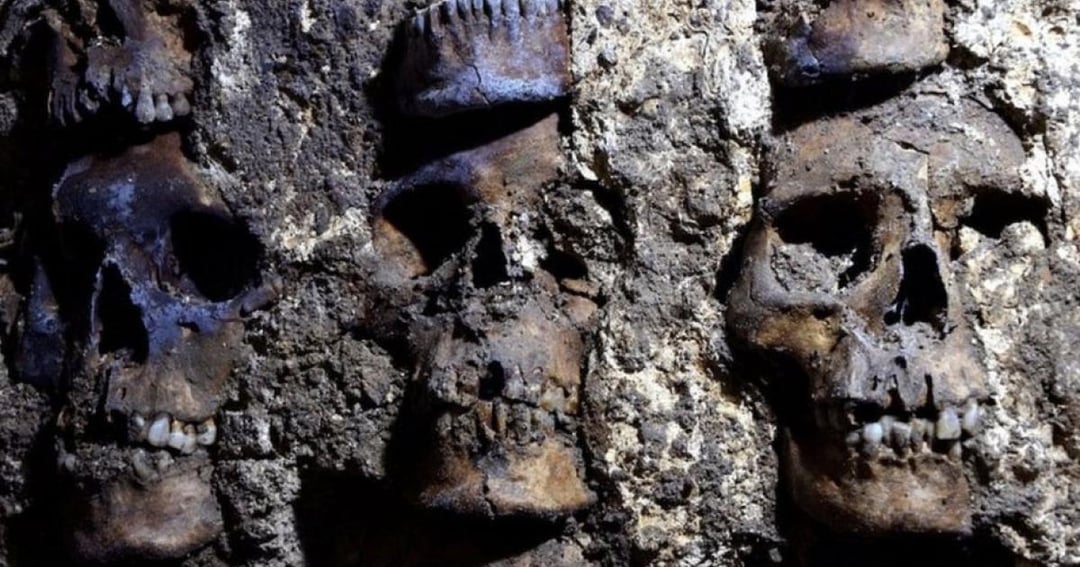
The architectural nightmare of Tenochtitlan: An Aztec ‘Huey Tzompantli’ tower made of 650 human skulls, including those of women and children, discovered beneath modern-day Mexico City.
Imagine walking through the bustling streets of modern-day Mexico City, surrounded by ancient history and vibrant culture, when suddenly you stumble upon a dark and fascinating secret from the past. Archaeologists have uncovered a haunting architectural relic beneath the city, a tower made from over 650 human skulls, known as the Huey Tzompantli. This gruesome discovery has left many wondering about the backstory and significance of such a structure, and I must admit, I’m equally intrigued. The Aztecs, who built this tower, were known for their sophisticated understanding of architecture, engineering, and mathematics, but this particular find has shed new light on their complex and often brutal society.
Uncovering the Dark History
The Huey Tzompantli, which translates to “great skull rack,” was a common feature in Aztec cities, used to display the skulls of sacrificed warriors and enemies. However, what’s striking about this particular discovery is the presence of skulls belonging to women and children, which challenges our previous understanding of Aztec sacrifice rituals. Historians believe that these individuals may have been victims of human sacrifice, possibly as part of a ritual to appease the gods or to celebrate important events. The tower’s architecture is also noteworthy, with the skulls carefully arranged and displayed in a way that would have been visible to the public. This raises questions about the role of these structures in Aztec society and how they were perceived by the people who lived among them.
Science and Symbolism
From a scientific perspective, the discovery of the Huey Tzompantli has provided valuable insights into the lives and deaths of the individuals whose skulls were used to build the tower. By analyzing the skulls, researchers can learn more about the diet, health, and lifestyles of the Aztecs, as well as the circumstances surrounding their deaths. The symbolism behind the tower is also fascinating, as it represents the Aztecs’ complex and often contradictory worldview. On one hand, the tower is a testament to their advanced understanding of architecture and engineering, while on the other hand, it’s a grim reminder of their brutal and violent practices. The fact that the tower was built using the skulls of women and children adds another layer of complexity to our understanding of Aztec culture and society.
A Window into the Past
The discovery of the Huey Tzompantli is a powerful reminder of the importance of preserving our cultural heritage and learning from the past. As we continue to uncover the secrets of this ancient structure, we’re forced to confront the darker aspects of human history and the complexities of the societies that came before us. The Aztecs may have been a sophisticated and advanced civilization, but they were also capable of great brutality and violence. By exploring these contradictions, we can gain a deeper understanding of the human experience and the many ways in which our ancestors lived, died, and interacted with one another.
As I reflect on the Huey Tzompantli, I’m struck by the realization that even in the heart of a modern city, the past can be lurking just beneath the surface, waiting to be uncovered. The story of this ancient tower is a sobering reminder of the complexities and contradictions of human history, and the importance of exploring and understanding our cultural heritage. Whether you’re an archaeologist, a historian, or simply a curious observer, the Huey Tzompantli is a fascinating and thought-provoking discovery that challenges our assumptions and invites us to learn more about the people and societies that came before us.