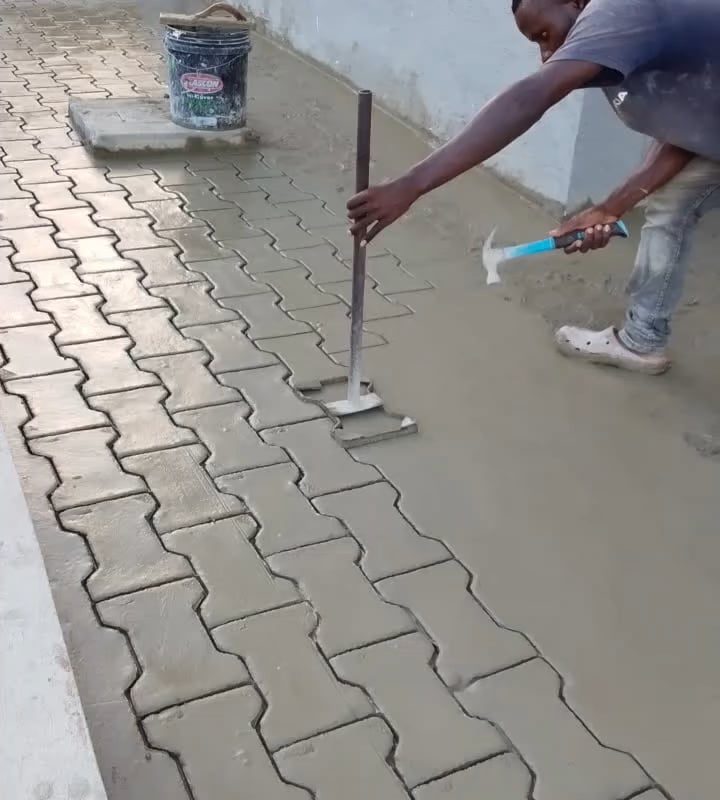
Stamping a paver pattern into wet concrete.
As I watched the concrete truck pull up to the construction site, I couldn’t help but feel a sense of excitement and curiosity. The crew was about to stamp a paver pattern into the wet concrete, and I had always been fascinated by this process. It’s amazing to think that with just a few simple tools and some careful planning, a plain slab of concrete can be transformed into a beautiful and intricate design that resembles traditional pavers. But have you ever wondered how this process works, and what kind of science is behind it?
The Art of Stamping
The process of stamping a paver pattern into wet concrete is a delicate art that requires a great deal of skill and precision. The concrete must be poured and smoothed out to a perfect consistency, and then the stamping tools are applied to create the desired pattern. The tools themselves are usually made of polyurethane or other durable materials, and are designed to mimic the texture and appearance of real pavers. As the tools are pressed into the concrete, they leave behind a impression that will harden and become a permanent part of the slab. It’s a remarkable process that can create a wide range of different patterns and designs, from simple and subtle to complex and ornate.
The Science Behind the Stamp
But what’s really interesting about stamping paver patterns into concrete is the science behind it. When concrete is first poured, it’s in a liquid state that’s perfect for molding and shaping. As it begins to set, the concrete starts to undergo a process called hydration, in which the cement reacts with water to form a hard, solid bond. The stamping process takes advantage of this window of time, when the concrete is still soft and pliable, to create the desired pattern. The tools used for stamping are designed to apply just the right amount of pressure to the concrete, without damaging it or disrupting the hydration process. It’s a delicate balance that requires a great deal of expertise and experience to get right.
A Beautiful and Durable Finish
The end result of stamping a paver pattern into wet concrete is a beautiful and durable finish that can last for decades with proper care. The pattern itself can be customized to fit any style or design, from modern and sleek to traditional and rustic. And because the pattern is actually a part of the concrete itself, rather than just a surface coating, it won’t fade or wear off over time. Whether you’re looking to create a stunning patio, driveway, or walkway, stamping a paver pattern into wet concrete is a great way to add some visual interest and personality to your outdoor space. As I watched the crew finish up their work and step back to admire their handiwork, I couldn’t help but feel a sense of awe and appreciation for this fascinating process, and the beautiful results it can produce.
As I walked away from the construction site, I couldn’t help but think about all the other fascinating processes and techniques that go into creating the buildings and structures that surround us. From the intricate details of architectural design to the complex science behind materials like concrete, there’s always something new to learn and discover. And who knows – maybe next time you see a beautifully stamped concrete patio or driveway, you’ll appreciate the skill and craftsmanship that went into creating it, and the fascinating science that makes it all possible.