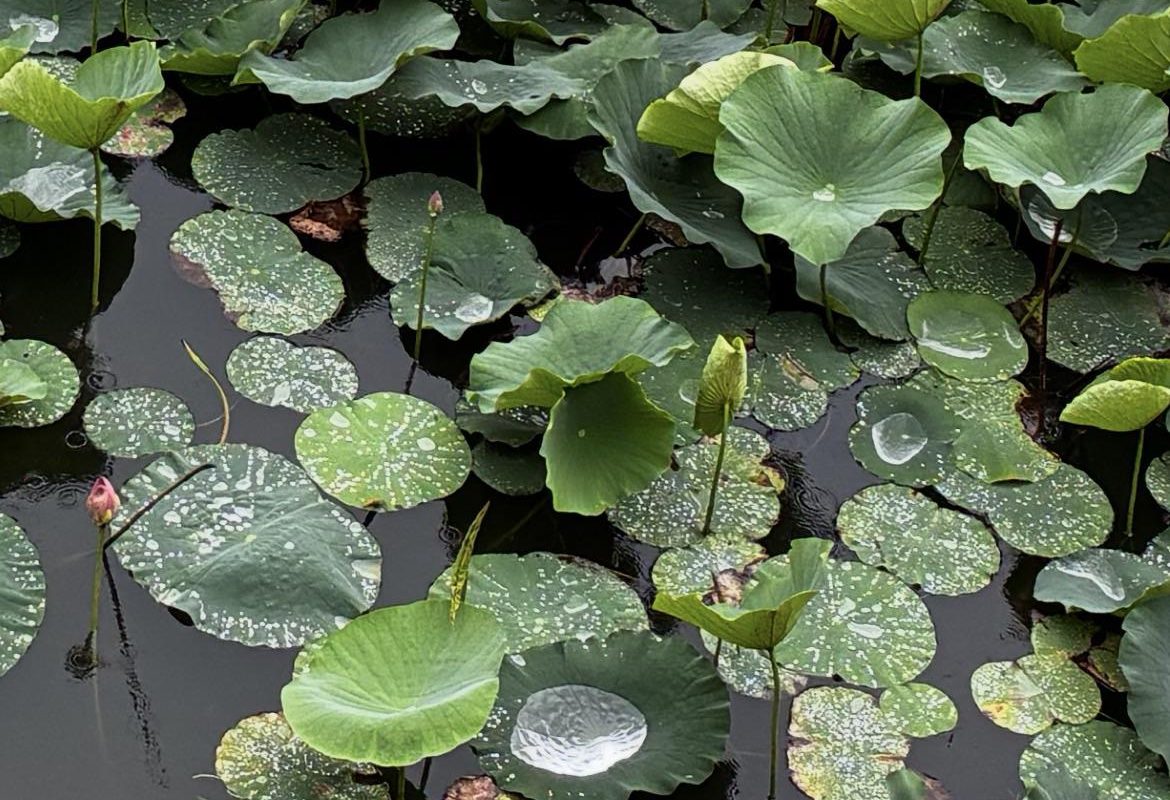
Rainwater collecting on lotus flower leaves
Have you ever stopped to admire the serene beauty of a lotus flower floating on a tranquil pond, its delicate petals swaying gently in the breeze? As I gazed at one of these stunning blooms, I noticed something fascinating – rainwater collecting on its leaves, forming tiny, sparkling droplets that seemed to defy gravity. It was as if the lotus leaf was a tiny, natural umbrella, shielding the water from the outside world. But what’s behind this mesmerizing phenomenon, and how do lotus leaves manage to achieve this incredible feat?
The Unique Properties of Lotus Leaves
The secret to the lotus leaf’s remarkable ability to collect and hold rainwater lies in its unique microstructure. The leaf’s surface is covered in tiny, microscopic bumps and ridges that create a self-cleaning effect. This means that water droplets are able to roll off the leaf easily, taking dirt and debris with them, leaving the leaf spotless and untouched. But when rainwater does collect on the leaf, it forms a thin layer that’s held in place by the intricate network of tiny hairs and ridges. It’s an incredible example of nature’s engineering, and one that has inspired scientists and engineers to develop new materials and technologies that mimic the lotus leaf’s remarkable properties.
The Science of Superhydrophobicity
So, what exactly is happening at a molecular level to allow the lotus leaf to collect and hold rainwater in this way? The answer lies in the concept of superhydrophobicity – the ability of a surface to repel water. The lotus leaf’s unique microstructure creates a surface that’s extremely unwelcoming to water, causing it to bead up and roll off easily. But when the leaf is submerged in water, the surface tension of the water creates a thin layer that’s held in place by the leaf’s microscopic hairs and ridges. It’s a delicate balance of forces that allows the lotus leaf to collect and hold rainwater, and one that has fascinated scientists for centuries.
Nature’s Inspiration for Innovation
The lotus leaf’s incredible ability to collect and hold rainwater has inspired a wide range of innovations, from self-cleaning surfaces and water-repellent materials to more efficient water collection systems. By studying the unique properties of the lotus leaf, scientists and engineers are developing new technologies that could have a major impact on our daily lives. From reducing water waste and improving water quality to creating more sustainable and efficient systems for collecting and conserving water, the lotus leaf is a powerful reminder of the incredible ingenuity and innovation that can be found in nature.
As I continued to gaze at the lotus flower, I couldn’t help but feel a sense of awe and wonder at the incredible complexity and beauty of the natural world. The way that rainwater collects on the lotus leaf is just one example of the many fascinating phenomena that can be found in nature, and a powerful reminder of the importance of preserving and protecting our planet’s incredible biodiversity. Whether you’re a scientist, an engineer, or simply someone who appreciates the beauty of nature, the lotus leaf is a true marvel that’s sure to inspire and delight.