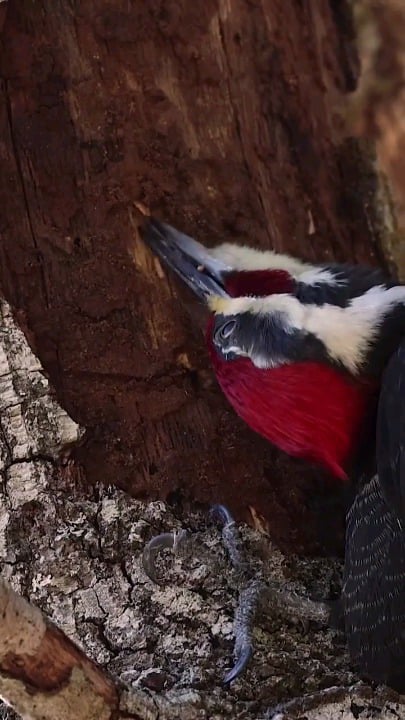
Pileated Woodpecker feasting on termites under tree bark.
Imagine walking through a forest, the sound of drumming echoing through the trees, and catching a glimpse of a magnificent bird with a bright red crest, its black and white feathers glistening in the sunlight. This is the pileated woodpecker, a creature of fascination and intrigue, and one of the most iconic birds in North America. But what’s even more fascinating is what this bird gets up to when it’s not drumming on trees – it’s feasting on termites, and it’s got a clever way of getting to them. Under the bark of trees, a secret world of insects thrives, and the pileated woodpecker has evolved to take advantage of this bounty.
The Termite Buffet
The pileated woodpecker’s diet consists mainly of insects, and termites are one of its favorite snacks. These social insects live in complex colonies under the bark of trees, feeding on the wood and causing significant damage. But the woodpecker sees this as an opportunity, using its powerful beak to pry off the bark and expose the termite colony. With its long, sticky tongue, the woodpecker can then extract the termites from their tunnels and feast on them. It’s a clever adaptation, and one that allows the woodpecker to thrive in its forest habitat. But what’s even more interesting is the way the woodpecker detects the termites in the first place – it uses a combination of drumming and tapping on the tree to listen for the faint sounds of the insects moving beneath the bark.
A Delicate Balance
The pileated woodpecker’s love of termites has a significant impact on the forest ecosystem. By preying on these insects, the woodpecker helps to regulate their populations, preventing them from causing too much damage to the trees. This has a knock-on effect, allowing other species to thrive in the forest. The woodpecker’s activities also create cavities in the trees, which can be used by other birds and animals for nesting and shelter. It’s a remarkable example of the interconnectedness of nature, and the important role that each species plays in the ecosystem. And yet, despite its importance, the pileated woodpecker is often overlooked, its habits and habitats poorly understood. By studying this fascinating bird, we can gain a deeper appreciation for the complex web of life that surrounds us.
Conservation Concerns
Unfortunately, the pileated woodpecker is facing a number of threats, from habitat loss to climate change. As forests are cleared and fragmented, the woodpecker’s habitat is reduced, making it harder for the birds to find food and shelter. Climate change also affects the termite populations, altering the availability of this crucial food source. It’s a worrying trend, and one that highlights the need for conservation efforts to protect this incredible species. By preserving and restoring forests, we can help to safeguard the pileated woodpecker’s future, and ensure that its drumming continues to echo through the trees for generations to come.
As we watch the pileated woodpecker at work, its bright red crest a flash of color in the forest, we’re reminded of the beauty and complexity of the natural world. This bird’s fascinating habits, from its termite-feasting to its drumming on trees, are a testament to the incredible diversity of life on our planet. And as we strive to protect and preserve this species, we’re also reminded of our own place within the ecosystem, and the importance of respecting and appreciating the intricate web of life that surrounds us.