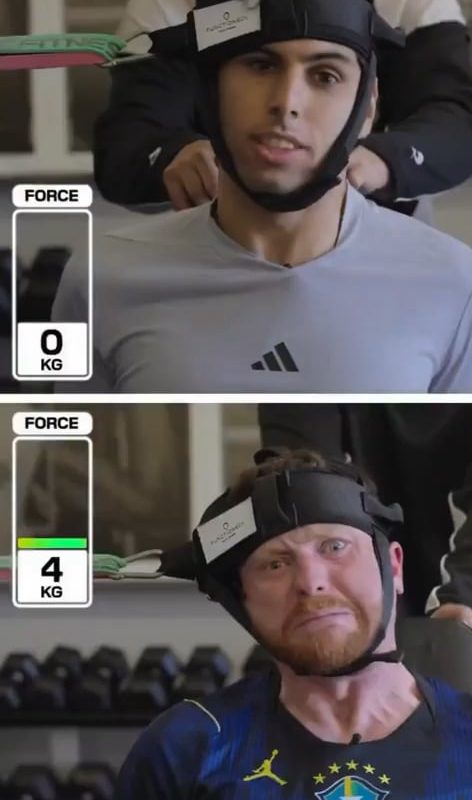
A simple test shows the neck strength of F1 drivers compared to normal people
I have to admit, I’ve always been fascinated by the physical and mental demands of being a Formula 1 driver. These athletes are pushed to their limits, navigating high-speed turns and withstanding intense G-forces that would leave the rest of us breathless. But have you ever wondered what sets them apart from the rest of us in terms of physical strength? Recently, I stumbled upon a simple yet intriguing test that compares the neck strength of F1 drivers to that of normal people, and the results are nothing short of astonishing.
The Test of Neck Strength
The test in question involves a device that measures the force exerted by the neck muscles, essentially assessing how well a person can resist the forces acting on their head. For F1 drivers, this is crucial, as they need to be able to withstand the intense forces generated by high-speed cornering, which can reach up to 5G. The test revealed that F1 drivers have significantly stronger neck muscles than the average person, with some drivers registering forces of up to 50 Newtons, compared to around 10-20 Newtons for non-drivers. This disparity highlights the extraordinary physical demands of F1 driving and the specialized training that these athletes undergo to build up their strength and endurance.
The Science Behind Neck Strength
So, what makes the neck muscles of F1 drivers so uniquely strong? The answer lies in the way their bodies adapt to the intense forces they experience on the track. When an F1 driver takes a high-speed turn, their head is subjected to a tremendous amount of force, which can cause their neck muscles to fatigue rapidly. To counteract this, F1 drivers engage in specialized training exercises that target the muscles of the neck and shoulders, building up their strength and endurance over time. This training, combined with their natural physical abilities, enables them to withstand the forces generated by high-speed driving and maintain control of their vehicle.
Implications and Applications
The findings of this test have significant implications not just for F1 driving, but for other high-performance sports and activities as well. By understanding the physical demands of these sports and the specialized training that athletes undergo, we can develop more effective training programs and safety protocols to protect them from injury. Moreover, the technology used to measure neck strength could have applications in fields such as medicine and rehabilitation, where it could be used to assess and treat neck injuries and disorders. As I delved deeper into the world of F1 driving, I was struck by the intricate web of physical and mental factors that come into play, and the remarkable feats of human endurance that these athletes achieve on a daily basis.
As I reflect on the remarkable neck strength of F1 drivers, I’m reminded of the awe-inspiring feats of human performance that these athletes achieve every time they step into their vehicles. The combination of physical strength, mental toughness, and specialized training that enables them to withstand the intense forces of high-speed driving is a testament to the incredible adaptability and resilience of the human body. Whether you’re a die-hard F1 fan or just a curious observer, the story of these athletes and their remarkable abilities is sure to leave you inspired and eager to learn more about the fascinating world of high-performance sports.