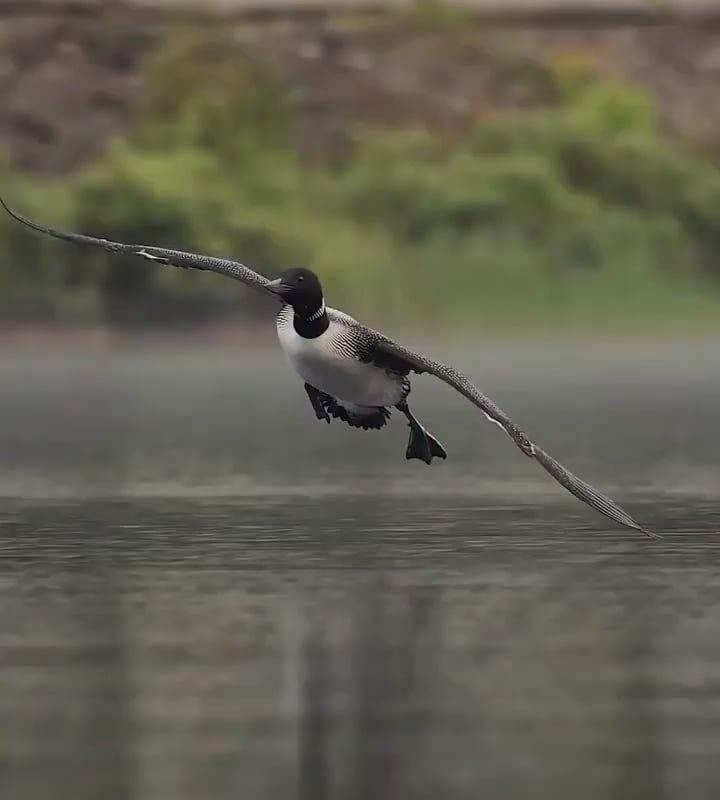
A common loon coming in for a smooth landing.
As I stood on the shore, gazing out at the serene lake, I couldn’t help but feel a sense of excitement and anticipation. The sun was setting, casting a warm golden light across the water, and I knew that this was the perfect time to spot one of my favorite birds – the common loon. And then, like a ghostly apparition, it appeared, gliding effortlessly across the surface of the lake, its feathers glistening in the fading light. The common loon was coming in for a smooth landing, and I felt like I was witnessing a truly magical moment.
The Art of Landing
The common loon’s ability to land smoothly on water is a remarkable feat, one that requires a great deal of skill and precision. Unlike other birds, which can simply flap their wings and touch down on land, the loon must use its powerful legs and webbed feet to brake its descent and come to a gentle stop on the water’s surface. This is made all the more difficult by the fact that the loon’s legs are located far back on its body, making it difficult to balance and maneuver in the air. And yet, despite these challenges, the common loon is able to land with ease, its feathers barely ruffled by the impact.
Aquatic Adaptations
So how does the common loon manage to land so smoothly on water? The answer lies in its unique physiology and adaptations. The loon’s body is streamlined for swimming and diving, with a thick layer of fat and a waterproof coat of feathers that allow it to glide effortlessly through the water. Its webbed feet are also perfectly suited for propulsion and maneuverability, allowing the loon to make sharp turns and quick changes in direction. And when it comes time to land, the loon uses its powerful legs and feet to brake its descent and come to a gentle stop, much like a plane touching down on a runway.
Conservation Status
Despite its remarkable abilities, the common loon is facing a number of threats in the wild, including habitat loss, pollution, and climate change. The loon’s breeding grounds are often disrupted by human activity, such as the construction of docks and seawalls, and its food sources are being depleted by overfishing and other human impacts. As a result, conservation efforts are underway to protect the common loon and its habitats, including the creation of protected areas and the implementation of sustainable fishing practices. By working together to protect this incredible bird, we can help ensure that it continues to thrive for generations to come.
As I watched the common loon disappear into the depths of the lake, I couldn’t help but feel a sense of awe and appreciation for this incredible bird. Its smooth landing had been a truly magical moment, one that I would never forget. And as I turned to leave, I knew that I would be back again soon, eager to catch another glimpse of this remarkable creature and to learn more about its fascinating world. The common loon may be a elusive and mysterious bird, but it is also a powerful reminder of the beauty and wonder of the natural world, and the importance of working to protect it.