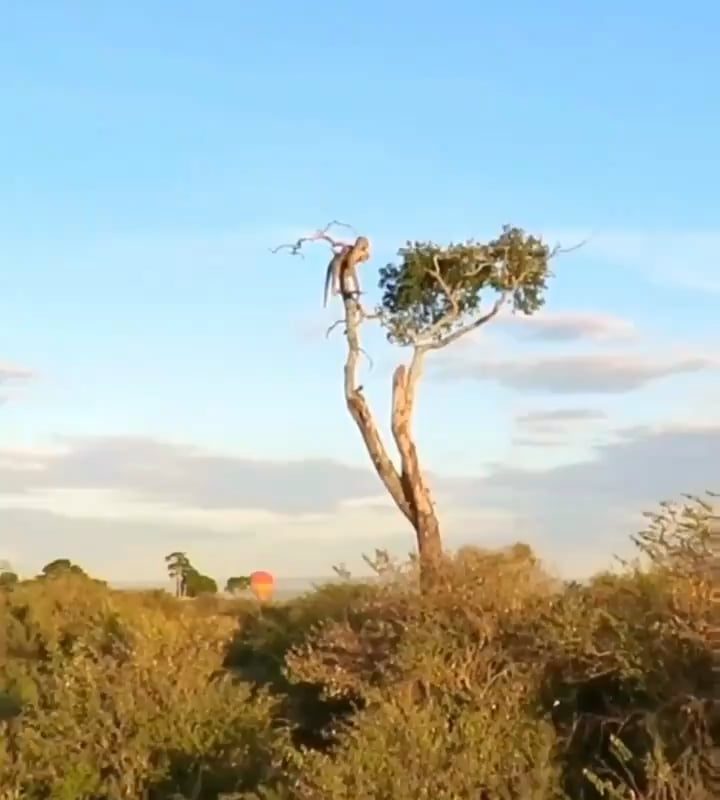
A leopard watches the sunset, perched high in a tree in the Masai Mara, Kenya.
As the day comes to a close in the Masai Mara, a leopard finds the perfect spot to watch the sunset – perched high in a tree, with the golden light of the setting sun casting a warm glow over the savannah. It’s a moment of perfect tranquility, with the leopard’s eyes fixed on the horizon as the stars begin to twinkle in the night sky. But have you ever wondered what makes this moment so special, not just for the leopard, but for the entire ecosystem of the Masai Mara? Let’s dive in and explore the fascinating world of these majestic creatures and their habitat.
The Art of Tree Climbing
The leopard’s ability to climb trees is a remarkable example of its adaptability and agility. With its powerful limbs and sharp claws, the leopard can effortlessly scale even the tallest trees in the Masai Mara. But why do they climb trees in the first place? For leopards, trees provide a safe haven from predators and rival leopards, as well as a perfect spot to stalk their prey. They can also use trees to escape the heat of the day, or to simply relax and enjoy the view – as our sunset-watching leopard is doing. This unique ability to climb trees has also led scientists to study the leopard’s behavior and habitat, revealing a complex and fascinating world of predator-prey relationships and ecosystem dynamics.
The Masai Mara Ecosystem
The Masai Mara is one of the most famous wildlife reserves in Africa, and for good reason. This incredible ecosystem is home to a vast array of wildlife, from the Big Five (lion, leopard, rhinoceros, elephant, and Cape buffalo) to countless species of birds, reptiles, and insects. The Masai Mara is also known for its unique landscape, with rolling hills, grasslands, and woodlands providing a diverse range of habitats for its inhabitants. But what makes this ecosystem so special is the delicate balance between its many components. From the migratory patterns of the wildebeest to the predatory habits of the leopards, every species plays a vital role in maintaining the health and stability of the ecosystem. And as our leopard watches the sunset, it’s a reminder that even in this vast and complex world, there is still room for moments of peace and tranquility.
A Moment of Peace
As the sun dips below the horizon, our leopard remains perched in its tree, taking in the sights and sounds of the Masai Mara at dusk. It’s a moment of perfect calm, with the leopard’s worries and cares forgotten in the face of the breathtaking beauty of its surroundings. And as we watch this scene unfold, we’re reminded of the importance of taking time to appreciate the natural world. In a world that’s increasingly fast-paced and chaotic, it’s easy to get caught up in our daily worries and forget to stop and smell the roses. But as our leopard shows us, even in the wild, there is still room for moments of peace and contemplation – and it’s up to us to appreciate and preserve these moments, for the sake of the leopards and the entire ecosystem of the Masai Mara.
As the stars twinkle to life in the night sky, our leopard settles in for a well-deserved rest, its belly full and its spirit at peace. And as we bid farewell to this majestic creature, we’re left with a sense of wonder and awe at the incredible world of the Masai Mara, and the incredible animals that call it home. Whether you’re a seasoned wildlife enthusiast or just someone who appreciates the beauty of nature, the story of our sunset-watching leopard is a reminder of the magic and mystery that awaits us in the wild – and the importance of preserving it for generations to come.