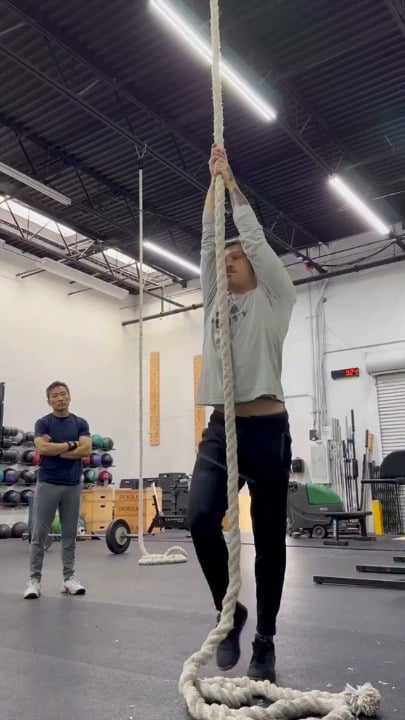
A slightly easier way to climb a rope
As I watched a group of kids attempting to climb a rope at the local gym, I couldn’t help but think back to my own childhood struggles with this very same activity. Who among us hasn’t tried to scale a rope, only to find ourselves stuck, struggling to make progress, and wondering if we’re just not cut out for this whole “climbing” thing? But what if I told you there’s a slightly easier way to climb a rope, one that’s been used by sailors and adventurers for centuries? It’s a technique that’s not only effective but also fascinating, with a rich history and some pretty cool science behind it.
The History of Rope Climbing
Rope climbing has been a vital skill for sailors, rock climbers, and adventure seekers for thousands of years. From ancient mariners scaling the rigging of tall ships to modern-day climbers tackling sheer rock faces, the ability to climb a rope has been a crucial part of many professions and pursuits. But have you ever wondered how people used to climb ropes before the advent of modern climbing gear? It turns out that our ancestors used a variety of techniques, including wrapping their feet around the rope, using knots to create footholds, and even employing specialized tools like rope climbers’ hooks. One technique that’s gained popularity in recent years is the “wrap and step” method, which involves wrapping one’s feet around the rope and using the legs to push upwards, rather than relying solely on arm strength.
The Science Behind the Technique
So, what makes the “wrap and step” method easier than traditional rope climbing techniques? It all comes down to physics and biomechanics. When we climb a rope using only our arms, we’re relying on our biceps and shoulders to do all the work. This can be exhausting, especially for those of us who aren’t exactly gym rats. But by using our legs to push upwards, we’re able to engage our powerful leg muscles, which are designed for activities like walking and running. This not only makes climbing easier but also reduces the strain on our arms and shoulders, allowing us to climb for longer periods without getting tired. Additionally, the “wrap and step” method allows us to use our body weight to our advantage, rather than fighting against it, which makes the whole process feel more natural and intuitive.
Putting it into Practice
So, how can you start using the “wrap and step” method to climb ropes like a pro? It’s actually pretty simple. Start by finding a sturdy rope and a comfortable pair of shoes. Then, practice wrapping your feet around the rope and using your legs to push upwards. You can start with short climbs and gradually work your way up as you build strength and confidence. It’s also a good idea to practice with a partner or spotter, especially if you’re new to rope climbing. With a little practice and patience, you’ll be scaling ropes like a sailor in no time. And who knows, you might just find that you enjoy the challenge and thrill of rope climbing, and want to take your skills to the next level.
As I watched those kids at the gym, I couldn’t help but feel a sense of excitement and nostalgia. Rope climbing is one of those activities that’s both challenging and rewarding, a true test of strength, endurance, and determination. And with the “wrap and step” method, it’s never been easier to get started and experience the thrill of climbing for yourself. So why not give it a try? You never know where it might take you – up the rigging of a tall ship, to the top of a sheer rock face, or simply to a new level of physical fitness and confidence. The possibilities are endless, and the view from the top is well worth the climb.