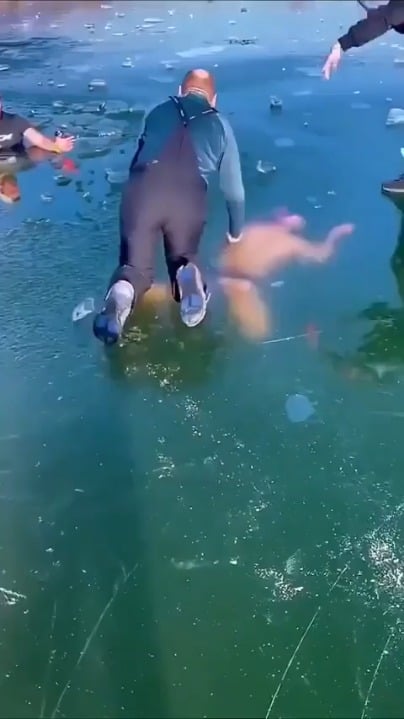
A Slovak ice swimmer narrowly escaped death after becoming disoriented beneath a frozen lake and struggling to find the exit. He was rescued after finding his way back with the help of a safety rope and his team
As I sat reading about the latest ice swimming adventure, I couldn’t help but feel a chill run down my spine – and it wasn’t just because of the icy waters. A Slovak ice swimmer had just narrowly escaped death after becoming disoriented beneath a frozen lake, and the details of his harrowing experience are a sobering reminder of the risks that these athletes take every time they dive into the freezing cold. The fact that he was able to find his way back to safety with the help of a trusty safety rope and his quick-thinking team is a testament to their skill and preparation – but it also raises some fascinating questions about the science behind ice swimming, and what drives these athletes to push themselves to such extremes.
The Allure of Ice Swimming
For those who may not be familiar with the sport, ice swimming involves diving into a frozen lake or river and swimming beneath the ice – often for distances of up to 100 meters or more. It’s an incredibly demanding and potentially deadly pursuit, requiring a unique combination of physical strength, mental toughness, and technical skill. But despite the risks, ice swimming has a growing following around the world, with many athletes drawn to its raw, unbridled challenge. Whether it’s the thrill of exploring the unknown, the rush of adrenaline that comes with pushing oneself to the limit, or simply the sense of accomplishment that comes with overcoming such a formidable obstacle, ice swimming has a certain allure that’s hard to deny.
The Science of Hypothermia
One of the biggest risks that ice swimmers face is hypothermia – a condition that occurs when the body’s core temperature drops below a certain threshold, causing the heart rate to slow and the brain to become disoriented. In extreme cases, hypothermia can be fatal – which is why ice swimmers need to be so careful about monitoring their body temperature and watching for signs of distress. But what’s fascinating is that the human body is actually capable of adapting to cold temperatures over time, a process known as acclimatization. By gradually exposing themselves to colder and colder water, ice swimmers can build up their tolerance and reduce their risk of hypothermia – although it’s a delicate balancing act that requires careful training and preparation.
A Debt of Gratitude
In the case of the Slovak ice swimmer who narrowly escaped death, it’s clear that his safety rope and support team played a crucial role in his rescue. But it’s also a reminder that ice swimming is a team sport, reliant on the skill and expertise of many different people – from the swimmers themselves to the safety divers, coaches, and medical professionals who support them. As we marvel at the bravery and skill of these athletes, it’s worth taking a moment to appreciate the often-unsung heroes who help make their exploits possible – and to recognize the debt of gratitude that we owe to those who push the boundaries of human endurance, inspiring us all to be a little more brave, a little more daring, and a little more alive.
As I finished reading about the Slovak ice swimmer’s close call, I couldn’t help but feel a sense of awe and respect for these athletes and their sport. Whether you’re an seasoned adventurer or just an armchair enthusiast, it’s hard not to be drawn in by the thrill and excitement of ice swimming – and the fascinating stories that surround it. So the next time you’re tempted to take a dip in the icy waters, remember the risks and the rewards – and the incredible community of athletes and supporters who make it all possible.