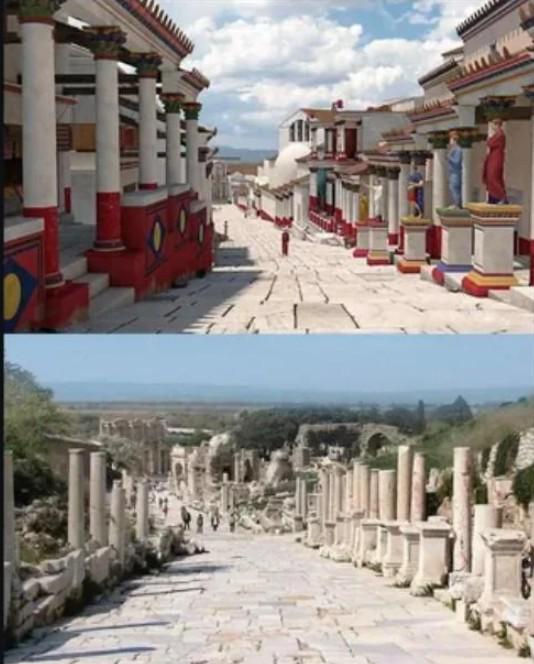
Ancient Greece would have likely looked like this. This is a reconstruction of Curetes Street in ancient Ephesus
Imagine walking through the bustling streets of ancient Greece, surrounded by towering marble columns, vibrant market stalls, and the sound of philosophers debating the meaning of life. This is what ancient Greece would have likely looked like, and a fascinating reconstruction of Curetes Street in ancient Ephesus gives us a glimpse into what life was like back then. The attention to detail in this reconstruction is stunning, from the intricate mosaics that adorn the sidewalks to the imposing facades of the buildings. It’s like stepping back in time and experiencing the sights, sounds, and smells of a bygone era.
The History Behind the Reconstruction
The city of Ephesus was a major cultural and economic center in ancient Greece, and Curetes Street was one of its main thoroughfares. The street was lined with shops, restaurants, and temples, and was a hub of activity for both locals and visitors. The reconstruction of Curetes Street is based on extensive archaeological research and excavations, which have uncovered a wealth of information about what life was like in ancient Ephesus. From the remains of ancient buildings to the artifacts and relics that have been discovered, scientists have been able to piece together a detailed picture of what this vibrant city would have looked like over 2,000 years ago.
Bringing the Past to Life
The reconstruction of Curetes Street is a testament to the power of science and technology to bring the past to life. By using advanced computer simulations and 3D modeling, researchers have been able to recreate the street and its surroundings with remarkable accuracy. The result is a immersive and engaging experience that allows visitors to explore ancient Ephesus in a way that would have been impossible just a few decades ago. Whether you’re a history buff, an architecture enthusiast, or simply someone who loves to explore new and exciting places, the reconstruction of Curetes Street is an absolute must-see.
Uncovering the Secrets of the Past
So what can we learn from this reconstruction of ancient Ephesus? For one thing, it gives us a unique glimpse into the daily lives of people who lived over 2,000 years ago. We can see how they lived, worked, and interacted with one another, and gain a deeper understanding of the culture and values that shaped their world. The reconstruction also highlights the impressive engineering and architectural skills of the ancient Greeks, who were able to build complex and beautiful structures that have stood the test of time. As we continue to explore and learn from the past, we may uncover even more secrets and surprises that challenge our assumptions and broaden our understanding of the world.
As we gaze upon the reconstructed Curetes Street, we are reminded of the enduring power of human creativity and ingenuity. The ancient Greeks may have lived in a different time and place, but their legacy continues to inspire and fascinate us to this day. Whether we’re exploring the ruins of an ancient city or simply imagining what life would have been like in a bygone era, we are connected to the past in ways that are both profound and unexpected. So let’s keep exploring, keep discovering, and keep pushing the boundaries of what we thought we knew about the ancient world. Who knows what secrets and surprises await us just around the corner?