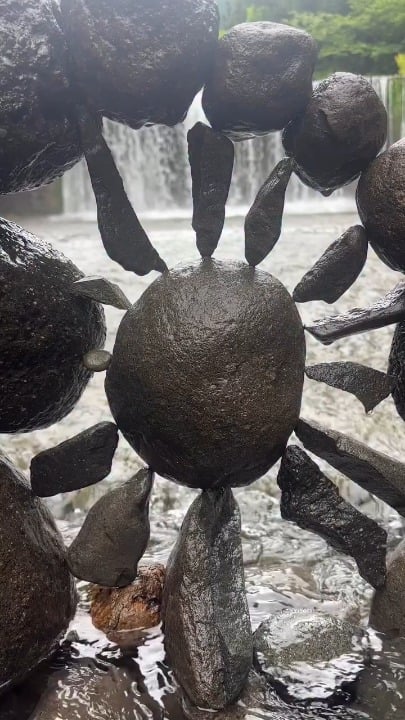
Balancing rocks with this level of precision is unreal.
I still can’t get over the mesmerizing videos of rocks being balanced with such precision that it seems almost otherworldly. The patience, the skill, and the attention to detail required to achieve this level of balance is truly awe-inspiring. As I delved deeper into the world of rock balancing, I discovered that it’s not just about creating visually stunning structures, but also about understanding the intricate dance between physics, geology, and art. The artists who create these balancing acts have a deep understanding of the rocks they work with, from their texture and weight to their center of gravity, and use this knowledge to coax them into seemingly impossible positions.
The Art of Balance
One of the most fascinating aspects of rock balancing is the way it challenges our perceptions of what is possible. By carefully selecting and placing each rock, the artists create structures that appear to defy gravity, leaving us wondering how they managed to achieve such precision. But rock balancing is not just about creating an optical illusion; it’s also about understanding the underlying physics that govern the behavior of the rocks. The artists must take into account the friction between the rocks, the distribution of weight, and the subtle movements of the environment, such as wind or water, to create a stable and balanced structure. As I watched these artists at work, I was struck by the meditative quality of their process, the way they seemed to become one with the rocks and the environment, and the sense of calm and focus that radiated from their creations.
The Science Behind the Balance
So, what makes rock balancing possible? The answer lies in the unique properties of the rocks themselves. The artists often use rocks with unusual shapes or textures that allow them to create a stable base or a secure grip. They also exploit the principles of physics, such as the concept of center of gravity, to create a balance that is both precise and delicate. But rock balancing is not just about science; it’s also about art and creativity. The artists use their imagination and vision to create structures that are not only balanced but also visually stunning, with intricate patterns, shapes, and forms that seem to come alive. As I explored the world of rock balancing, I was amazed by the diversity of styles and techniques, from the minimalist elegance of a single balanced rock to the elaborate complexity of a multi-rock sculpture.
A Journey of Discovery
As I continued to explore the world of rock balancing, I found myself on a journey of discovery, learning about the history and cultural significance of this ancient art form. From the intricate stone carvings of ancient civilizations to the modern-day rock balancers who push the boundaries of what is possible, I was struck by the universal language of balance and harmony that transcends time and culture. Rock balancing is not just about creating a fleeting moment of wonder; it’s about tapping into a deeper sense of connection and meaning that speaks to our very humanity. Whether you’re an artist, a scientist, or simply someone who appreciates the beauty of the natural world, rock balancing has the power to inspire and awe, inviting us to slow down, observe, and appreciate the intricate beauty of the world around us.
As I reflect on the captivating world of rock balancing, I am reminded of the magic that happens when art, science, and nature come together. The precision, the patience, and the creativity required to balance rocks with such elegance and poise is a testament to the human spirit’s capacity for innovation and expression. Whether you’re a seasoned rock balancer or just a curious observer, this ancient art form has the power to inspire and delight, inviting us to explore the intricate beauty of the natural world and the boundless possibilities of the human imagination.