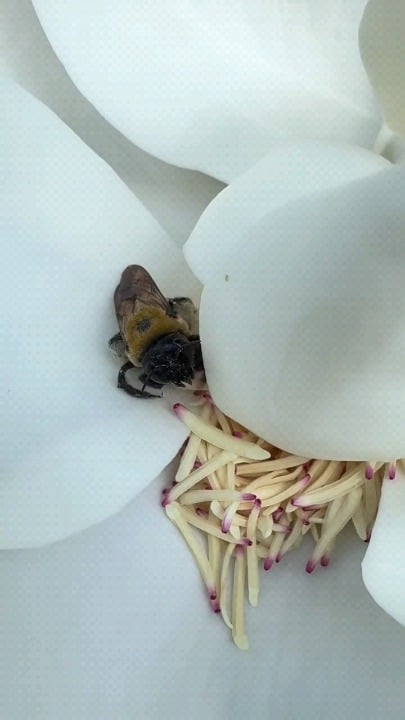
Bee gets more pollen than it knows what to do with
In a sun-drenched meadow, a busy little bee found itself in a bit of a sticky situation – it had collected more pollen than it knew what to do with. As it flew from flower to flower, its bright yellow baskets, or corbiculae, became so packed with the precious cargo that it could hardly fly back to the hive. It’s a problem many of us can only dream of having, but for this bee, it was a logistical nightmare. How did it end up with such an abundance of pollen, and what does this say about the intricate world of bees and flowers?
The Pollen Collection Process
The process of collecting pollen is a remarkable one, involving a combination of skill, strategy, and a little bit of luck. Bees visit flowers in search of nectar, but in the process, they also collect pollen, which is rich in protein and essential for feeding their young. As they move from flower to flower, pollen grains stick to their hairy bodies, and they use their front legs to scrape it off and store it in their corbiculae. It’s a delicate balancing act, as they need to collect enough pollen to feed their colony, but not so much that it becomes too heavy to fly. In the case of our overwhelmed bee, it’s likely that it encountered a particularly pollen-rich patch of flowers, and its baskets became overloaded as a result.
The Science of Pollen
Pollen is a fascinating substance, and its importance extends far beyond the world of bees. It’s the male reproductive material of flowers, and it plays a crucial role in the reproduction of plants. Without pollen, many plants would be unable to produce seeds, and our food supply would be severely impacted. Bees, of course, are some of the most important pollinators, and their ability to collect and transport pollen is essential for the health of our ecosystem. As scientists, we’re still learning about the complexities of pollen and its role in the natural world, but one thing is clear: it’s a vital component of our planet’s biodiversity.
A Hive of Activity
So what happens to all that excess pollen? When our bee finally makes it back to the hive, it will share its bounty with its fellow workers, who will use it to feed the colony’s young and store it for future use. The hive is a remarkable place, full of intricate social hierarchies and communication systems. Bees work together to collect and process pollen, using complex dances and pheromones to coordinate their efforts. It’s a truly remarkable sight to behold, and a testament to the incredible social organization of these tiny creatures. As we watch our overwhelmed bee struggle to manage its pollen haul, we’re reminded of the incredible complexity and beauty of the natural world.
As we watch our busy little bee flying back to the hive, its pollen baskets overflowing with golden goodness, we can’t help but feel a sense of wonder and awe at the intricate world of bees and flowers. It’s a world that’s full of fascinating stories and complex relationships, and one that reminds us of the importance of preserving our planet’s precious biodiversity. So next time you see a bee buzzing from flower to flower, remember the incredible journey it’s on, and the vital role it plays in our ecosystem.