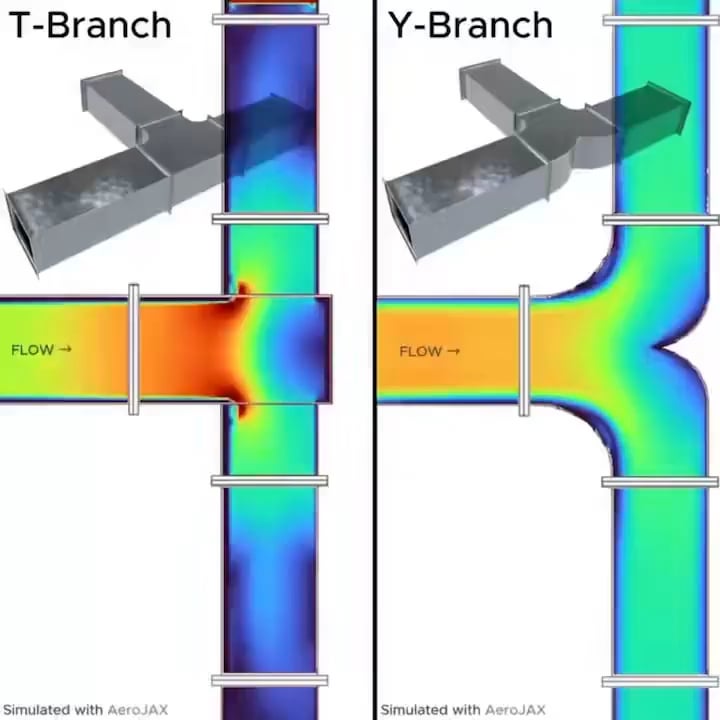
CFD simulation through the vents
Have you ever stopped to think about the air flowing through the vents in your home or office? It’s one of those things that’s easy to take for granted, but the truth is, it’s a complex process that involves a delicate balance of pressure, temperature, and flow rates. And that’s where Computational Fluid Dynamics, or CFD, comes in – a powerful tool that allows engineers to simulate and analyze the behavior of fluids, like air, as they move through different systems. But what’s really fascinating is the story behind how CFD simulation through vents works, and the impact it can have on our daily lives.
The Science Behind CFD Simulation
CFD simulation is based on a set of mathematical equations that describe the behavior of fluids under different conditions. These equations take into account factors like velocity, pressure, and temperature, and use numerical methods to solve them. The result is a detailed, 3D model of the airflow through the vents, which can be used to identify areas of inefficiency, optimize system performance, and even predict potential problems before they occur. But what’s really cool is that CFD simulation isn’t just limited to vents – it can be used to model all sorts of fluid flow systems, from the airflow around airplanes to the circulation of blood through the human body.
Real-World Applications of CFD Simulation
So, how is CFD simulation through vents actually used in the real world? One of the most obvious applications is in the design of heating, ventilation, and air conditioning (HVAC) systems. By using CFD simulation, engineers can optimize the layout of ducts and vents to ensure that air is flowing efficiently and effectively, which can help to reduce energy costs and improve indoor air quality. But CFD simulation is also used in other areas, like architecture and construction, where it can be used to model the airflow through buildings and identify potential issues with ventilation and cooling. And, as you might expect, it’s also used in the aerospace industry, where it’s used to simulate the airflow around aircraft and optimize their design for better performance and fuel efficiency.
The Future of CFD Simulation
As computer power and simulation software continue to evolve, the possibilities for CFD simulation are expanding rapidly. One of the most exciting areas of development is in the use of CFD simulation to model complex, turbulent flows – like the kind you might find in a hurricane or a tornado. By using advanced numerical methods and high-performance computing, researchers are able to simulate these kinds of flows with unprecedented accuracy, which could have a major impact on our ability to predict and prepare for severe weather events. And, as CFD simulation becomes more accessible and user-friendly, we can expect to see it being used in all sorts of new and innovative ways – from optimizing the design of wind turbines to modeling the flow of water through complex systems like rivers and oceans.
As we continue to push the boundaries of what’s possible with CFD simulation, it’s exciting to think about the potential impact it could have on our daily lives. From improving the efficiency of our homes and buildings to helping us better understand and predict the behavior of complex systems, the possibilities are endless. And, as someone who’s always fascinated by the way things work, I have to say – I’m excited to see where this technology will take us next. Whether you’re an engineer, an architect, or just someone who’s curious about the world around you, CFD simulation is definitely worth keeping an eye on.