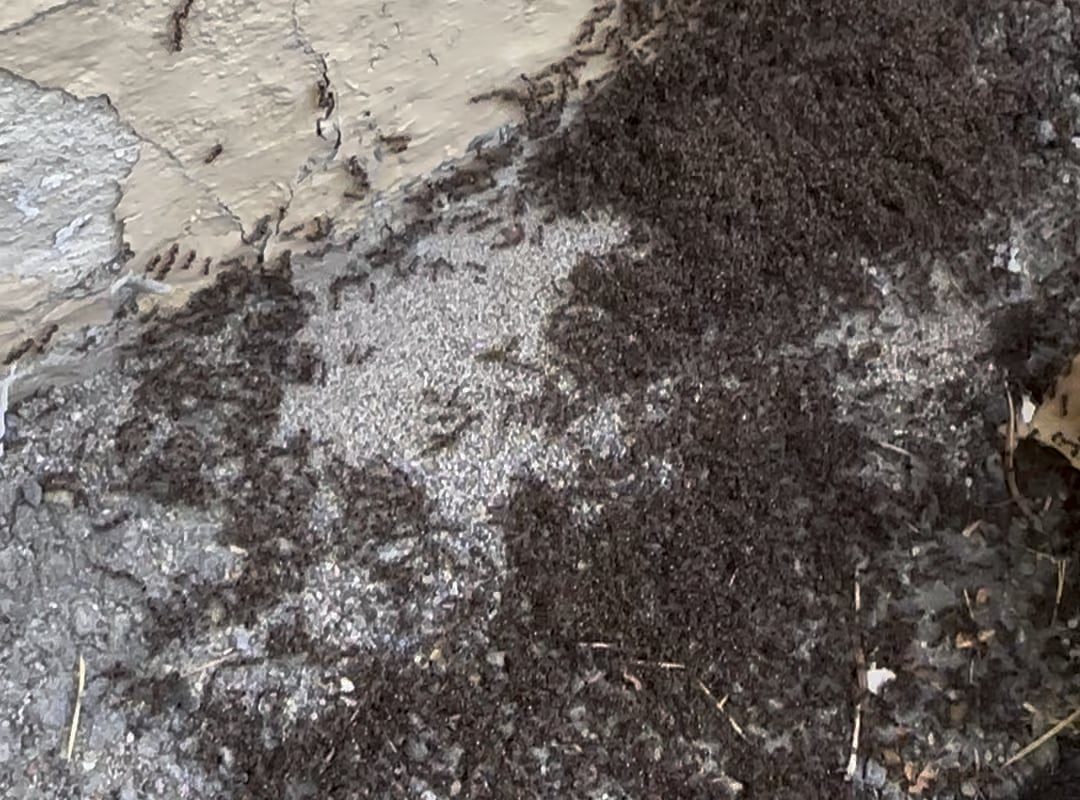
Huge swarm of ants
Imagine walking out into your backyard on a warm summer morning, only to be greeted by a sea of tiny, crawling creatures that seem to stretch on forever. A huge swarm of ants can be a breathtaking sight, and also a bit unsettling. But have you ever stopped to think about what’s really going on when you see a swarm like this? It’s not just a bunch of individual ants running around – it’s a complex, highly organized system that’s been perfected over millions of years of evolution. As we delve into the fascinating world of ants, we’ll discover the intricate social structures, clever communication methods, and impressive engineering feats that make these little creatures so remarkable.
The Social Structure of Ants
At the heart of any ant swarm is a strict social hierarchy, with different castes performing different roles. You’ve got your workers, who are responsible for foraging, caring for young, and maintaining the nest. Then there are the soldiers, with their enlarged heads and powerful jaws, who defend the colony from predators. And at the top of the heap is the queen, who lays eggs and ensures the survival of the colony. This division of labor allows ants to work together seamlessly, achieving incredible feats of cooperation and productivity. But what’s really interesting is how ants communicate with each other to make it all work – it’s a complex system of chemical signals, known as pheromones, that allow them to convey all sorts of information about food, danger, and even the location of potential mates.
Communication and Cooperation
Ants are able to communicate with each other through these pheromone signals, which are released into the air or left on surfaces as trails. This allows them to mark paths to food sources, warn other ants of potential dangers, and even recruit other ants to help with tasks like foraging or nest-building. It’s a remarkably effective system, and one that’s allowed ants to thrive in almost every environment on Earth. But ants don’t just communicate with each other – they also cooperate in amazing ways. For example, some species of ants are able to form “rafts” to survive floods, with individual ants clinging together to form a floating mass that can drift to safety. It’s a testament to the incredible flexibility and adaptability of these tiny creatures.
Engineering Feats
One of the most impressive things about ants is their ability to build complex underground nests, with intricate networks of tunnels and chambers. These nests can be huge, with some species building structures that cover acres and house millions of individual ants. It’s a remarkable feat of engineering, especially when you consider that ants are working with relatively simple tools – their mandibles, legs, and bodies. And yet, they’re able to construct nests that are not only elaborate but also remarkably durable, with some species building structures that last for decades or even centuries. It’s a reminder that even the smallest creatures can achieve great things when they work together and use their unique skills and abilities.
As we watch a huge swarm of ants at work, it’s easy to get caught up in the sheer spectacle of it all – the shimmering mass of bodies, the constant motion, the sense of industry and purpose. But as we look closer, we start to appreciate the incredible complexity and sophistication that underlies this apparent chaos. Ants are more than just a nuisance or a pest – they’re a reminder of the beauty and wonder of the natural world, and the incredible things that can be achieved when individuals work together towards a common goal. So next time you see a swarm of ants, take a moment to appreciate the fascinating world of these tiny creatures, and the remarkable things they’re capable of achieving.