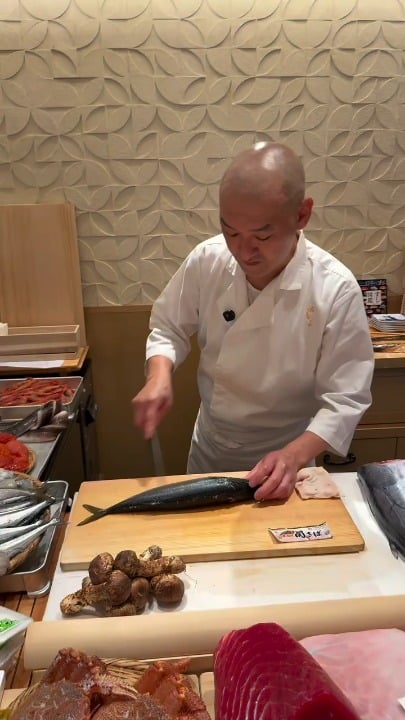
Japanese chef preparing Saba (mackarel) attentively before the next step
As I stepped into the quiet Tokyo restaurant, I was immediately drawn to the Japanese chef standing at the counter, his hands moving with precision as he prepared the Saba, or mackerel, for the next step in its culinary journey. The way he gently scaled the fish, his eyes scanning every inch of its shimmering skin, was almost meditative, and I found myself mesmerized by the attention to detail he brought to this simple yet crucial task. What was it about this humble fish that warranted such care, and what secrets lay hidden in the traditional Japanese methods used to prepare it for the plate?
The Art of Preparation
The chef’s meticulous preparation of the Saba is rooted in a deep understanding of the fish’s unique characteristics and the importance of preserving its delicate flavor and texture. Mackerel is a notoriously oily fish, with a high fat content that can make it prone to spoilage if not handled properly. By carefully scaling and cleaning the fish, the chef is able to remove any impurities or bacteria that may be present on its skin, helping to prevent the growth of unwanted microorganisms that can affect the fish’s flavor and safety. This attention to detail is not just about presenting a visually appealing dish, but also about ensuring that every bite is a safe and enjoyable one.
A Tradition of Respect
In Japanese cuisine, the preparation of Saba is not just about cooking a meal, but about showing respect for the ingredients and the people who will be eating them. The chef’s careful handling of the fish is a reflection of this mindset, as he seeks to honor the sacrifice of the animal and the efforts of the people who caught and supplied it. This sense of respect is deeply ingrained in Japanese culture, where the preparation and consumption of food is often seen as a spiritual or meditative practice. By taking the time to carefully prepare each ingredient, the chef is able to connect with the natural world and the people around him, creating a sense of community and gratitude that is at the heart of the Japanese culinary tradition.
The Science of Flavor
But the chef’s preparation of the Saba is not just about tradition or respect – it’s also about science. The careful scaling and cleaning of the fish helps to preserve its delicate flavor and texture, while the application of heat and seasoning can enhance the umami flavors that are naturally present in the fish. The high fat content of the mackerel also makes it an ideal candidate for certain types of cooking, such as grilling or pan-frying, which can help to caramelize the fish’s natural sugars and create a crispy, golden-brown crust. By understanding the chemistry of the fish and the cooking process, the chef is able to coax out the full range of flavors and textures that the Saba has to offer, creating a truly unforgettable dining experience.
As I watched the chef finish preparing the Saba and move on to the next step in its preparation, I couldn’t help but feel a sense of awe and appreciation for the care and attention that he brought to his craft. The simple act of preparing a fish for cooking had been transformed into a meditation on respect, tradition, and the science of flavor, and I knew that I would never look at a meal in the same way again. The Saba, once just a humble fish, had been elevated to a culinary masterpiece, and I felt grateful to have been a part of its journey, if only for a brief moment.