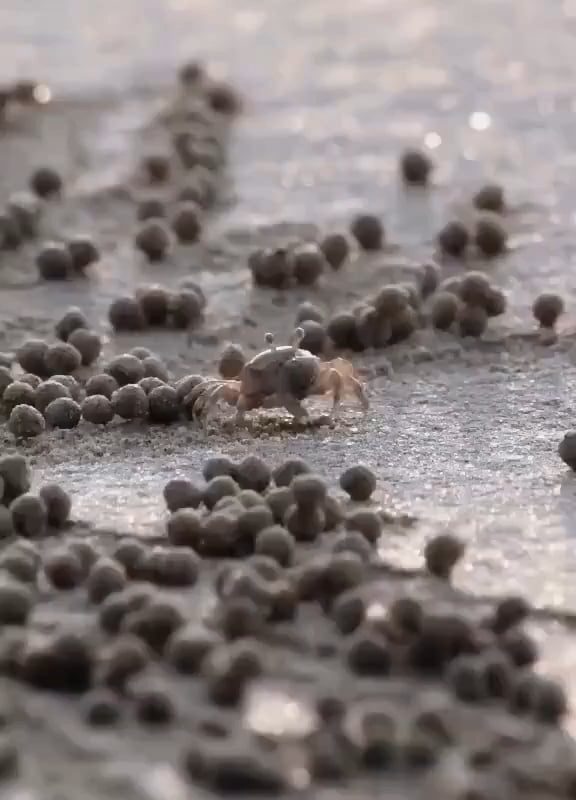
Little sand crab rolling sand into tiny balls
As I sat on the beach, watching the waves gently lap at the shore, I noticed something peculiar – a tiny crab, no bigger than a coin, scurrying across the sand, rolling tiny balls of sand into perfect little spheres. I was mesmerized by this tiny creature’s industrious nature, and I couldn’t help but wonder what it was doing and why. It turns out, these little sand crabs are quite common, and their behavior is not just fascinating, but also serves a very important purpose.
The Importance of Sand Balls
These tiny sand crabs, also known as sand bubbler crabs or sand-sifting crabs, are found in tropical and subtropical regions around the world. They spend most of their time burrowing into the sand, searching for food and shelter. As they dig, they create these tiny balls of sand, which may seem like a pointless exercise, but actually serves as a way for them to remove any debris or unwanted particles from their burrows. By rolling the sand into balls, they are able to sift through the sand and remove any impurities, leaving their burrows clean and safe. It’s a remarkable example of how these tiny creatures have adapted to their environment and developed unique strategies to survive.
The Science Behind the Behavior
But what’s even more fascinating is the science behind this behavior. Researchers have found that the sand crabs use their sensitive legs to detect the texture and consistency of the sand, allowing them to identify the perfect amount of moisture and sand particles to create these tiny balls. It’s a complex process that involves a combination of sensory input and motor skills, and one that has evolved over time to help these crabs thrive in their environment. Additionally, the balls of sand also help to stabilize the sand and prevent it from shifting or eroding, which is important for the crabs’ burrows and the overall ecosystem of the beach.
A Closer Look at These Tiny Creatures
As I continued to watch the sand crab, I was struck by its tiny size and delicate features. These crabs are usually between 1-2 centimeters in size, and have a translucent shell that allows them to blend in with their surroundings. Despite their small size, they are incredibly resilient and can survive in a variety of environments, from the intense heat of the desert to the cool, damp conditions of the forest. They are also incredibly social creatures, often living in large colonies and working together to build complex networks of burrows and tunnels.
As I sat on the beach, watching the sand crab scurry across the sand, I was reminded of the incredible diversity and complexity of the natural world. These tiny creatures, with their fascinating behavior and unique adaptations, are a testament to the incredible ingenuity and resilience of life on Earth. And as I walked away from the beach, I couldn’t help but feel a sense of wonder and awe at the tiny sand crab, and the important role it plays in the ecosystem of the beach.