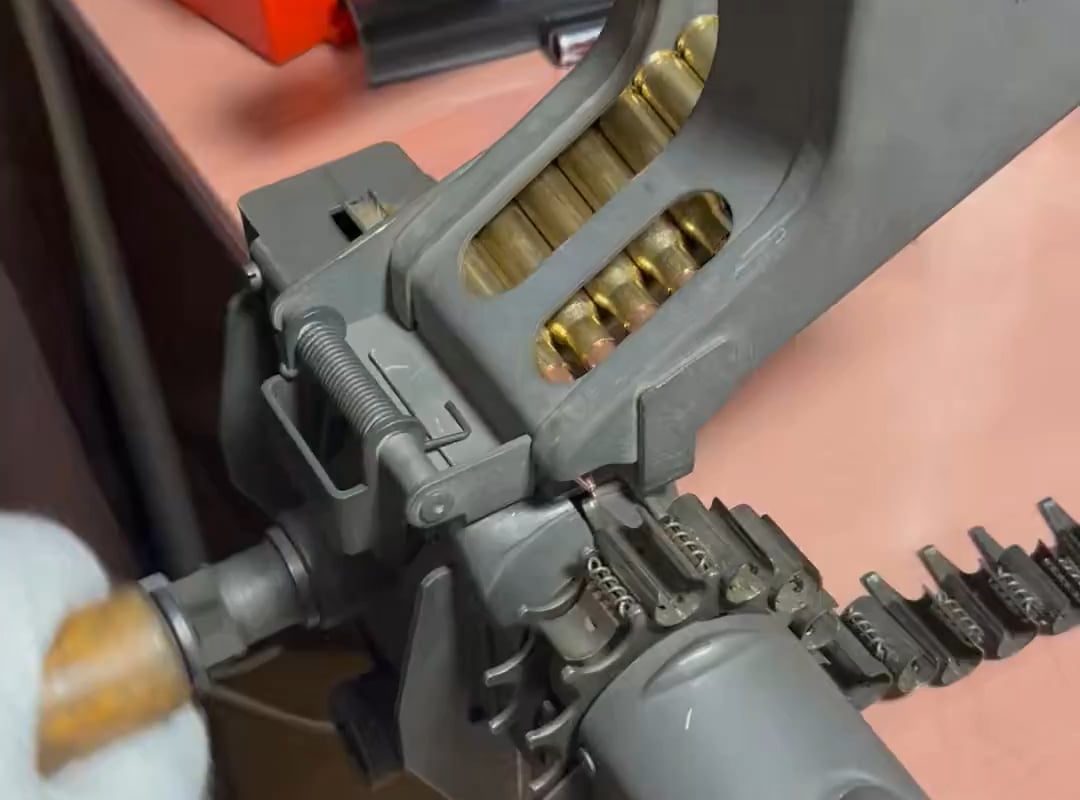
Mechanical reloading of bullets in the ammo belt
As I delved into the world of firearms and ammunition, I stumbled upon a fascinating process that left me in awe – the mechanical reloading of bullets in the ammo belt. It’s a crucial step that ensures the smooth operation of machine guns and other automatic firearms, but have you ever wondered how it works? The idea that a machine can reload bullets with such precision and speed is a testament to human ingenuity and the relentless pursuit of innovation. From the early days of firearms to the modern era, the mechanical reloading of bullets has undergone significant transformations, shaped by the demands of warfare, technological advancements, and the quest for efficiency.
The Early Days of Mechanical Reloading
The concept of mechanical reloading dates back to the late 19th century, when the first machine guns were developed. These early machines relied on manual loading, which was time-consuming and prone to errors. The introduction of the ammo belt, a flexible strip of canvas or metal links that held multiple cartridges, revolutionized the reloading process. As the gun fired, the belt was pulled through the machine, feeding new rounds into the chamber. However, the early systems were often cumbersome and unreliable, leading to frequent jams and misfires. It wasn’t until the early 20th century, with the advent of World War I, that mechanical reloading began to take shape as a critical component of modern warfare.
The Science Behind Mechanical Reloading
So, how does mechanical reloading work? At its core, the process involves a complex interplay of mechanical components, including gears, levers, and springs. As the gun fires, the ammo belt is pulled through the machine, and a new round is extracted from the belt and fed into the chamber. The mechanical reloading system must be precisely calibrated to ensure that each round is loaded correctly, with the correct amount of force and timing. The science behind this process is rooted in the principles of mechanics and materials science, where the properties of metals, plastics, and other materials are carefully considered to optimize performance and reliability. The result is a system that can reload bullets with breathtaking speed and accuracy, often in a matter of milliseconds.
Modern Applications and Innovations
Today, mechanical reloading is an essential component of modern firearms, from machine guns to automatic pistols. The process has undergone significant advancements, driven by advances in materials science, computer-aided design, and manufacturing technologies. Modern mechanical reloading systems are designed to be faster, more reliable, and more efficient, with features such as advanced sensors, automated diagnostic systems, and improved ergonomics. As firearms technology continues to evolve, it will be exciting to see how mechanical reloading adapts to new demands and challenges, from the development of new materials and designs to the integration of artificial intelligence and robotics.
As I concluded my journey into the world of mechanical reloading, I was struck by the sheer complexity and beauty of this process. From its humble beginnings to its current state-of-the-art applications, mechanical reloading is a testament to human ingenuity and the relentless pursuit of innovation. Whether you’re a firearms enthusiast, a historian, or simply someone fascinated by the intricacies of machines, the story of mechanical reloading is sure to captivate and inspire, offering a glimpse into a world where technology and precision come together in a dance of steel and fire.