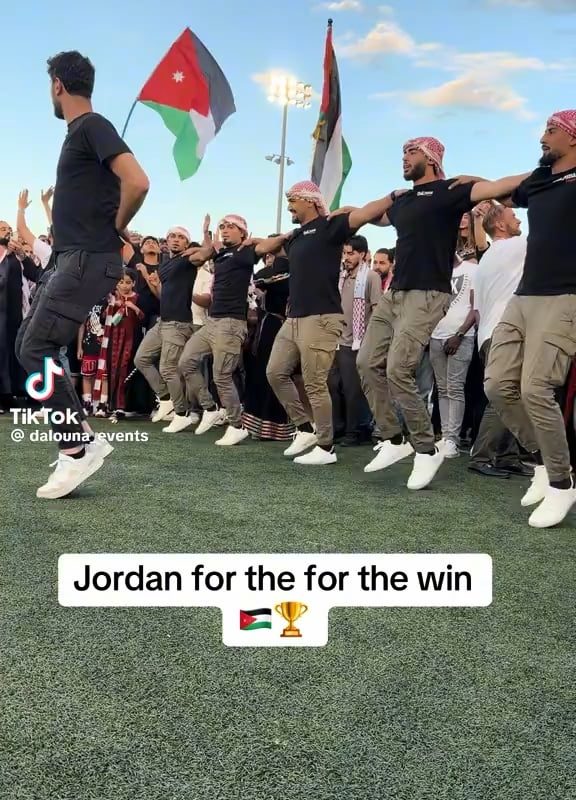
Men doing the Dabke. So satisfying seeing their legs/ feet in sync
There’s something undeniably mesmerizing about watching a group of men perform the Dabke, their legs and feet moving in perfect sync. The traditional Middle Eastern dance is a sight to behold, with its intricate footwork and lively rhythms. But what makes it so satisfying to watch? Is it the sense of community and camaraderie that comes with dancing together, or is there something more to it? As I delved deeper into the world of Dabke, I discovered a rich history and cultural significance that adds depth and meaning to this captivating dance.
The History of Dabke
The Dabke has its roots in the Levant region, where it originated as a folk dance among the peasant communities. The dance is characterized by a line of men holding hands and performing a series of intricate steps, often to the accompaniment of traditional music and singing. Over time, the Dabke has evolved and spread throughout the Middle East, with different regions developing their own unique styles and variations. Despite its widespread popularity, the Dabke remains deeply rooted in its cultural heritage, with many performances taking place at weddings, festivals, and other community celebrations.
The Science of Synchronization
So, what makes the Dabke so satisfying to watch? One possible explanation lies in the science of synchronization. When a group of people move in sync, it creates a sense of unity and cohesion that is both visually appealing and emotionally resonant. Research has shown that synchronized movement can actually stimulate the brain’s reward centers, releasing feel-good chemicals such as dopamine and endorphins. This can create a sense of pleasure and enjoyment, not just for the dancers themselves, but also for the audience watching. In the case of the Dabke, the synchronized footwork and lively rhythms combine to create a truly exhilarating experience.
Cultural Significance and Community
For the men who perform the Dabke, the dance is often about more than just the physical movement – it’s about community, cultural heritage, and a sense of belonging. In many Middle Eastern cultures, the Dabke is an important part of social and cultural life, bringing people together and fostering a sense of unity and cooperation. When a group of men come together to perform the Dabke, they are not just dancing – they are participating in a shared cultural tradition that transcends borders and generations. As I watched a group of men perform the Dabke, I couldn’t help but feel a sense of awe and appreciation for the beauty and significance of this traditional dance.
As I continued to watch the Dabke, I found myself becoming more and more entranced by the synchronized movement and lively rhythms. There’s something truly special about this traditional dance, something that goes beyond just the physical movement and speaks to a deeper sense of community and cultural heritage. Whether you’re a longtime fan of the Dabke or just discovering it for the first time, there’s no denying the magic and allure of this captivating dance – and the sense of satisfaction that comes from watching a group of men move in perfect sync.