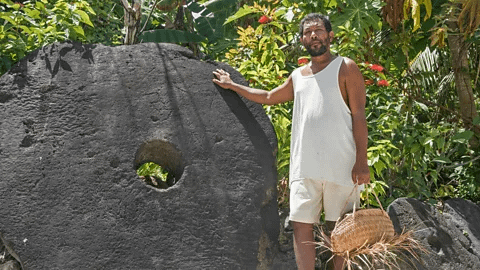
On Yap Island, large donut shaped coins called Rai Stones are used as currency. As they are difficult to move, transactions are memorized through oral history – much like contemporary distributive ledgers. Rai Stone transactions are used for weddings, land acquisitions and ransoms.
Imagine walking into a store and instead of pulling out your wallet or phone to make a payment, you point to a massive stone outside and say “I’ll just take that one as payment.” Sounds crazy, right? But on the tiny island of Yap in the Pacific, this is exactly how things work. The island is home to a unique form of currency called Rai Stones, which are large donut-shaped coins that can weigh up to 8,000 pounds. Yes, you read that right – 8,000 pounds! These massive stones are so big and heavy that they’re often left in one place, and transactions are simply memorized through oral history. It’s a system that’s been in place for centuries, and it’s fascinating to learn about.
The History of Rai Stones
The use of Rai Stones as currency dates back to the early days of Yap Island, when the stones were brought back from neighboring islands as a form of tribute. Over time, the stones became a symbol of wealth and status, and were used to facilitate transactions such as weddings, land acquisitions, and even ransoms. The stones were often carved with intricate designs and patterns, which added to their value and significance. Despite their size and weight, the stones were highly valued, and were often used as a form of display to show off one’s wealth. It’s amazing to think that these massive stones have been used as currency for so long, and that their value is still recognized and respected today.
How Rai Stone Transactions Work
So, how do transactions work when the currency is a massive stone that can’t be moved? The answer lies in oral history. When a transaction takes place, the details are memorized and passed down through generations. This means that the ownership of a particular stone is not necessarily determined by its physical location, but rather by the collective memory of the community. It’s a system that relies on trust and cooperation, and it’s remarkable to think that it’s been in place for so long. In fact, the use of Rai Stones as currency is often cited as an example of a distributive ledger, where transactions are recorded and verified by a network of people rather than a central authority.
The Significance of Rai Stones Today
Today, the use of Rai Stones as currency is still an important part of Yap Island’s culture and tradition. While the stones are no longer used for everyday transactions, they are still used for special occasions such as weddings and land acquisitions. The stones are also a popular tourist attraction, and visitors can see them on display in villages and museums around the island. The story of the Rai Stones is a fascinating one, and it’s a reminder that there’s often more to money and currency than meets the eye. Whether you’re an economist, an anthropologist, or simply someone who’s curious about the world, the Rai Stones of Yap Island are definitely worth learning more about.
In the end, the story of the Rai Stones is a reminder that currency and value are complex and multifaceted concepts that can take many different forms. Whether it’s a digital transaction on your phone or a massive stone on a remote island, the key to a successful currency is trust, cooperation, and a shared understanding of its value. As we continue to navigate the complexities of modern finance and technology, it’s fascinating to look back at examples like the Rai Stones, which show us that even the most unlikely forms of currency can be effective and enduring.