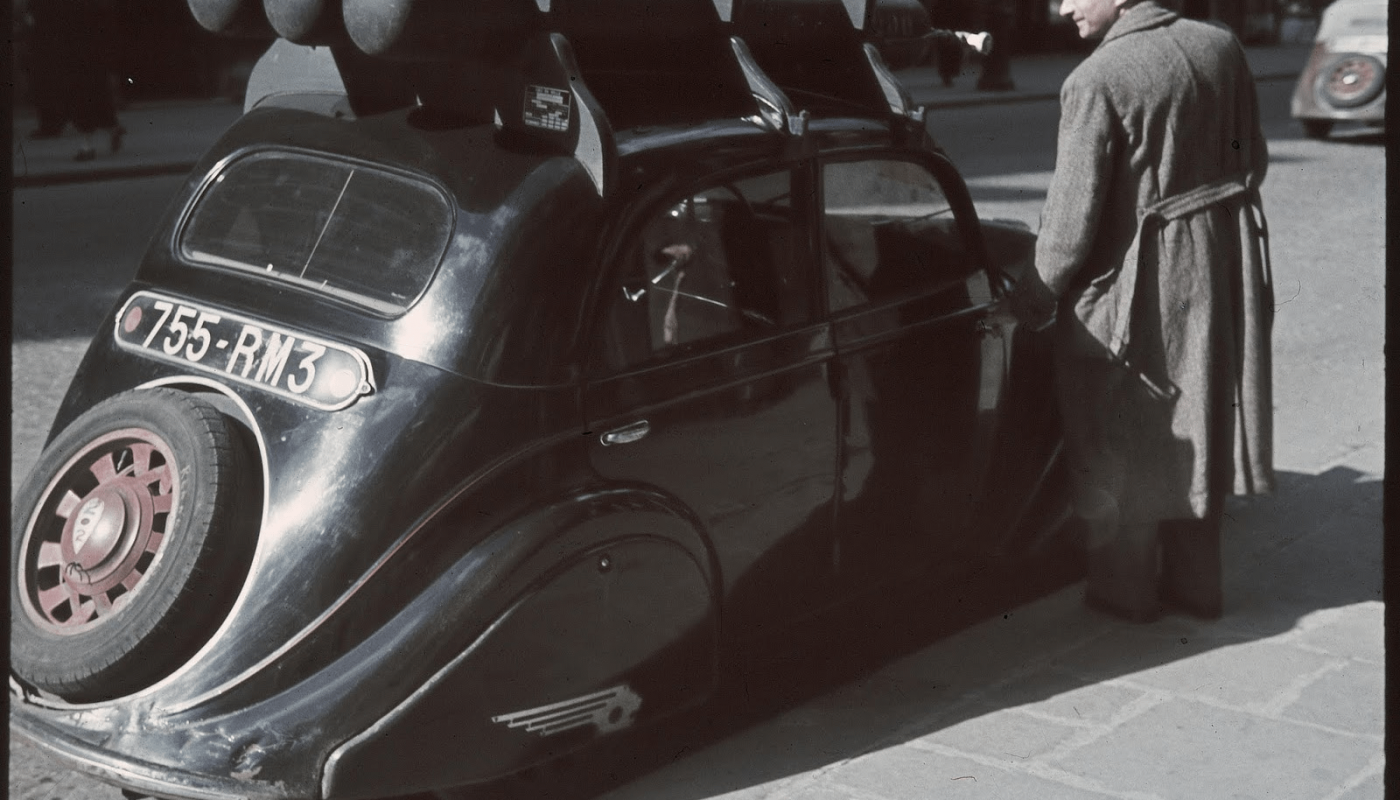
Photo of Peugeot 202 with adaptation to run on natural gas during german ocupation of France. Photo by Andre Zucca, 1940s.
As I stumbled upon this intriguing photo of a Peugeot 202 adapted to run on natural gas during the German occupation of France, I couldn’t help but wonder about the story behind it. The image, captured by Andre Zucca in the 1940s, is a testament to the resourcefulness and ingenuity of the French people during a time of great hardship. The Peugeot 202, a popular car model at the time, was modified to run on natural gas, a fuel source that was more readily available than traditional gasoline. But what drove the need for such an adaptation, and how did it work?
A Time of Scarcity
The German occupation of France during World War II led to a severe shortage of gasoline, making it difficult for people to fuel their vehicles. In response, the French government encouraged the use of alternative fuels, such as natural gas and charcoal. The Peugeot 202, with its adapted engine, was able to run on natural gas, which was more abundant and easier to produce than gasoline. This modification not only helped to alleviate the fuel shortage but also reduced the country’s reliance on German-controlled fuel supplies. The photo of the Peugeot 202 is a remarkable example of how the French people adapted to the challenges of war, using their ingenuity and resourcefulness to find solutions to everyday problems.
The Science Behind the Adaptation
So, how did the Peugeot 202’s engine get modified to run on natural gas? The process involved installing a special converter that allowed the engine to burn natural gas instead of gasoline. Natural gas, which is primarily composed of methane, has a different combustion characteristic than gasoline, requiring a higher compression ratio and a specialized ignition system. The converter, which was typically installed in the trunk of the car, used a series of valves and pipes to mix the natural gas with air, creating a fuel mixture that could be burned by the engine. This adaptation not only allowed the Peugeot 202 to run on natural gas but also improved its fuel efficiency and reduced its emissions.
A Lasting Legacy
The adaptation of the Peugeot 202 to run on natural gas during the German occupation of France is a fascinating example of how necessity can drive innovation. The use of alternative fuels during this time period paved the way for the development of more efficient and environmentally friendly vehicles in the years that followed. Today, natural gas is still used as a fuel source for vehicles, particularly in countries with an abundance of natural gas reserves. The photo of the Peugeot 202, taken by Andre Zucca in the 1940s, serves as a reminder of the importance of innovation and adaptability in the face of adversity, and the lasting impact that these efforts can have on our world.
As I continued to gaze at the photo of the Peugeot 202, I couldn’t help but feel a sense of admiration for the resourcefulness and determination of the French people during this tumultuous time. The adaptation of this car to run on natural gas is a testament to the human spirit’s ability to persevere and innovate in the face of challenge, and a reminder that even in the darkest of times, there is always the potential for creativity and progress to flourish.