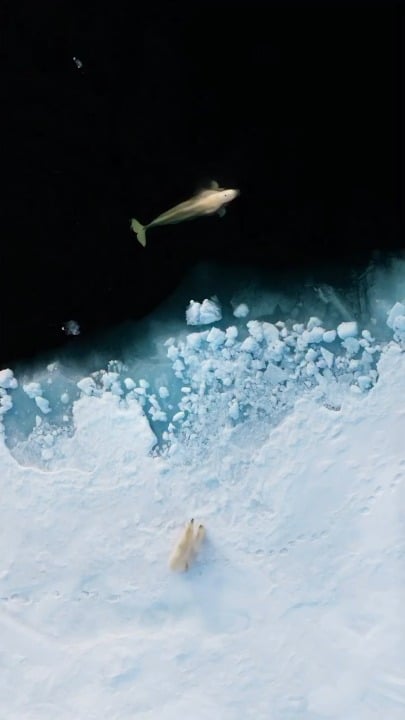
Polar bear tries to hunt Belunga Whale in Arctic pack ice.
In the harsh yet breathtakingly beautiful Arctic landscape, a thrilling drama unfolded recently, captivating the hearts of wildlife enthusiasts and scientists alike. A polar bear, the apex predator of the Arctic, was spotted attempting to hunt a beluga whale in the pack ice. This extraordinary encounter not only showcases the incredible adaptability and hunting prowess of polar bears but also highlights the intricate and often surprising dynamics of Arctic ecosystems. As we delve into the details of this remarkable event, we find ourselves entwined in a fascinating tale of survival, strategy, and the relentless pursuit of sustenance in one of the world’s most inhospitable environments.
The Hunt: A Test of Strength and Strategy
The scene was set in the Arctic pack ice, a realm of frozen tundras and icy waters where polar bears reign supreme. The beluga whale, with its distinctive white color and rounded forehead, had ventured into the bear’s domain, perhaps seeking refuge or prey in the icy waters. The polar bear, ever the opportunist, sensed a potential meal and began to stalk its prey. This was no ordinary hunt; it was a clash of titans, with the bear’s powerful claws and teeth pitted against the whale’s formidable size and strength. Observers noted the bear’s cautious approach, its movements stealthy and calculated as it sought to exploit any weakness in the whale’s defenses. Despite the odds, the bear’s determination was palpable, driven by the primal urge to survive and thrive in a landscape where hunger and scarcity are constant companions.
The Science Behind the Encounter
From a scientific perspective, this encounter offers a unique window into the behavioral patterns and ecological roles of both polar bears and beluga whales. Polar bears are well-adapted to hunting seals, their primary source of nutrition, using techniques that involve stalking, ambushing, and killing. However, the pursuit of a beluga whale represents a significant departure from this usual prey, suggesting a level of adaptability and opportunism that is both impressive and necessary in the face of a changing Arctic environment. Climate change, with its attendant melting of sea ice, is altering the distribution and abundance of prey species, forcing polar bears to explore new hunting strategies and territories. This adaptability is a testament to the bear’s resilience but also underscores the challenges it faces in a rapidly shifting ecosystem.
A Glimpse into the Future
The attempted hunt of a beluga whale by a polar bear serves as a poignant reminder of the interconnectedness and vulnerability of Arctic ecosystems. As the Arctic continues to warm at an alarming rate, the consequences for its inhabitants are far-reaching and profound. Polar bears, beluga whales, and countless other species are being pushed to adapt, migrate, or face the very real threat of extinction. This dramatic encounter, while captivating in its own right, also prompts us to reflect on our role in preserving these ecosystems. By supporting conservation efforts, reducing our carbon footprint, and advocating for policies that address climate change, we can help ensure that the Arctic remains a vibrant, thriving environment, where polar bears and beluga whales can continue to roam and hunt as they have for millennia.
As the Arctic pack ice melts away, revealing more of its secrets and stories, we are reminded of the awe-inspiring beauty and complexity of nature. The polar bear’s audacious attempt to hunt a beluga whale is more than just an intriguing anecdote; it’s a snapshot of life on the edge, where survival is a daily challenge and adaptability is the key to existence. This remarkable event invites us to step into the frozen world of the Arctic, to marvel at its creatures, and to ponder our responsibility to protect this fragile, fascinating ecosystem for generations to come.