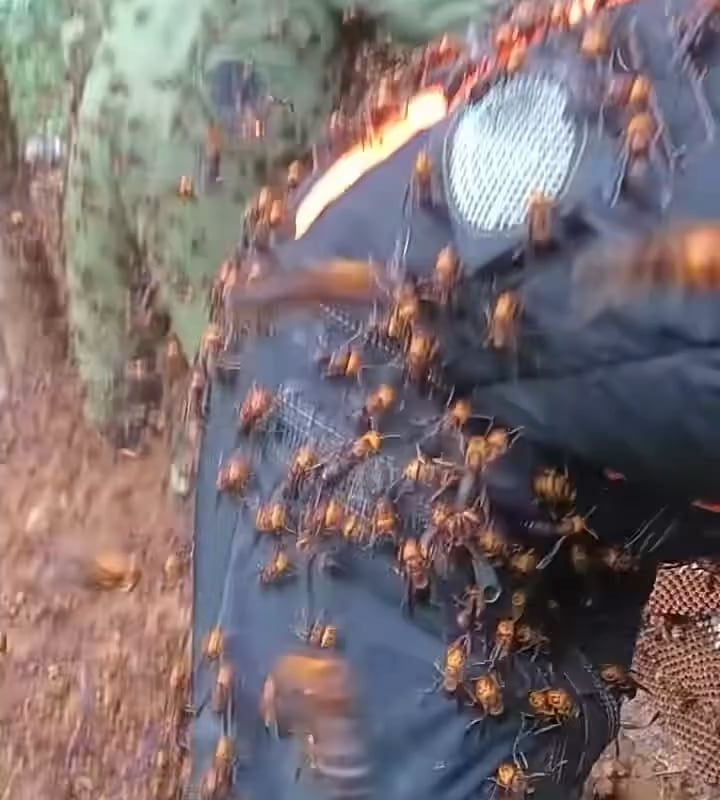
Professionals Harvesting Massive Hornet Nests
Imagine being surrounded by thousands of angry hornets, their buzzing growing louder as you carefully make your way closer to their nest. It’s a daunting task, but for some professionals, harvesting massive hornet nests is all in a day’s work. These brave individuals, often beekeepers or entomologists, put themselves at risk to collect and study these fascinating creatures. But what drives them to take on this challenge, and what can we learn from their experiences? The world of hornet nest harvesting is a complex and intriguing one, full of science, skill, and a dash of adventure.
The Art of Nest Harvesting
Harvesting a hornet nest is a delicate process that requires great care and attention to detail. Professionals must first locate the nest, often by tracking the hornets back to their source. Once the nest is found, they must carefully assess the situation, taking into account the size of the nest, the number of hornets, and the potential risks involved. The actual harvesting process typically involves smoking the hornets to calm them, before carefully cutting the nest from the surrounding area. It’s a painstaking process, but one that can yield valuable insights into the behavior and biology of these incredible insects.
The Science Behind the Sting
So, why do professionals go to such great lengths to harvest hornet nests? The answer lies in the science behind these incredible creatures. Hornets, particularly the Asian giant hornet, are known for their potent venom, which contains a unique compound called melittin. This compound has been shown to have antibacterial properties, and researchers are eager to learn more about its potential applications. By studying the behavior and biology of hornets, scientists can gain a deeper understanding of the complex social structures and communication methods that govern their colonies. This knowledge can, in turn, inform the development of new medicines, agricultural practices, and even robotics.
Risks and Rewards
Despite the many rewards of hornet nest harvesting, there are also significant risks involved. Hornet stings can be extremely painful, and in some cases, even life-threatening. Professionals must take every precaution to protect themselves, from wearing specialized suits to using smoke and other calming agents to reduce the risk of attack. However, for those who are passionate about these incredible creatures, the rewards far outweigh the risks. By harvesting and studying hornet nests, professionals can contribute to a deeper understanding of the natural world, and perhaps even uncover new secrets and discoveries that can benefit humanity as a whole.
As we marvel at the bravery and skill of these professionals, we’re reminded of the importance of exploring and understanding the natural world. By delving into the fascinating world of hornet nest harvesting, we can gain a new appreciation for the complexity and beauty of these incredible creatures, and perhaps even uncover new secrets and discoveries that can benefit us all. Whether you’re an entomologist, a beekeeper, or simply a curious observer, the world of hornet nest harvesting is a captivating and intriguing one, full of science, adventure, and a dash of danger.