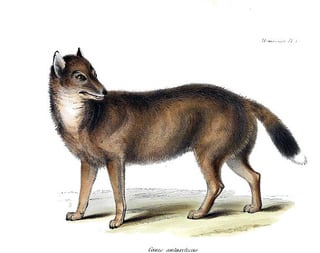
The Falkland fox was driven to extinction without clear evidence that it threatened sheep. Hunted by settlers and easy to catch due to its tame nature, it disappeared unnecessarily. (source: wikipedia)
The Falkland Islands, a remote and rugged archipelago in the South Atlantic, are home to a fascinating yet tragic tale of extinction. The Falkland fox, also known as the warrah, once roamed these islands, but its story is one of untimely demise. This curious creature was hunted to extinction by settlers, who viewed it as a threat to their sheep, but what’s striking is that there’s no clear evidence to support this claim. The Falkland fox’s tame nature, which made it easy to catch, ultimately led to its downfall. As we delve into the history of this enigmatic animal, we’re left wondering what really drove its extinction, and whether it was truly necessary.
A Tame and Curious Creature
The Falkland fox was a unique and intriguing animal, with a distinctive appearance and behavior. Its tameness was likely due to the lack of natural predators on the islands, which made it unafraid of humans. This trait, while endearing, ultimately proved to be its downfall. Settlers, who arrived on the islands in the 19th century, saw the fox as a threat to their sheep and began to hunt it. However, there’s no conclusive evidence to suggest that the Falkland fox was indeed a significant threat to the sheep population. In fact, some accounts suggest that the fox primarily fed on small animals, like rodents and birds, and was not a major predator of sheep.
Unnecessary Extinction
The extinction of the Falkland fox is a cautionary tale about the dangers of assumptions and the importance of scientific evidence. Without clear proof of the fox’s impact on sheep, it’s likely that its extinction was unnecessary. The Falkland fox’s population declined rapidly as settlers hunted it, and by the 1870s, it was considered extinct. This loss is not only a tragedy for the animal itself but also for the ecosystem of the Falkland Islands. The removal of a species, even one perceived as a pest, can have unintended consequences on the environment and the balance of the ecosystem.
A Lesson from History
The story of the Falkland fox serves as a reminder of the importance of responsible and informed conservation. It highlights the need for scientific research and evidence-based decision-making when it comes to managing wildlife populations. As we look back on the extinction of the Falkland fox, we’re reminded that even the most seemingly insignificant creatures play a vital role in their ecosystems. The Falkland fox may be gone, but its story can teach us valuable lessons about the importance of preserving biodiversity and the need for careful consideration when interacting with the natural world.
As we reflect on the tale of the Falkland fox, we’re left with a sense of sadness and regret. The unnecessary extinction of this unique creature is a reminder of the importance of responsible stewardship of the natural world. The Falkland fox may be gone, but its story will live on, serving as a cautionary tale about the dangers of assumptions and the importance of preserving the delicate balance of our ecosystems. By learning from the past, we can work towards a future where humans and wildlife coexist in harmony, and where the loss of a species like the Falkland fox is not repeated.