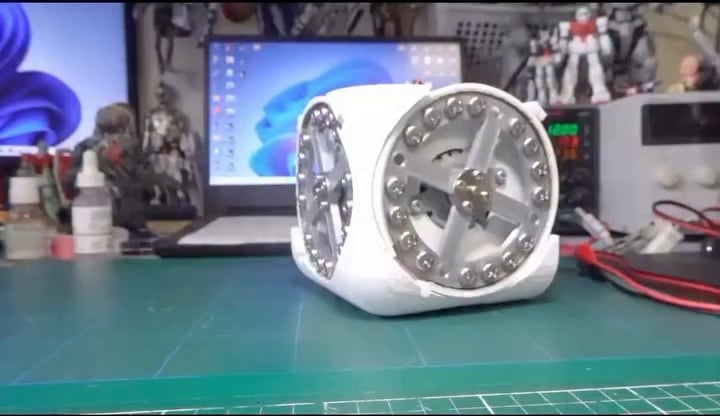
Using a reaction wheel, this system can lift itself upright and maintain balance in an inverted position.
As I watched a video of a robot effortlessly lifting itself upright and balancing in an inverted position, I couldn’t help but feel a sense of awe and wonder. The secret to this impressive feat lies in a clever device called a reaction wheel, which allows the system to maintain its balance and stability even in the most unlikely of positions. But what exactly is a reaction wheel, and how does it work its magic? Let’s dive in and explore the fascinating world of robotics and balance.
The Science of Balance
The concept of balance is something that we often take for granted, but it’s actually a complex and intricate process that requires a delicate interplay of physics and engineering. When a system is in motion, it’s subject to a range of forces and torques that can affect its balance and stability. A reaction wheel is a type of flywheel that uses the conservation of angular momentum to generate a torque that can counteract these forces and keep the system upright. By carefully controlling the speed and direction of the reaction wheel, the system can make precise adjustments to its balance and maintain its stability even in challenging environments.
Applications and Implications
The use of reaction wheels in robotics has a wide range of applications and implications, from space exploration to search and rescue missions. For example, a robot equipped with a reaction wheel could be used to navigate treacherous terrain or climb steep inclines, all while maintaining its balance and stability. This technology could also be used in the development of autonomous vehicles, allowing them to navigate complex environments and avoid obstacles with ease. As we continue to push the boundaries of what is possible with robotics and artificial intelligence, the use of reaction wheels is likely to play an increasingly important role in the development of new and innovative technologies.
The Future of Robotics
As we look to the future of robotics, it’s clear that the use of reaction wheels and other balancing technologies will be a key area of research and development. By combining advanced sensors, sophisticated algorithms, and precise control systems, we can create robots that are capable of navigating even the most challenging environments with ease and precision. Whether it’s exploring the surface of Mars or navigating the rubble of a disaster zone, the use of reaction wheels and other balancing technologies is likely to play a vital role in the development of the next generation of robots. As I finished watching that video of the robot lifting itself upright, I couldn’t help but feel a sense of excitement and anticipation for the amazing things that the future of robotics has in store for us.
As I reflect on the incredible capabilities of reaction wheels and the robots that use them, I’m reminded of the incredible power of human ingenuity and innovation. From the intricate dance of physics and engineering that underlies the reaction wheel, to the vast range of applications and implications that this technology has, it’s clear that we’re living in a truly remarkable time. As we continue to push the boundaries of what is possible with robotics and artificial intelligence, I have no doubt that we’ll see even more amazing feats of balance and agility in the years to come.