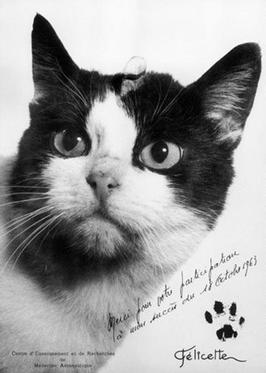
While the Soviets sent the famous dog Laika into orbit, France sent a stray Parisian cat named Félicette into space on a suborbital flight in 1963. She survived and returned safely.
As I was digging through the fascinating history of space exploration, I stumbled upon a story that left me purring with delight – the tale of Félicette, a stray Parisian cat who bravely ventured into space in 1963. While many of us are familiar with the story of Laika, the Soviet space dog, Félicette’s journey is a lesser-known but equally captivating one. This curious cat was sent on a suborbital flight by the French, and her story is a testament to the innovative spirit of space research during the 1960s.
From Streets to Stars
Félicette’s journey began on the streets of Paris, where she was discovered by a group of scientists who were on the lookout for a suitable feline candidate for their space mission. The team, led by the French space program, was determined to study the effects of space travel on living organisms, and Félicette fit the bill perfectly. After a series of rigorous tests and training sessions, Félicette was launched into space on October 18, 1963, aboard a Véronique AGI rocket. The mission was designed to be a suborbital flight, which meant that Félicette would reach the edge of space but not orbit the Earth.
The Science Behind Félicette’s Flight
So, what made Félicette’s mission so significant? For starters, the French scientists were eager to study the effects of weightlessness and radiation on a living organism. By sending Félicette into space, they hoped to gain valuable insights into how the human body would respond to the harsh conditions of space travel. The mission was also designed to test the capabilities of the Véronique AGI rocket, which was a crucial step in the development of France’s space program. Félicette’s bravery and resilience played a significant role in the success of the mission, and her safe return to Earth was a major triumph for the scientists involved.
A Legacy of Feline Space Exploration
Today, Félicette’s legacy serves as a reminder of the important role that animals have played in the history of space exploration. From Laika to Félicette, these brave creatures have paved the way for human spaceflight, and their contributions should not be forgotten. As we continue to push the boundaries of space research and exploration, it’s heartwarming to remember the story of a stray Parisian cat who dared to reach for the stars. Félicette’s journey may have been a brief one, but her impact on the world of space science is a lasting one, and her story is sure to inspire generations of space enthusiasts to come.
As I reflect on Félicette’s incredible journey, I am reminded of the power of curiosity and innovation that has driven human progress throughout history. From the streets of Paris to the edge of space, Félicette’s story is a testament to the boundless potential of exploration and discovery. And who knows? Maybe one day, we’ll have a new generation of feline astronauts, boldly going where no cat has gone before. The thought alone is enough to leave me smiling, and I hope it has inspired you to learn more about the fascinating history of space exploration and the amazing animals that have helped us get there.