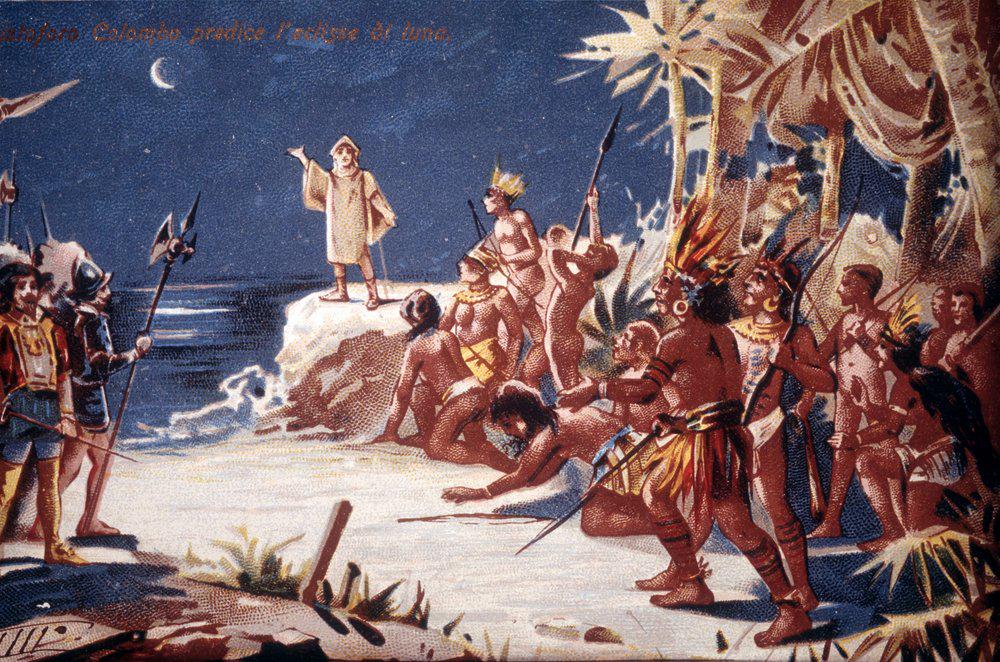
1504, stranded in Jamaica with a famished crew, Columbus faced a mutiny and a blockade of food supplies from the indigenous Arawak people. Using an almanac by astronomer Regiomontanus, Columbus predicted a total lunar eclipse. When turned moon turned red, the terrified Arawak stopped the blockade.
Imagine being stranded on a beautiful island, surrounded by lush green forests and crystal-clear waters, but with a crew on the brink of starvation and a hostile local population refusing to help. This was the dire situation Christopher Columbus found himself in back in 1504, during his fourth and final voyage to the New World. He had been sailing the Caribbean for months, but his ships were damaged, and his crew was famished. The indigenous Arawak people, who had initially been friendly, had grown tired of the Europeans’ demands for food and were now blockading their supplies. It was a desperate time, and Columbus needed a miracle to turn things around.
The Science of Survival
Columbus, being the skilled navigator and leader that he was, remembered an almanac he had brought with him on the voyage. The almanac, written by the renowned astronomer Regiomontanus, contained predictions of celestial events, including a total lunar eclipse that was about to occur. Columbus, knowing that the Arawak people were deeply superstitious and believed in the power of the gods, decided to use this knowledge to his advantage. He called upon the Arawak leader and told him that the gods were angry with the Arawak people for not providing food to the Europeans, and that a sign of their displeasure would soon be visible in the sky. Sure enough, when the moon turned red during the lunar eclipse, the Arawak people were terrified, believing that the gods were indeed angry with them.
A Turning Point in History
The lunar eclipse was a turning point in the history of Columbus’s voyage. The Arawak people, fearing the wrath of the gods, immediately lifted the blockade and began providing food to the Europeans. This not only saved the crew from starvation but also helped to establish a temporary peace between the two groups. It’s fascinating to think about how a celestial event, predicted by an astronomer’s almanac, could have such a profound impact on the course of history. The incident also highlights the importance of understanding and respecting the cultural beliefs and practices of indigenous populations, and the need for leaders to be adaptable and resourceful in the face of adversity.
Legacy of a Leader
Columbus’s clever use of the almanac and his understanding of the Arawak people’s superstitions has become legendary in the annals of history. It’s a testament to his leadership skills and his ability to think on his feet, even in the most desperate of situations. The incident also underscores the significance of astronomy and science in navigation and exploration. Without the almanac and Columbus’s knowledge of the lunar eclipse, the outcome of the voyage might have been very different. As we look back on this fascinating episode, we are reminded of the power of human ingenuity and the importance of respecting the cultural and scientific knowledge of others.
In the end, Columbus’s voyage may not have been as successful as he had hoped, but the story of how he used a lunar eclipse to save his crew from starvation has become an enduring part of his legacy. It’s a reminder that even in the darkest of times, there is always hope, and that with courage, determination, and a little bit of scientific knowledge, we can overcome even the most daunting challenges. The next time you gaze up at the night sky, remember the incredible story of how a total lunar eclipse helped to change the course of history, and the remarkable leader who used science and cunning to save his crew from the brink of disaster.