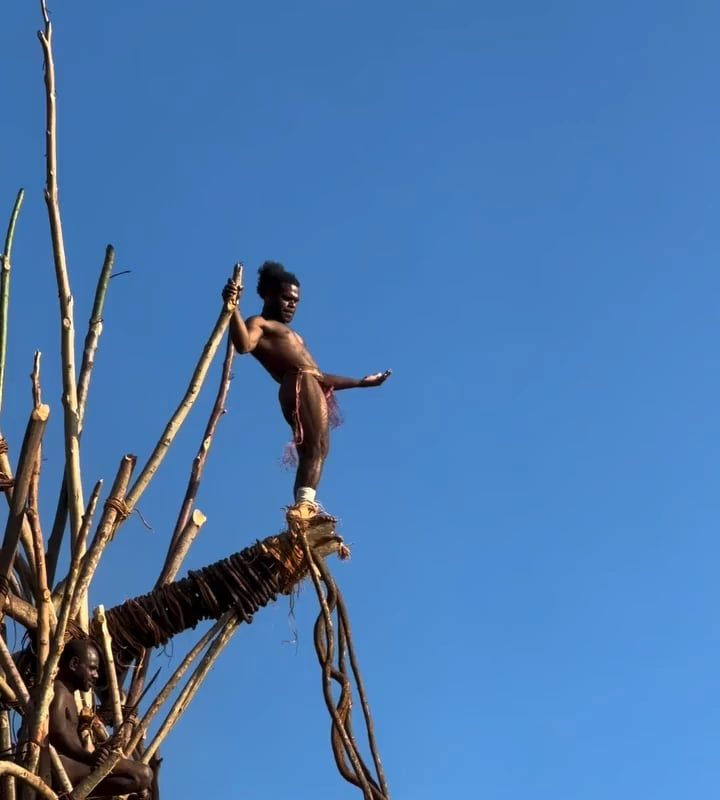
Land diving on Pentecost island in Vanuatu.
Imagine standing on a rickety tower, high above the ground, with nothing but a few vines tied around your ankles to break your fall – sounds crazy, right? Yet, for the men of Pentecost Island in Vanuatu, this is a traditional coming-of-age ritual known as land diving, a practice that has been passed down for generations. The tower, made from wooden poles and vines, can reach heights of up to 30 meters, and the divers, known as “nanggol,” jump off with their arms crossed and their eyes closed, trusting in the vines to absorb the shock of the fall. This ancient tradition is not just a thrilling spectacle, but also a deeply spiritual and cultural practice that holds significant meaning for the islanders.
The History and Significance of Land Diving
Land diving on Pentecost Island is believed to have originated as a fertility ritual, where the divers would jump from the tower to ensure a good yam harvest. The ritual was also a way to demonstrate bravery and strength, as well as to resolve conflicts and settle disputes. The nanggol would jump from the tower, and if they survived, it was seen as a sign of their strength and virility. The ritual was also closely tied to the island’s spiritual beliefs, with the divers believed to be communicating with the spirits of their ancestors. Today, land diving is still an important part of the island’s culture and identity, with the ritual taking place every Saturday between April and June.
The Science Behind the Jump
So, how do the nanggol survive the jump without breaking their ankles or worse? The secret lies in the vines, which are carefully selected and prepared to absorb the shock of the fall. The vines are made from a special type of forest vine that is flexible and strong, and are tied around the diver’s ankles in a specific way to maximize the absorption of the impact. The divers also use a technique called “bungee jumping,” where they stretch their bodies to maximize the length of the vine, allowing them to jump from greater heights. The science behind the jump is fascinating, and researchers have studied the physics of the land diving ritual to understand how the nanggol can survive such a seemingly impossible feat.
Preserving a Unique Cultural Tradition
Despite the risks involved, land diving remains an important part of the cultural heritage of Pentecost Island, and efforts are being made to preserve this unique tradition. The Vanuatu government has recognized the importance of land diving and has taken steps to protect the ritual and the island’s cultural identity. Visitors to the island can witness the land diving ritual, but are encouraged to do so respectfully and responsibly, recognizing the significance of the ritual to the islanders. As a result, land diving on Pentecost Island continues to thrive, attracting visitors from around the world who come to witness this incredible and awe-inspiring spectacle.
As I reflect on the land diving ritual on Pentecost Island, I am struck by the bravery, strength, and spiritual connection of the nanggol. This ancient tradition is a testament to the power of culture and community, and a reminder of the importance of preserving our unique cultural heritage. Whether you’re an adventure-seeker or simply curious about different cultures, land diving on Pentecost Island is an experience that will leave you in awe of the human spirit and the incredible things we can achieve when we come together to celebrate our traditions and beliefs.