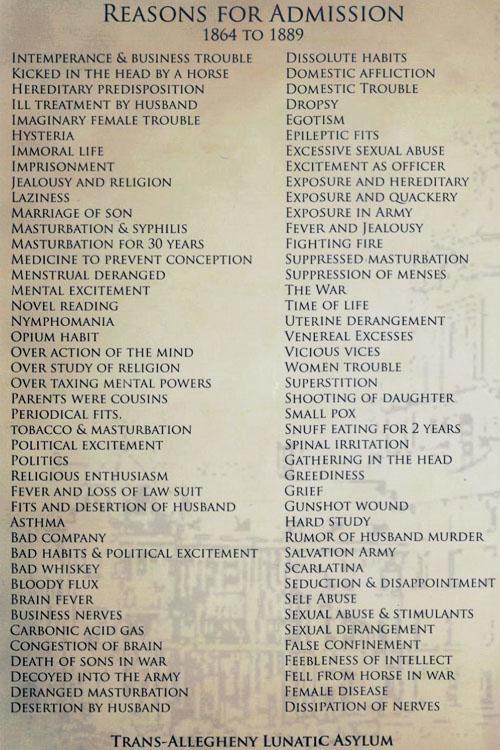
A list of criteria for being admitted in to an insane asylum from the 1800s
Imagine being locked away in a mysterious institution, deemed unfit to live among society due to a set of criteria that seems almost laughable by today’s standards. The 1800s was a time of great change and discovery, but also a time of great misunderstanding when it came to mental health. Insane asylums were the go-to solution for dealing with individuals who didn’t quite fit the mold, and the criteria for admission was often based on vague and unscientific notions of what constituted “insanity.” From being deemed “overly emotional” to having a “tendency to cause trouble,” the list of reasons for being admitted to an insane asylum is a fascinating, if not disturbing, look into the past.
Unconventional Behavior
The criteria for admission to an insane asylum in the 1800s was often based on behaviors that were deemed unconventional or unacceptable by societal standards. Women who were considered “too independent” or “overly emotional” might find themselves locked away, as might men who were seen as “weak-willed” or “effeminate.” The idea of what constituted “normal” behavior was narrow and rigid, and anyone who deviated from these expectations was at risk of being labeled “insane.” This meant that individuals who were simply different, or who didn’t conform to societal norms, might find themselves trapped in an institution with little hope of escape.
Questionable Medical Theories
The medical theories of the time were also a major factor in the criteria for admission to an insane asylum. The idea of “humoralism,” which held that the body contained four fluid-like substances that needed to be kept in balance, was still widely accepted, and any imbalance was seen as a sign of insanity. Additionally, the theory of “phrenology,” which held that the shape and size of the skull could determine an individual’s personality and mental health, was also used to diagnose and treat mental illness. These pseudoscientific theories led to some truly bizarre criteria for admission, including having a “bad temperament” or being prone to “excessive daydreaming.”
A Glimpse into the Past
Looking back on the criteria for admission to an insane asylum in the 1800s is a sobering reminder of how far we’ve come in our understanding of mental health. While it’s easy to laugh at the outdated notions of what constituted “insanity,” it’s also important to remember the very real people who suffered as a result of these misconceptions. The history of insane asylums is a complex and often disturbing one, but it’s also a reminder of the importance of compassion, empathy, and understanding in our approach to mental health. By examining the past, we can gain a deeper appreciation for the progress we’ve made, and a renewed commitment to providing care and support to those who need it most.
As we look back on the criteria for admission to an insane asylum in the 1800s, it’s clear that our understanding of mental health has come a long way. While the idea of being locked away for being “overly emotional” or having a “tendency to cause trouble” seems outrageous to us today, it’s a reminder that our perceptions of mental health are always evolving. By exploring the fascinating, if not disturbing, history of insane asylums, we can gain a deeper understanding of the complexities of the human mind, and a renewed appreciation for the importance of compassion and empathy in our approach to mental health.