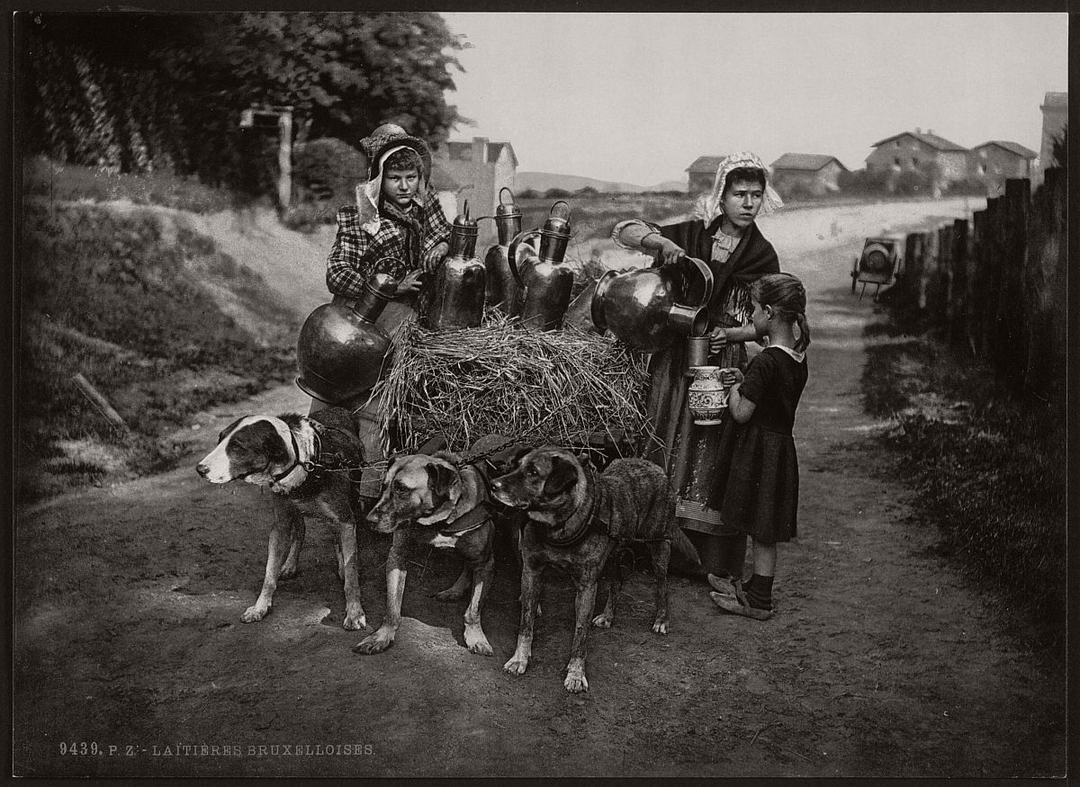
Belgium milk women in their traditional clothes using dogs to pull their cars, Brussels, Belgium, circa 1880-90s.
Imagine strolling through the charming streets of Brussels, Belgium in the late 19th century, surrounded by the sound of clinking milk bottles and the chatter of women in traditional clothes, when suddenly you notice a peculiar sight – women dressed in long skirts and aprons, with dogs harnessed to small carts, delivering milk to the locals. This was a common scene in Brussels during the 1880s and 1890s, where milk women, known as “marchandes de lait,” would use dogs to pull their milk carts, adding a touch of warmth and character to the city’s streets.
The Tradition of Milk Women
In those days, milk women played a vital role in providing fresh milk to the community, and their use of dogs to pull their carts was not only a practical solution but also a testament to the resourcefulness of these women. The dogs, usually large and strong breeds like Saint Bernards or Newfoundlanders, were trained to pull the carts, which were laden with large milk bottles and other dairy products. The milk women would carefully harness the dogs to the carts, making sure they were comfortable and secure, before setting off on their daily rounds. This tradition was not only a convenient way to transport milk but also a way for the women to connect with their community, exchanging stories and gossip as they delivered their goods.
The Science Behind Dog-Powered Carts
From a scientific perspective, the use of dogs to pull carts was a remarkable example of the application of animal power in everyday life. The dogs’ strength and endurance allowed them to pull heavy loads over long distances, making them an ideal choice for tasks like milk delivery. Additionally, the use of dogs also helped to reduce the cost of transportation, as they were cheaper to maintain than horses or other animals. The milk women would also use clever techniques, like using the dogs’ natural instinct to follow a routine, to train them to pull the carts along specific routes, making the delivery process more efficient and reliable.
A Glimpse into the Past
Looking back at this fascinating tradition, it’s clear that the milk women of Brussels played a significant role in shaping the city’s culture and identity. Their use of dogs to pull their carts not only reflected their resourcefulness and determination but also added a touch of charm and character to the city’s streets. As we fast-forward to the present day, it’s heartening to see that this tradition has not been forgotten, with many Belgians still celebrating their heritage and the important role that milk women played in their community. The image of these women, dressed in their traditional clothes, with dogs by their side, remains an enduring symbol of Brussels’ rich history and cultural heritage.
As we gaze upon old photographs of these milk women, with their dogs and carts, we are reminded of a bygone era, where life was simpler, and community was at the heart of everyday life. The story of the milk women of Brussels is a testament to the power of tradition and the importance of preserving our cultural heritage, and as we continue to navigate the complexities of modern life, it’s comforting to know that we can still learn from the past and appreciate the simple joys of a bygone era.