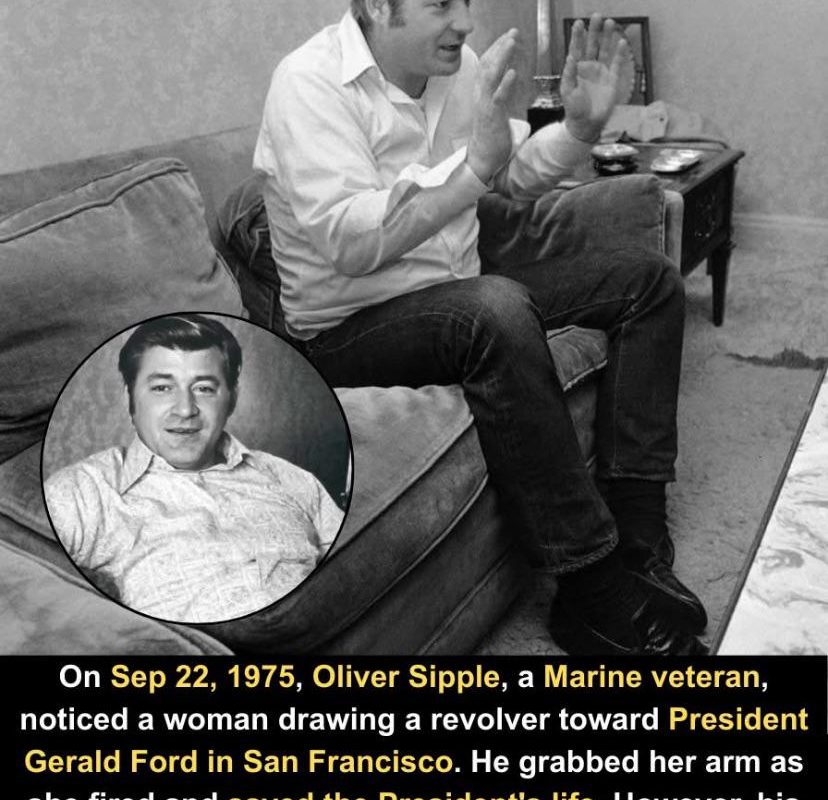
Oliver Sipple saved Gerald Ford but lost his privacy
Have you ever heard of Oliver Sipple, the man who saved a president’s life but lost his own sense of security and anonymity in the process? It’s a fascinating story that highlights the complexities of heroism, identity, and the consequences of being thrust into the spotlight. On September 22, 1975, Oliver Sipple, a 33-year-old decorated Marine and Vietnam veteran, found himself in the right place at the right time when he grabbed the arm of Sara Jane Moore, preventing her from shooting President Gerald Ford in San Francisco. This selfless act of bravery would change Sipple’s life forever, but not necessarily for the better.
A Hero’s Burden
As news of Sipple’s heroism spread, he became an overnight sensation, with his face plastered on newspapers and television screens across the country. However, this newfound fame came at a steep price. Sipple, who was gay, had kept his sexual orientation a secret from his family and friends, fearing rejection and persecution. But when the media descended upon him, his private life was suddenly exposed, causing him immense distress and anxiety. His mother reportedly suffered a nervous breakdown upon learning about her son’s sexuality, and Sipple himself struggled to cope with the loss of his anonymity.
The Science of Trauma
Research has shown that sudden and intense media scrutiny can have a profound impact on a person’s mental health, leading to symptoms of post-traumatic stress disorder (PTSD), anxiety, and depression. In Sipple’s case, the constant attention and intrusion into his private life likely exacerbated his existing struggles with identity and self-acceptance. The science behind trauma suggests that our brains are wired to respond to threats, and in Sipple’s case, the threat was not just the physical danger he faced when saving the president, but also the emotional toll of being “outed” and having his private life scrutinized by the public.
A Legacy of Courage
Despite the challenges he faced, Oliver Sipple’s bravery and selflessness have become an enduring part of American history. His actions that day in San Francisco serve as a powerful reminder of the importance of standing up for what is right, even in the face of adversity. Sipple’s story also highlights the need for greater understanding and acceptance of marginalized communities, including the LGBTQ+ community. As we reflect on his legacy, we are reminded that true heroism is not just about grand acts of bravery, but also about the quiet, everyday struggles of individuals who fight for their rights and dignity in the face of overwhelming odds.
In the end, Oliver Sipple’s story is a complex and multifaceted one, full of contradictions and paradoxes. While he saved a president’s life, he lost his own sense of privacy and security in the process. Yet, his bravery and resilience have inspired countless people around the world, and his legacy continues to be felt today. As we honor his memory, we are reminded of the power of courage, compassion, and the human spirit to overcome even the most daunting challenges.


![[OC] Multi-Cellular "Organisms" Have Grown Within my Particle Simulation](https://www.smartplusmedia.com/wp-content/uploads/2025/12/OC-Multi-Cellular-Organisms-Have-Grown-Within-my-Particle-Simulation.png)
