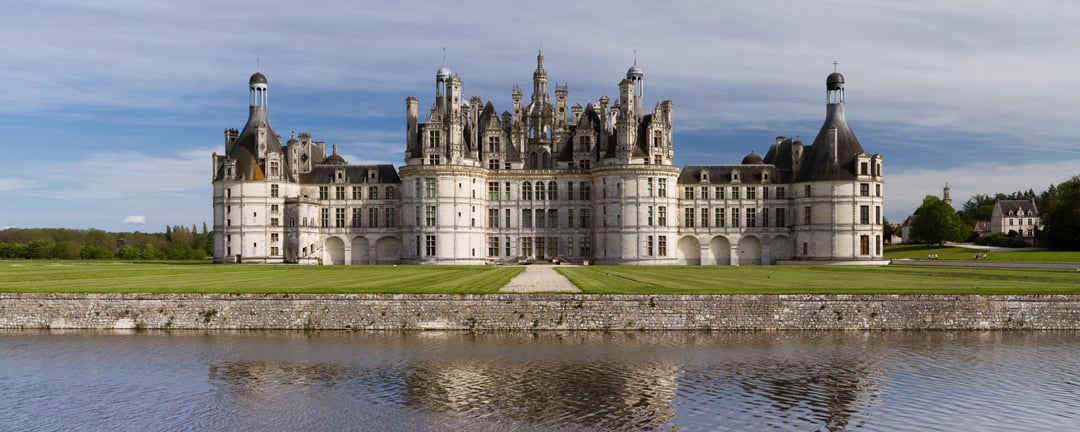
Château de Chambord: one of the most recognisable palaces in the world because of its very distinctive French Renaissance architecture. The open double-spiral staircase that is the centrepiece of the palace might have been designed by Leonardo da Vinci.
As I wandered through the rolling hills and picturesque countryside of France’s Loire Valley, I stumbled upon a sight that left me utterly breathless – the majestic Château de Chambord, one of the most recognisable palaces in the world. Its distinctive French Renaissance architecture, with its elegant turrets, sweeping arches, and majestic spires, seems to transport you back in time to an era of grandeur and opulence. But what really sets this stunning palace apart is its show-stopping centrepiece – an open double-spiral staircase that is as functional as it is beautiful, and which might have been designed by none other than the great Leonardo da Vinci himself.
A Palace Fit for a King
The Château de Chambord was built in the early 16th century as a hunting lodge for King Francis I, and it’s said that the king wanted a palace that would surpass all others in grandeur and beauty. And grand it certainly is – with over 400 rooms, 365 fireplaces, and 84 staircases, this palace is a true marvel of Renaissance architecture. But despite its size and complexity, the palace is surprisingly harmonious and balanced, with a sense of elegance and refinement that is hard to find in modern buildings. As you explore the palace, you can’t help but feel a sense of awe and wonder at the sheer scale and ambition of the project – and the fact that it was built over 500 years ago only adds to its mystique and charm.
The Enigmatic Staircase
The open double-spiral staircase at the heart of the Château de Chambord is one of its most striking features – and one of the most intriguing. The staircase is designed so that two people can climb the stairs at the same time, without ever meeting – a clever and practical solution to the problem of navigating a busy palace. But what’s really fascinating about this staircase is the rumour that it might have been designed by Leonardo da Vinci, who was a frequent visitor to the palace and a close friend of King Francis I. While we can’t know for certain whether da Vinci was involved in the design, the staircase certainly bears some of the hallmarks of his innovative and visionary style – and it’s a testament to the enduring power of his ideas and creativity.
A Legacy of Beauty and Innovation
Today, the Château de Chambord is one of France’s most popular tourist attractions, drawing millions of visitors each year. And it’s easy to see why – the palace is a true masterpiece of French Renaissance architecture, with its stunning architecture, beautiful gardens, and fascinating history. But the Château de Chambord is more than just a pretty face – it’s also a testament to the power of human creativity and innovation. From its ingenious staircase to its elegant turrets and sweeping arches, this palace is a reminder that even the most beautiful and intricate buildings can be functional and practical, as well as aesthetically pleasing. As I left the palace and made my way back through the rolling hills and picturesque countryside of the Loire Valley, I couldn’t help but feel grateful for the experience – and already, I’m planning my next visit to this incredible and unforgettable palace.
As I reflect on my visit to the Château de Chambord, I’m struck by the sense of wonder and awe that this palace inspires – and the enduring legacy of beauty and innovation that it represents. Whether you’re an architecture buff, a history enthusiast, or simply someone who appreciates the finer things in life, the Château de Chambord is a must-see destination that is sure to leave you breathless and inspired. So why not start planning your visit today – and discover the magic and mystery of this incredible palace for yourself?